Why Personalized Learning is the Future of Education?
 Jasdeep Singh13 Feb, 2025
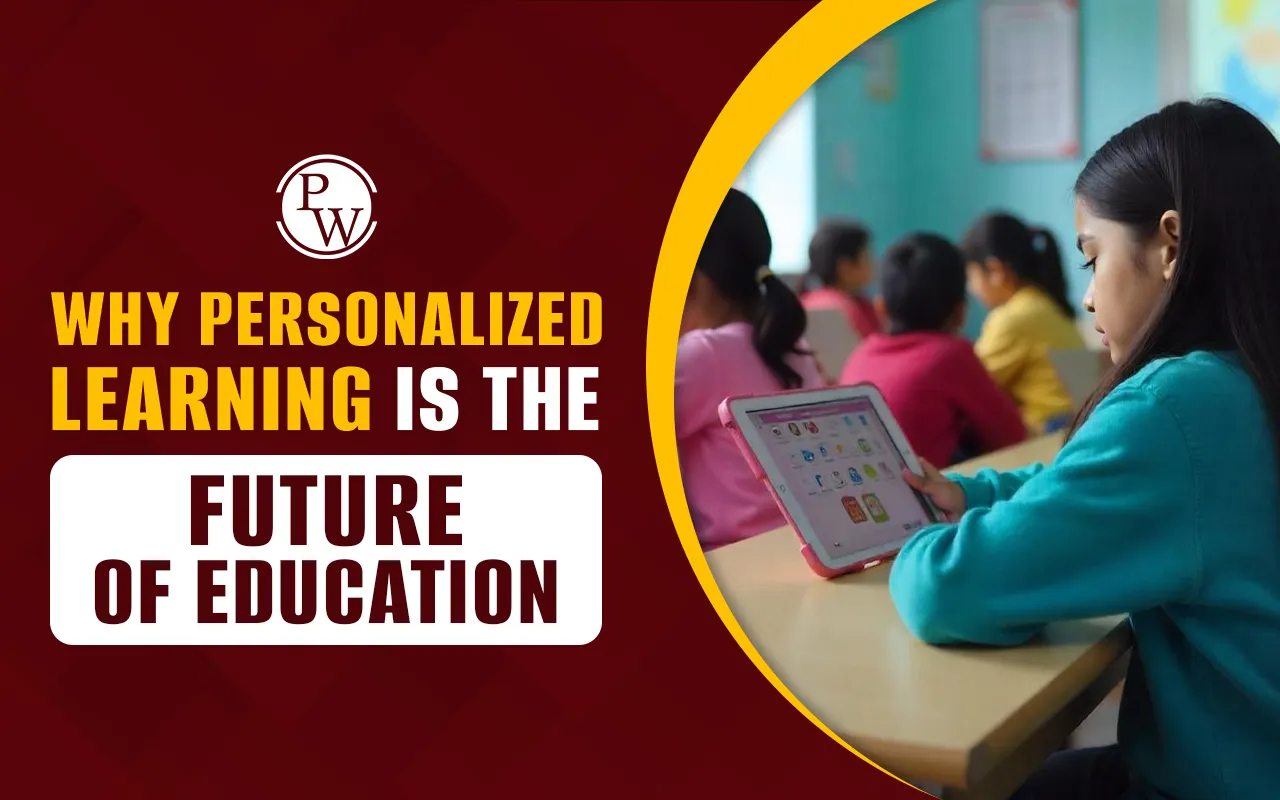
Every student learns differently. Some understand concepts quickly, while others need extra time and practice.
Traditional teaching methods often follow a fixed structure, making it difficult to cater to individual learning needs. This can leave some students struggling to keep up while others feel unchallenged.
Personalized learning adapts lessons to match each student’s pace, strengths, and interests. It ensures that learners receive the right support and challenges, making education more effective and meaningful.
This blog explores how personalized learning is transforming the way students absorb and apply knowledge.
What is Personalized Learning?
Personalized learning is an innovative educational approach that allows students to take charge of their education.
It enables them to choose what they learn and set their own pace for mastery, fostering greater engagement and ownership of their learning.
Although it can be challenging to implement in large classrooms, advancements in educational technology, especially communication platforms, are streamlining the process, making personalized learning more effective and widely adopted.
Why Personalized Learning is Gaining Popularity?
Here’s how personalized learning is shaping the future of education:
1. Students Learn at Their Own Pace
In a traditional classroom, teachers follow a set schedule, which does not always match the needs of every student. Some students grasp concepts faster and are left unchallenged, while others need more time to understand the material fully but may feel pressured to keep up.
With personalized learning, students advance at their own pace. Those who excel can move ahead to more complex topics, while those who need extra support can spend more time reinforcing concepts without fearing falling behind.
This method eliminates unnecessary stress and creates a more balanced and effective learning experience.
2. Enhances Student Engagement and Interest
One of the biggest challenges in traditional education is maintaining student interest. Many students become disengaged when lessons feel too easy, too difficult, or unrelated to their real-world experiences. Personalized learning addresses this by making education more relevant and interactive.
For instance, a student fascinated by sports might understand statistics better when learning through game scores and player performance analysis.
A student who enjoys gaming might find mathematical concepts easier to grasp through coding exercises or game design projects.
Similarly, a student passionate about nature could explore biology through outdoor experiments and ecological case studies.
By tailoring content to student interests, personalized learning increases motivation and engagement, leading to better retention and enjoyment of lessons.
3. Encourages Independent Thinking and Problem-Solving
In traditional classrooms, students are often taught to memorize information rather than develop a deeper understanding of the subject.
Personalized learning shifts the focus towards independent thinking and problem-solving, enabling students to take charge of their learning process.
By exploring topics in depth, researching on their own, and applying critical thinking skills, students become more confident learners.
They learn how to analyze information, draw conclusions, and adapt to new challenges—skills that are valuable in both education and real-life situations.
4. Supports Different Learning Needs
Every student has unique strengths and challenges. Some may struggle with reading comprehension, while others may find math concepts difficult to grasp.
Personalized learning accommodates these differences by offering customized support that ensures students receive the help they need in specific areas.
For example, students who need extra assistance in a subject can access additional interactive tools, audiobooks, and visual learning aids to enhance understanding.
Meanwhile, those who excel in a subject can explore advanced topics and take on more challenging assignments to keep them engaged. This way, every student receives the right level of support and challenge tailored to their learning journey.
5. Technology Enhances Personalized Learning
Technology has played a key role in the growth and success of personalized learning. AI-powered platforms, adaptive learning tools, and interactive resources help tailor educational content to match individual student progress and preferences.
For example:
-
AI-driven assessments identify areas where a student needs improvement and suggest targeted learning materials.
-
Gamification techniques, such as quizzes and interactive simulations, keep students motivated while reinforcing knowledge.
-
E-learning platforms provide access to self-paced learning modules, allowing students to study at a time and place that suits them best.
By integrating technology into education, personalized learning creates a dynamic and flexible learning environment where students can actively participate in their learning process.
6. Strengthens the Student-Teacher Relationship
Personalized learning does not replace teachers; instead, it allows them to focus on guiding and mentoring students rather than simply delivering lessons.
Teachers can spend more time identifying individual student needs, providing personalized feedback, and fostering a more interactive learning experience.
Rather than following a rigid curriculum, teachers in a personalized learning environment can adapt their instruction based on student progress.
This strengthens the teacher-student bond and ensures that students receive the encouragement and support they need to succeed.
7. Prepares Students for Real-World Success
Education is not just about passing exams; it should equip students with the skills they need to thrive in life. Personalized learning develops adaptability, curiosity, and a love for lifelong learning, all of which are important in today’s fast-changing world.
Students who experience personalized learning develop:
-
Confidence in their abilities to learn and solve problems.
-
A deeper understanding of subjects rather than just memorizing facts.
-
The ability to think independently and apply knowledge in real-world situations.
This approach ensures that students graduate not just with academic knowledge but also with the skills needed to succeed in careers, relationships, and everyday decision-making.
8. The Future of Learning is Personalized
As education continues to evolve, personalized learning is becoming the preferred approach in schools, colleges, and online platforms.
This method ensures that every student receives a learning experience tailored to their abilities, interests, and future goals.
By moving beyond the traditional model, personalized learning empowers students, enhances engagement, and fosters a lifelong passion for learning.
It is not about forcing all students to follow the same path but rather acknowledging their individuality and helping them thrive in their own way.
With technology-driven advancements and a deeper focus on student-centred education, personalized learning is reshaping the future of education and preparing students for a world where adaptability, creativity, and independent thinking are more important than ever.
CuriousJr – Personalized Learning for Classes 1 to 8!
Every child learns in a unique way, and CuriousJr makes it fun, engaging, and personal! With 1-on-1 mentor support, interactive storytelling, and lessons tailored to their needs, learning becomes exciting and effective. Book a Free Session Today and give your child a learning experience designed just for them!