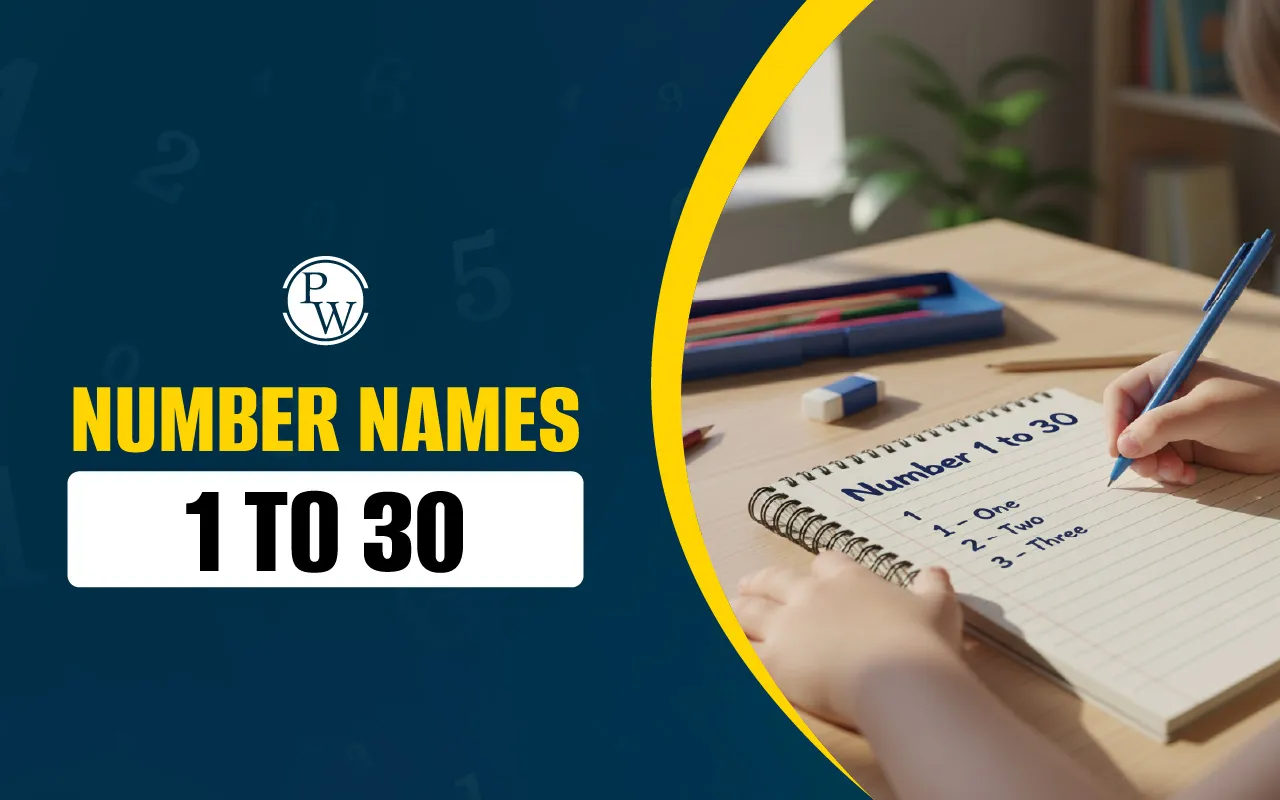
Number Names 1 to 30 | 1 to 30 Spelling
 Shivam Singh20 Jan, 2026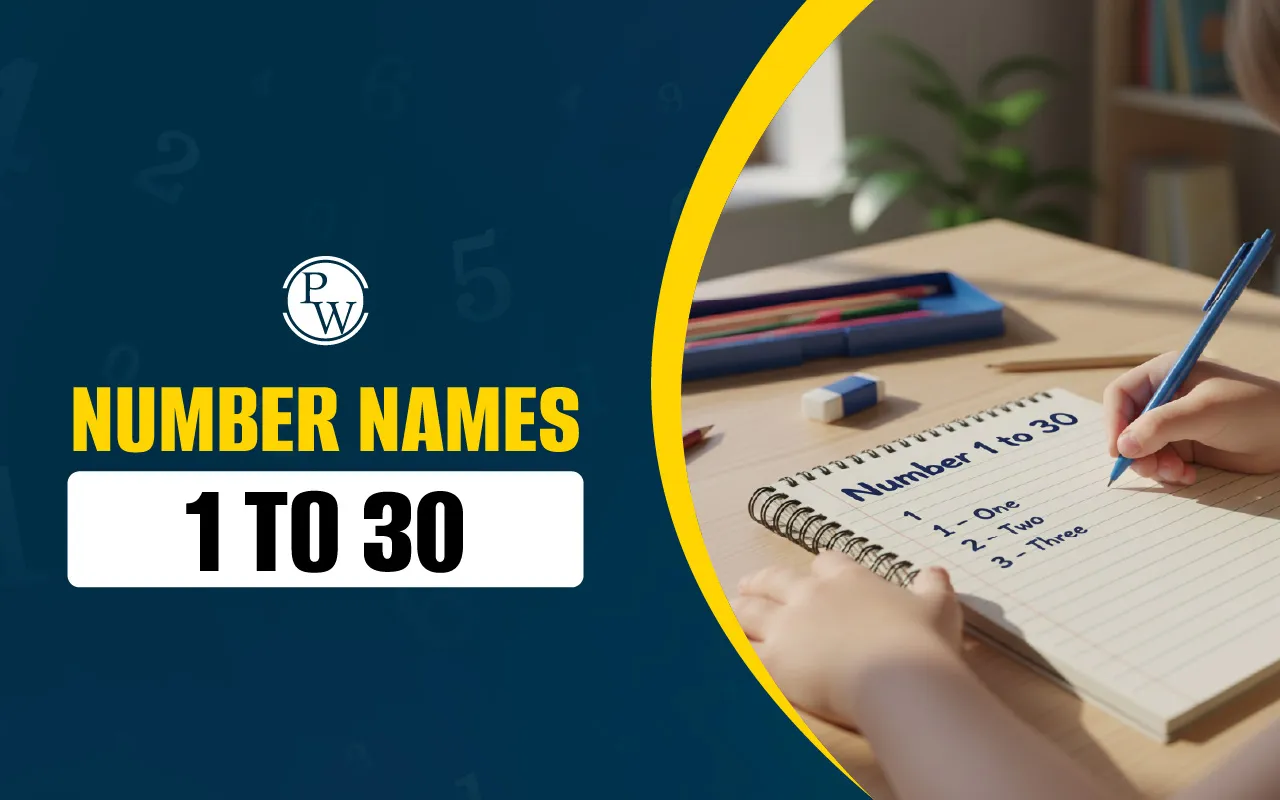
What Are Number Names 1 to 30?
Number names 1 to 30 are the words used to represent numbers from one to thirty in English. They show how each number looks when written in words instead of digits.
For example:
-
The number 1 is written as "one."
-
The number 13 is written as "thirteen.”
-
The number 29 is written as “ twenty-nine”.
Read More: Counting Numbers
Why Learn Number Names 1 to 30?
Learning 1 to 30 in words is a fundamental skill for students in early ages of learning mathematics. It helps them in many ways as follows:
-
Understanding Numbers Better: Writing numbers in words helps students understand the relationship between digits and their names.
-
Improving Counting: Number names help students in remembering and counting numbers in sequence.
-
Improving Spelling: Students get familiar with 1 to 30 spellings in English, like eighteen, twelve, thirty, etc.
-
Reading and Writing Skills: When children see numbers written in books or sentences, they can recognize, relate to, and read them easily.
-
Mathematical Confidence: Knowing the names of the numbers from 1 to 30 builds a strong base for learning higher numbers later.
Number Names 1 to 30 Patterns
The first twenty numbers have unique names. After that, the number names use the place value of each digit in the number. Once students learn numbers 1 to 30 number names in groups, and recognize patterns, the learning becomes much easier. Let’s understand how this happens:
-
Numbers 1 to 12 have unique number names, and their spellings do not follow a specific rule. Example: one, two, three, four, five, six, seven, eight, nine, ten, eleven, twelve.
-
Number names for 13 to 19 are based on the place value of one’s place and end with a “-teen.” Example: thirteen, fourteen, fifteen, sixteen, seventeen, eighteen, nineteen.
-
The numbers 20 and 30 are written in words as “twenty” and “thirty,” respectively.
-
The numbers 21 to 29 and 31 to 39 start with ‘twenty’ or ‘thirty’ followed by the corresponding single-digit number. Example: twenty-one, twenty-two, thirty-four, thirty-five, etc.
Number Names 1 to 30 List
The numbers in words 1 to 30 is listed here as ready reference for students:
|
Number Names 1 to 30 List |
|||||
|
Number |
Number Name |
Number |
Number Name |
Number |
Number Name |
|
1 |
One |
11 |
Eleven |
21 |
Twenty-one |
|
2 |
Two |
12 |
Twelve |
22 |
Twenty-two |
|
3 |
Three |
13 |
Thirteen |
23 |
Twenty-three |
|
4 |
Four |
14 |
Fourteen |
24 |
Twenty-four |
|
5 |
Five |
15 |
Fifteen |
25 |
Twenty-five |
|
6 |
Six |
16 |
Sixteen |
26 |
Twenty-six |
|
7 |
Seven |
17 |
Seventeen |
27 |
Twenty-seven |
|
8 |
Eight |
18 |
Eighteen |
28 |
Twenty-eight |
|
9 |
Nine |
19 |
Nineteen |
29 |
Twenty-nine |
|
10 |
Ten |
20 |
Twenty |
30 |
Thirty |
Read More: Before Number Concept
Tips to Learn Number Names 1 to 30 Easily
After understanding the pattern and sequence, learning number names becomes easier for your child. Here are a few simple tips for teachers and parents to help students efficiently learn 1 to 30 in words:
Learn in Groups
Instead of memorizing all 30 at once, divide them into smaller sets such as 1–10, 11–20, and 21–30. This makes learning easier and more manageable.
Say and Write Together
When children say the number and write its spelling at the same time, they remember it better. For example, encourage them to write “eighteen” while writing 18 and so on.
Use Flashcards
Make colorful flashcards with numbers on one side and spellings on the other. To help children learn the numbers in words in an engaging and interactive way.
Connect Numbers with Daily Objects
Count with numbers with everyday items and ask your child the same in words. For example: “five apples,” “three pencils,” “ten books,” etc.
Play Games
Arrange fun games or activities like Number Bingo or Match the Pair (number to word names), which can make the learning process enjoyable and effective.
Read More: Cardinal Numbers
Numbers in Words 1 to 30 Examples
Students can learn number names easily when they understand how to use numbers in words 1 to 30 in real sentences. Here are some numbers in words from 1 to 30 as examples to help them understand the number names better.
-
I have two pencils and three pens in my bag.
-
My brother is fifteen years old.
-
There are twenty-eight students in the class.
-
The train is running late by two hours.
-
In the leap-year, February has twenty-nine days.
-
The shop opens at nine-thirty in the morning.
-
He scored twenty-four marks out of thirty.
-
I read eight books during the holidays.
-
It is twenty minutes past eleven now.
-
Please call me after seven-thirty in the evening.
-
She bought ten packets of balloons for the party.
-
Each of these boxes contains twenty chocolates.
-
When you divide thirty-two by four, the quotient is eight.
-
The team scored seventeen runs in the last over.
-
There are twenty-five multiple-choice questions in the paper.
Also read: Number Names 1 to 100
Help Your Child Build Confidence in Maths with CuriousJr
Does your child need extra support with maths outside school? Many students struggle with numbers because they lack regular practice or proper guidance. With CuriousJr’s online maths classes, learning becomes easy, engaging, and stress-free.
Here’s how CuriousJr helps your child succeed:
-
Step-by-step learning from two dedicated mentors
-
Regular practice to boost speed and accuracy
-
Interactive lessons that make maths fun
-
Progress reports and parent-teacher updates
Each session helps children understand concepts clearly and gain confidence in solving problems independently. Consistent learning improves both grades and interest in the subject. Book a demo class today and give your child the right start to master maths with confidence and joy.
Number Names 1 to 30 FAQ
What is special about the number name fifteen?
How is the number 0 written in words?
What are ordinal numbers and how are they written in words?
How does understanding the 1 to 30 number names help learn higher numbers?