
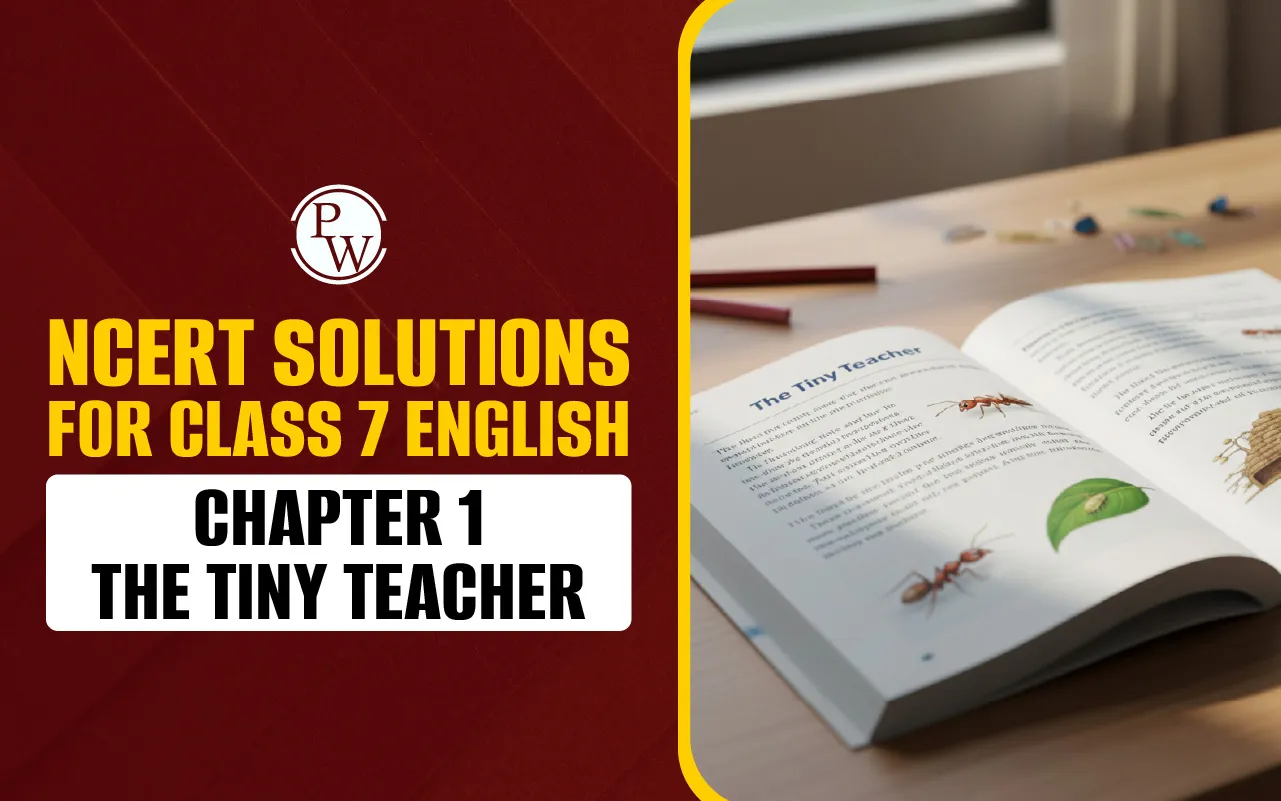
NCERT Solutions for Class 7 English Chapter 1 The Tiny Teacher
 Shivam Singh11 Sept, 2026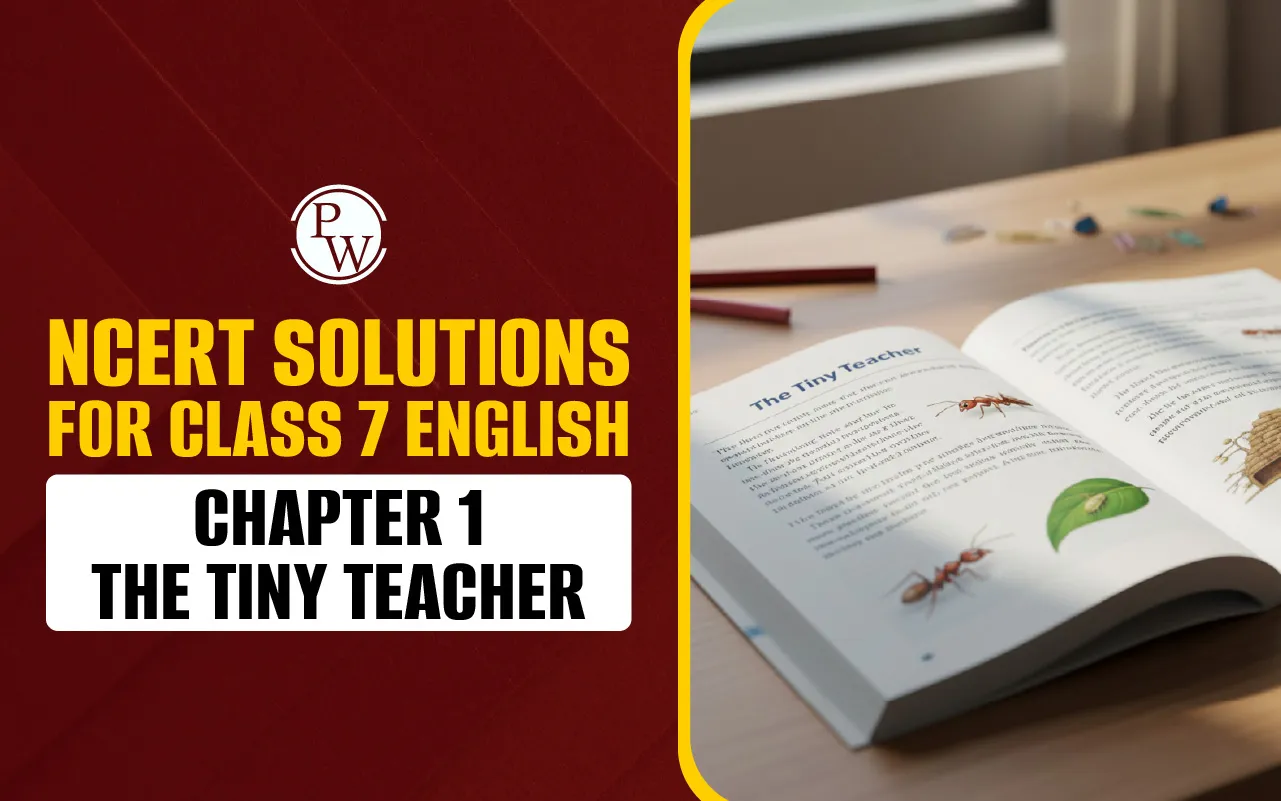
NCERT Solutions for Class 7 English Chapter 1
An Alien Hand is an interesting Class 7 English supplementary reader, and Chapter 1 – “The Tiny Teacher” introduces students to the fascinating world of ants. Many students search for the tiny teacher question answers to understand the chapter clearly and score well in exams.
This chapter explains how ants live in an organised society, work together, and follow strict discipline. Through the tiny teacher class 7 questions and answers, students learn about the queen ant, worker ants, soldiers, and how each ant has a specific role. These questions and answers help students grasp important details such as ant communication, teamwork, and survival skills.
As An Alien Hand Class 7 Chapter 1, The Tiny Teacher teaches moral values like hard work, unity, and responsibility in a simple and engaging way. The Class 7 English An Alien Hand Chapter 1 question answers are written in easy language, making them suitable for quick revision and better understanding of the text.
Using well-structured tiny teacher question answers helps students prepare for exams, improve comprehension skills, and write accurate answers. These NCERT-based solutions are ideal for students who want clear explanations, key points, and exam-ready content for Class 7 English.
The Tiny Teacher Class 7 Questions and Answers
Question 1. The story of an ant’s life sounds almost untrue.
The italicized phrase means
(i) highly exaggerated.
(ii) too remarkable to be true.
(iii) not based on facts.
Answer: (i) highly exaggerated.
Question 2. Complete the following sentences.
(i) An ant is the smallest, _______________________________________.
(ii) We know a number of facts about an ant’s life because _______________________.
Answer: (i) An ant is the smallest, commonest and wisest insect we have seen.
(ii) We know a number of facts about an ant’s life because there are people who have kept ants as pets and have watched them closely.
Question 3. In what ways is an ant’s life peaceful?
Answer: An ant’s life is peaceful because all of them do their work bravely, honestly and intelligently. They do not interfere in each other’s work.
Comprehension Check
Question 1. How long does it take for a grub to become a complete ant?
Answer: It takes two to three weeks for the grub to transform into a cocoon and then another three weeks to convert into a complete ant.
Question 2. Why do the worker ants carry the grubs about?
Answer: The worker ants carry the grubs about daily for exercise, airing and sunshine.
Question 3. What jobs are new ants trained for?
Answer: New ants are trained by the old ants on the jobs of workers, cleaners, soldiers, builders, etc.
Question 4. Name some other creatures that live in anthills.
Answer: Other creatures that live in anthills are beetles and greenfly.
Question 5. Mention three things we can learn from the ‘tiny teacher’. Give reasons for choosing these items.
Answer: Three things that we can learn from the ‘tiny teacher’ are hard work, cleanliness, loyalty and care for the young ones.
Exercises
Answer the following questions:
Question 1. (i) What problems are you likely to face if you keep ants as pets?
(ii) When a group of bees finds nectar, it informs other bees of its location, quantity, etc. through dancing. Can you guess what ants communicate to their fellow ants by touching one another’s feelers?
Answer: (i) There might be several problems if we keep ants as pets. They would start eating our food and other eatables. They bite. They won’t listen to our orders.
(ii) Ants communicate about food newly found by them to their fellow ants by touching one another’s feelers.
Question 2. Complete the following poem with words from the box below. Then recite the poem.
Soldiers live in barracks
And birds in _________,
Much like a snake that rests
In a _________. No horse is able
To sleep except in a _________.
And a dog lives well,
Mind you, only in a _________.
To say ‘hi’ to an ant, if you will,
You may have to climb an _________.
Hole, kennel, nests, anthill, stable
Answer:
Soldiers live in barracks
And birds in nests,
Much like a snake that rests
In a hole. No horse is able
To sleep except in a stable.
And a dog lives well,
Mind you, only in a kennel.
To say ‘hi’ to an ant, if you will,
You may have to climb an anthill.
Read More: Subject in English Grammar
The Tiny Teacher Question Answer Chapter 1 Summary
The tiny teacher question answer chapter 1 is about the amazing lives of ants. Even though they are small, they are very smart and work hard. The chapter teaches you how to be organised and work hard in groups. Students can learn how ants live in "anthills," which are complicated constructions with hundreds of small rooms and corridors, by looking at these solutions.
Key Aspects of Ant Life
Ants live in a very organised way. The queen ant is the mother of all the ants in the colony and can survive for roughly 15 years. After her "wedding flight" on a hot summer day, she loses her wings and starts her main job: producing eggs.
Division of Labor in the Colony
One of the most important things to remember from the tiny teacher question answer class 7 is how strictly the anthill divides up work. No one in the colony ever conflicts with anyone else because everyone understands what they are supposed to do:
-
Soldiers: They protect the grubs (young ants) and sleep in different barracks.
-
Workers: They spend much of their time looking for food and live in special areas.
-
Cleaners: They make sure the anthill stays clean.
-
Grubs: They are the juvenile ants that change from eggs to cocoons before becoming full-grown ants.
Read More: Narration in English Grammar
Detailed The Tiny Teacher Question Answer Class 7: Exercises and Explanations
Comprehension Check - Part 1
1. The story of an ant’s life sounds 'almost untrue.' What does the italicized phrase mean?
The phrase 'almost untrue' suggests that the facts about an ant's highly organized and disciplined life are so remarkable that they are difficult to believe or seem like a work of fiction.
2. Complete the following sentences:
-
An ant is the smallest, but the wisest creature we have seen.
-
We know a number of facts about an ant’s life because people have kept ants as pets and watched their daily behavior closely.
3. In what ways is an ant’s life peaceful?
An ant’s life is peaceful because each ant does its share of work intelligently and bravely. They never fight with other members of the group, and everyone adheres strictly to their assigned duties, whether they are workers, soldiers, or cleaners.
Comprehension Check - Part 2
1. How long does it take for a grub to become a complete ant?
It takes two or three weeks for a grub to become a cocoon, and another three weeks for the cocoon to break and a complete ant to appear.
2. Why do the worker ants carry the grubs about?
Worker ants carry the grubs daily for airing, exercise, and sunshine to ensure they grow healthy.
3. What jobs are new ants trained for?
New ants are trained for the roles of workers, soldiers, builders, and cleaners. They learn these duties from the older ants in the colony.
4. Name some other creatures that live in anthills.
Apart from ants, anthills often house beetles, lesser breeds of ants, and the "greenfly."
5. Why do ants keep these other creatures?
Ants keep these creatures for several reasons:
-
Pleasant Smell: Some give off a smell that is pleasant to the ants' senses.
-
Sweet Juices: Some provide sweet juices.
-
Pets: Others are kept just as pets or playthings, much like humans keep cats and dogs.
In this part, we split down the text activities so that students can get the Google Featured Snippet for questions about the tiny teacher question answer.
Comprehension Check - Part 1
-
The account of an ant's life sounds "almost untrue." What does the phrase in italics mean?
The words "almost untrue" mean that the facts concerning how organised and disciplined an ant's life is are so amazing that they are hard to believe or appear like a story. -
Finish the sentences below:
We have seen an ant that is the smallest and smartest thing we have seen.People have kept ants as pets and monitored them closely every day, so we know a lot about how they live. -
What makes an ant's life peaceful?
Because each ant accomplishes its job smartly and valiantly, an ant's life is serene. They never quarrel with anyone else in the group, and everyone does their job exactly as they are supposed to, whether they are soldiers, workers, or cleaners.
Comprehension Check - Part 2
-
How long does it take for a grub to turn into a full-grown ant?
It takes two to three weeks for a grub to turn into a cocoon, and then another three weeks for the cocoon to break and an ant to come out. -
Why do the worker ants move the grubs around?
Every day, worker ants take the grubs outside for fresh air, exercise, and sunshine to help them grow strong. -
What kinds of work do new ants learn to do?
Ants that are new to the colony are taught how to be labourers, soldiers, builders, and cleaners. The older ants in the colony teach them how to do these things. -
What other animals reside in anthills?
Along with ants, anthills are home to beetles, smaller types of ants, and the "greenfly." -
Why do ants preserve these other animals?
Ants keep these animals for a number of reasons:
-
Pleasant Smell: Some of them smell good to ants.
-
Sweet Juices: Some give you sweet juices.
-
Pets: Some people keep animals as pets or toys, just like they do with cats and dogs.
Read More: Prepositions of Manner
Mastering The Tiny Teacher Question Answer Short Questions
To excel in objective tests, students should focus on the tiny teacher question answer patterns that highlight the unique biological features of ants.
The Significance of the Greenfly
Students should pay close attention to the tiny teacher question answer that shows off the ants' distinct biological traits in order to do well on objective assessments.
The Importance of the Greenfly
People commonly call the greenfly the "cow of ants." The ants use their antennae to teach the greenfly how to give milk (honeydew). They milk it like we do a cow. This partnership of mutual benefit is a great example of the "tiny teacher's" wisdom.
Important Lessons to Learn from Ants
The chapter is called "The Tiny Teacher" because these little bugs may teach us a lot. The reference texts say that we should try to be like these things:
-
Hard work: They worked hard to get food and build things.
-
Sense of duty: Each ant does its job without complaining.
-
Discipline: Strictly following the norms of the colony.
-
Cleanliness: Keeping the anthill clean is important for hygiene.
-
Loyalty: A strong sense of loyalty to the land where they dwell.
|
Feature |
Description |
|
Communication |
Ants use their feelers or antennae to "talk" and pass messages. |
|
Greeting |
Ants greet each other by touching one another's antennae. |
|
Common Ants |
The most common varieties are black or red ants. |
|
Queen Ant |
The leader who lays eggs; her wings are cast off after the wedding flight. |
Also Read: How to improve English speaking skills
CuriousJr Interactive Online Tuition for Grades 3–8
CuriousJr offers online tuition courses designed to spark curiosity and build a strong foundation in English, Maths, Science and Social Science. Understanding chapters like “The Tiny Teacher” becomes much easier when learning is interactive, fun, and concept-based.
PW CuriousJr is specially designed for young learners from Grades 3 to 8. It helps students explore topics beyond rote learning by encouraging observation, thinking, and discussion. In English, students improve reading comprehension, vocabulary, and speaking skills through stories, poems, and chapters like The Tiny Teacher, which explain complex ideas in a simple and relatable way.





The Tiny Teacher Question Answer FAQs
What does the queen ant's "wedding flight" mean?
How do ants talk to each other without talking?
How does PW CuriousJr help me get ready for English?
What happens to the cocoons?
Why do people name the ant a "teacher"?




Get Free Counselling Today
and Clear up all your Doubts
 Live & recorded classes available at easeDashboard for progress trackingLakhs of practice questions

