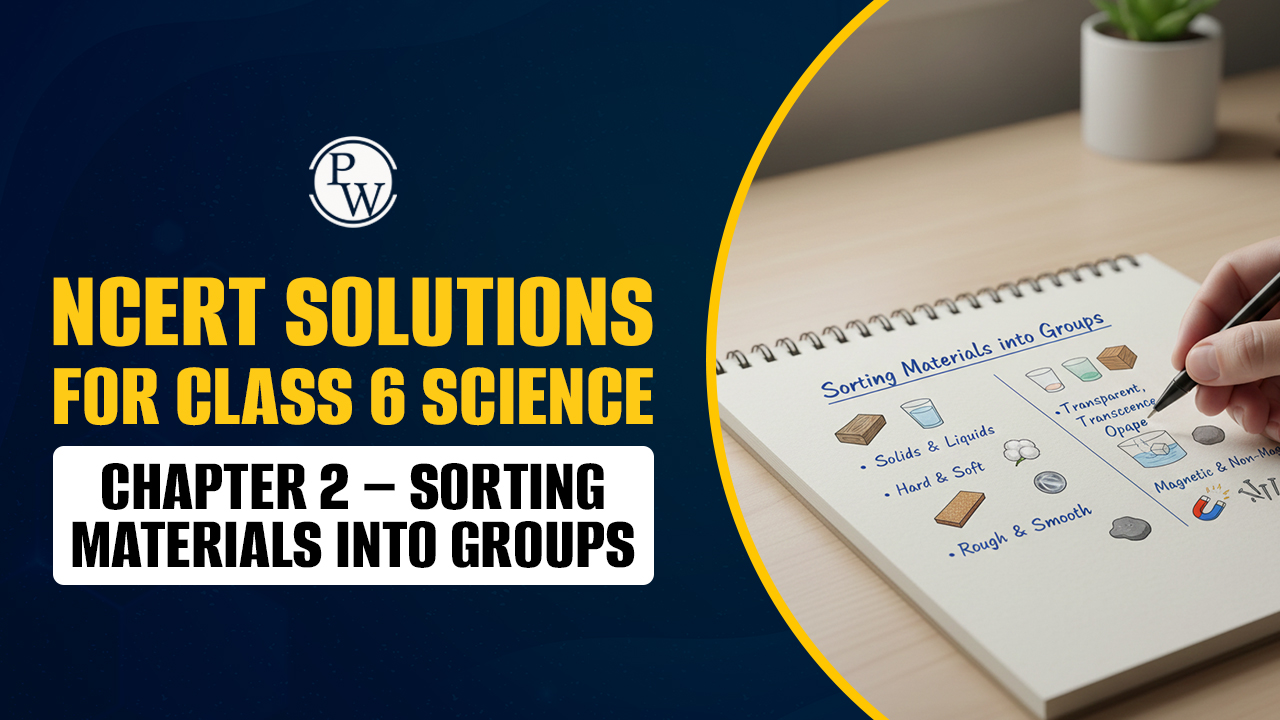
NCERT Solutions for Class 6 Science Chapter 2 Sorting Materials into Groups
 Shivam Singh15 Sept, 2026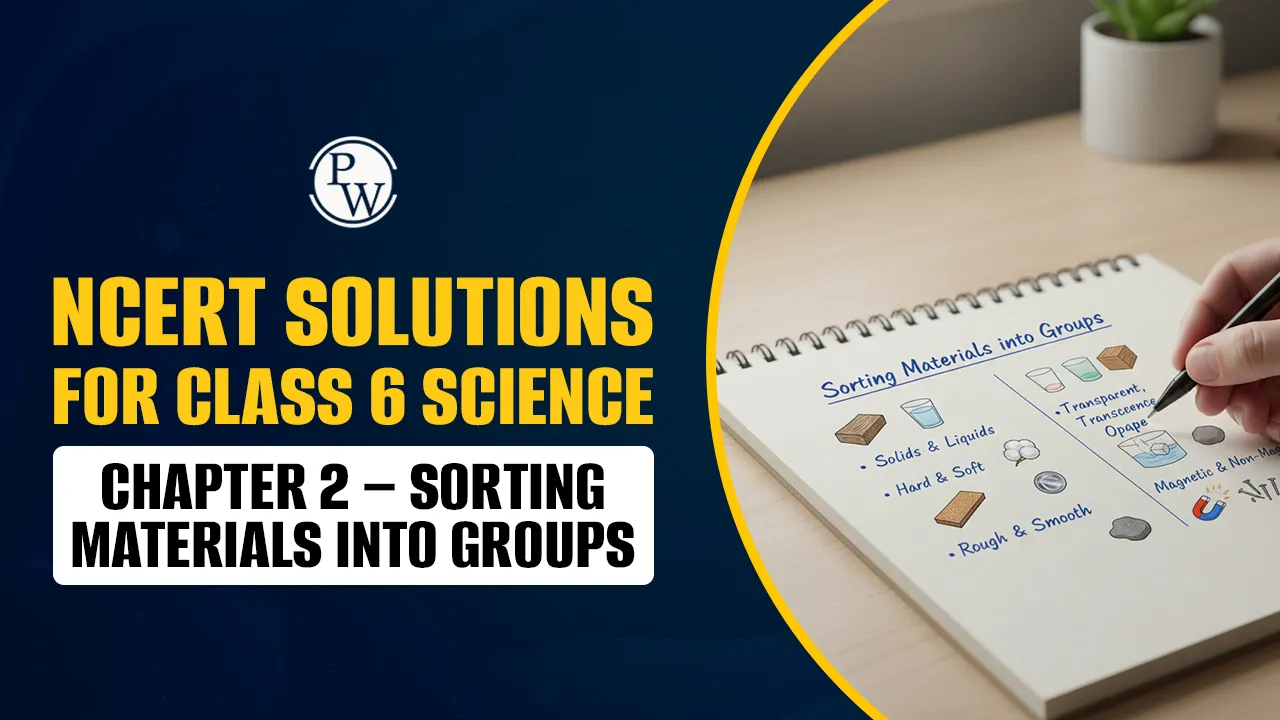
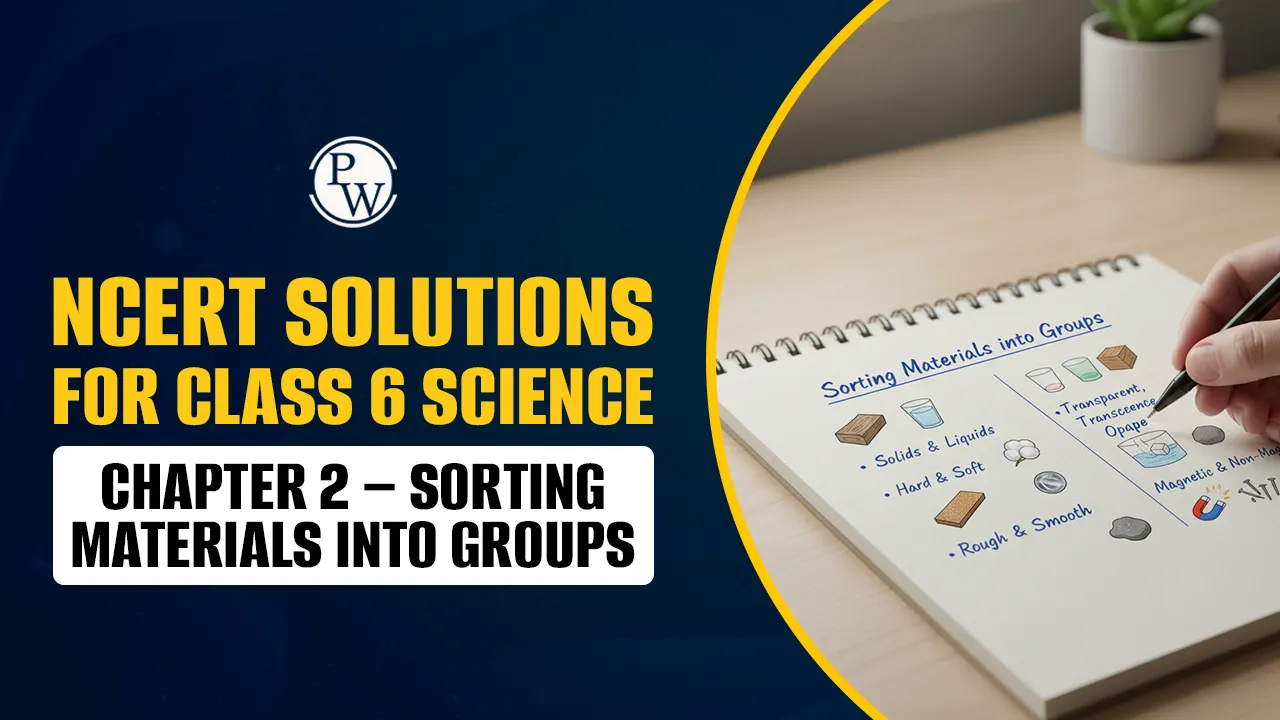
NCERT Solutions for Class 6 Science Chapter 2 helps students understand the basic idea of grouping materials based on their properties. This chapter, Sorting Materials into Groups, teaches students how objects around us are different and how they can be grouped to make study easier.
In science class 6 chapter 2 question answer, students learn that materials are sorted based on properties like appearance, hardness, solubility in water, transparency, and whether they float or sink. For example, wood and plastic float on water, while stone and iron sink. These concepts are explained clearly through sorting materials into groups questions and answers, making it easy for students to remember.
The sorting materials into groups class 6 questions and answers section includes short and long questions, such as why materials are grouped and how grouping helps in daily life. These questions improve logical thinking and help students relate science to real-life examples.
Teachers and students often use a sorting materials into groups class 6 worksheet with answers for practice. Worksheets help students revise important concepts and prepare well for exams. They include multiple-choice questions, fill in the blanks, and short answers, which strengthen understanding.
Overall, class 6 science chapter 2 question answer is very useful for exam preparation. It helps students score better by explaining answers in a clear and structured way. Regular practice of sorting materials into groups questions and answers builds a strong foundation for higher classes.
Class 6 Science Sorting Materials into Groups Questions and Answers
NCERT Solutions for Class 6 Science Chapter 2 Sorting Materials into Groups, is comprehensively explained in the NCERT Solutions, ensuring a solid understanding. These solutions, crafted by subject experts, can be valuable for school exams and olympiads. PhysicsWallah's NCERT Solutions are regularly updated to align with the latest syllabus, ensuring students focus on the most recent content. NCERT Solutions For Class 6 Science Chapter 2 delves into the details of objects around us, different types of materials, and their properties.
Exercise Questions
1. Name five objects which can be made from wood.
Solution: a) Table b) Chair c) Doors d) Desk e) Box
2. Select those objects which shine from the following: Glass bowl, steel spoon, plastic toy, cotton shirt
Solution: Glass bowls and steel spoons are the objects which shine.
3. Match the objects given below with the materials from which they could be made. Remember, an object could be made from more than one material, and a given material could be used for making many objects.
| Objects | Material |
| Book | Glass |
| Tumbler | Wood |
| Chair | Paper |
| Toy | Leather |
| Shoes | Plastics |
Solution:
| Objects | Material |
| Book | Paper, wood |
| Tumbler | Glass, wood, plastic |
| Chair | wood, plastic |
| Toy | Glass, wood, paper, plastics, leather |
| Shoes | Leather, plastic |
4. State whether the statements given below are True or False. (i) Stone is transparent, while glass is opaque. (ii) A notebook has lustre while an eraser does not. (iii) Chalk dissolves in water. (iv) A piece of wood floats on water. (v) Sugar does not dissolve in water. (vi) Oil mixes with water. (vii) Sand settles down in the water. (viii) Vinegar dissolves in water.
Solution: i) False ii) False iii) False iv) True v) False vi) False vii) True viii) True
5. Given below are the names of some objects and materials: Water, basketball, orange, sugar, globe, apple and earthen pitcher. Group them as: (a) Round shaped and other shapes (b) Eatables and non-eatables
Solution: (a) Round shaped – Basketball, Orange, Globe, Apple, Earthen Pitcher Other shapes – Water, Sugar (b) Eatables – Water, Orange, Sugar, Apple Non-eatables – Basketball, Globe, Earthen Pitcher
6. List all items known to you that float on water. Check and see if they will float on oil or kerosene.
Solution: A few items that float on water are as follows: 1. Sponge’s piece 2. Plastic bottle 3. Paper’s piece 4. Thermocol’s piece 5. Wood 6. Plastic ball 7. Cork However, these items will not float on oil or kerosene.
7. Find the odd one out from the following: a) Table, Bed, Baby, Chair, Cupboard b) Rose, Boat, Lotus, Jasmine, Marigold c) Aluminum, Copper, Iron, Sand, Silver d) Sugar, Sand, Salt, Copper Sulphate
Solution: a) Baby – others are made up of wood b) Boat – others are flowers c) Sand – others are metals d) Sand – others are soluble in water
Read More: What Is Global Warming?
Key Properties and Sorting Materials into Groups
We need to look at the physical and chemical properties of things in order to put them in the right groups. When you are sorting materials into groups questions and answers, you usually look at four main properties: how they seem, how hard they are, how soluble they are, and how clear they are.
-
Look and shine
Different materials frequently look different from one other. Iron looks different from copper or aluminium, while wood looks very different from iron. But other materials, like iron, copper, and aluminium, have some things in common that wood doesn't. "Lustre," or shine, is one of the main qualities.
This shine is something that most metals have. When you cut a metal rod, you may often see a dazzling sheen on the new surface. Some metals may lose their sheen and look dull over time because of air and moisture, but freshly cut surfaces always show the shine. When dividing things into groups of questions and answers, things like a glass dish and a steel spoon are considered shining objects, but a cotton blouse or a plastic toy usually isn't. -
Hardness and Feel
When you push on different things with your hands, some may be hard to compress and others may be easy to compress. This is what makes materials "hard" or "soft."
-
Soft Materials: These are easy to scratch or compress. Cotton and sponge are two examples.
-
Hard Materials: These are hard to squish. Iron is a good example of a hard substance.
Hardness is an important factor in grouping materials when sorting materials into groups questions and answers class 6 pdf. You can also say that materials are "smooth" or "rough," which adds to their physical description.
-
Solubility: Soluble and Insoluble
Solubility is the ability of a substance to entirely dissolve or vanish when mixed with water. This is an important idea for putting things into groups of questions and answers.
-
Soluble substances: They are things like sugar and salt that totally dissolve in water.
-
Non-Soluble substances: Things like sand, chalk powder, and sawdust don't go away even after being stirred for a long time.
This quality also applies to liquids. Vinegar and lemon juice are two examples of liquids that mix nicely with water. Some oils, like mustard oil, coconut oil, or kerosene, don't mix with water and instead float on top of it. Gases can also have different solubility levels. For example, oxygen gas that dissolves in water is important for the survival of plants and animals that live in water.
Read More: Facts About the Earth
Sorting Materials Based on Transparency and Buoyancy
Materials are classed not only by what they are made of, but also by how they react to light and gravity. This is a frequent topic in sorting materials into groups questions and answers class 6 worksheets.
Transparency
The amount of light that may travel through an object is called its transparency. This means that materials can be put into three groups:
-
Transparent: These are materials that let you see things plainly. Some examples are glass, water, air, and certain kinds of plastic. Store owners like to keep cookies and candy in clear containers so that customers can clearly see them.
-
Opaque: These are things that you can't see through. Some examples are metals, wood, and cardboard. You can't see what's inside a wooden box or a metal container that is closed.
-
Translucent: These are materials that let you see things, but not very well. For example, there is an oily spot on a piece of paper after eating fried food.
Floating vs. Sinking
When you explore how to arrange things into groups of questions and answers, you will see that some elements that can't be dissolved sink to the bottom of a container while others float.
-
Things that float: Leaves that have dried out, a plastic ball, and wood usually float on top of the water.
-
Things that sink: They include a stone, a metal key, or a coin.
Understanding buoyancy helps us put things we see in nature into groups, and it's a common way to sort materials into categories in questions and answers PDF files.
Also Read: Floating and Sinking
Why do we Sort Materials?
There are two basic motivations to sort things: for ease of use and to learn about their features. We keep similar things together in our daily lives. For instance, in a grocery store, all the different kinds of biscuits are placed in one section, and the legumes and grains are kept in another. This makes it easy to find them. Grouping materials in science lets us look at their properties in a systematic way and see if there are any patterns in their features.
CuriousJr Online Tuition Classes Improve Learning Outcomes
CuriousJr’s online tuition classes are thoughtfully designed for students from Class 3 to Class 8. These sessions help children build strong subject understanding and gain confidence in handling their everyday school studies.
Key features of CuriousJr classes include:
-
Daily interactive lessons that keep students engaged and help concepts become easier to understand and remember.
-
Complete coverage of Maths, Science, English, and Social Studies aligned with the latest school curriculum.
-
Regular tests and detailed feedback to track performance and ensure continuous improvement.
-
Personalised mentor guidance, where teachers focus on individual strengths and address learning gaps effectively.
Related Articles





Sorting Materials into Groups Class 6 Questions and Answers FAQs
List five things that can be made out of wood.
Which of these things shines: a glass dish, a plastic toy, a steel spoon, or a cotton shirt?
Does chalk break down in water?
Which of the following is the "odd one out": chair, bed, table, baby, or cupboard?
How does the PW Curious Junior course help with science in Class 6?

Get Free Counselling Today
and Clear up all your Doubts
 Live & recorded classes available at easeDashboard for progress trackingLakhs of practice questions