Difference Between Adolescence and Puberty
 Shivam Singh19 Jan, 2026
What is Adolescence and Puberty?
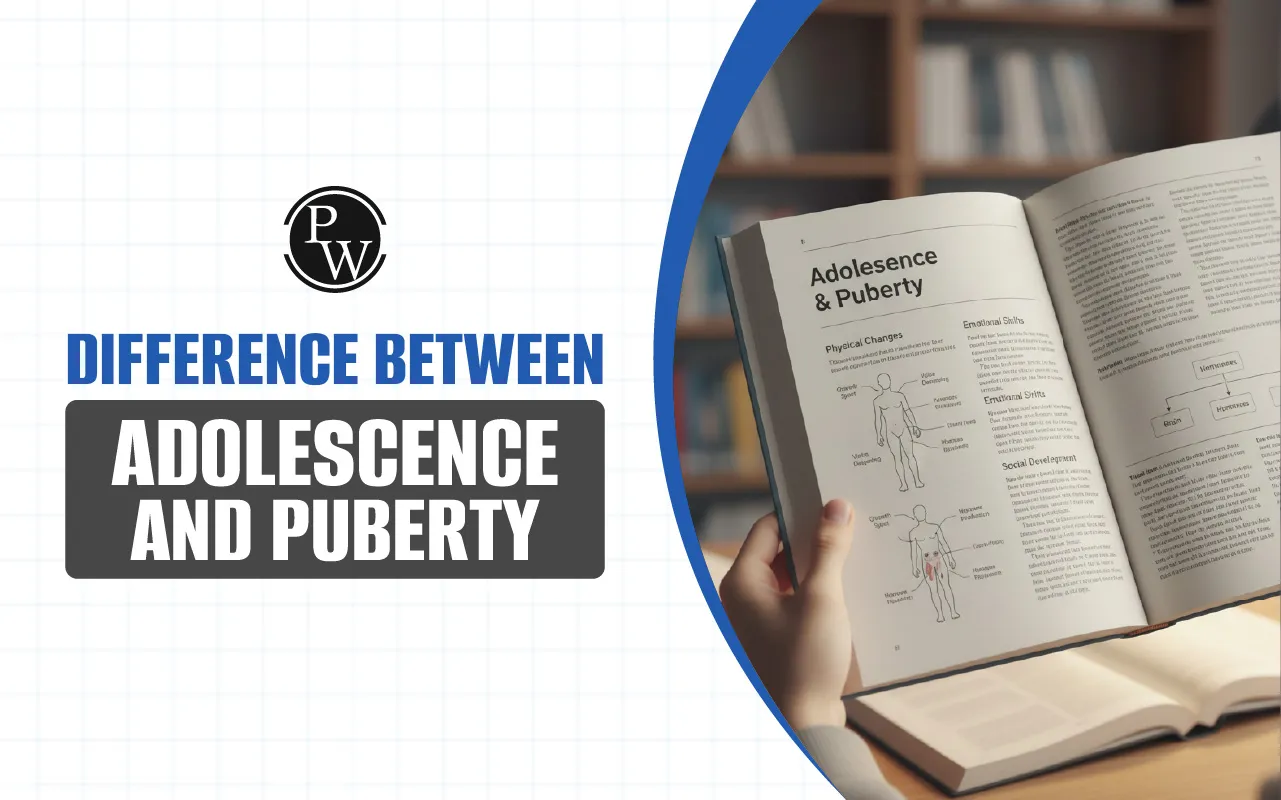
What is Adolescence and Puberty? It is an important question in biology because it helps us understand how the human body and mind change during the teenage years. Adolescence and Puberty are two important stages of human growth. Adolescence is the phase of life between childhood and adulthood, usually from the age of 10 to 19. During this stage, a living being not only grows physically but also goes through emotional, psychological, and social changes.
On the other hand, Puberty is a shorter part of adolescence that mainly involves physical development. Changes such as an increase in height, deepening of voice, and development of reproductive organs are part of puberty. While both Adolescence and Puberty are important, they are not the same. So, to learn what is difference between adolescence and puberty, keep reading.
Read more: Heat and Temperature
Behavioral Changes in Puberty
Puberty is the time when a person’s body begins to change as they grow into an adult. During this stage, both the body and mind go through many changes. These happen because of hormones and new experiences. It can sometimes feel confusing, but it is a natural part of growing up. Here are some common behavioral changes in puberty:
-
Mood Swings: Hormonal changes can make emotions change very fast. Teenagers often have sudden mood changes.
-
Self-Consciousness: Adolescents become more aware of how they look and often worry about what others think of them.
-
Desire for Independence: They want to make their own choices and may not like too much control from parents or elders.
-
Peer Importance: Friends and peer groups become very important and can affect the way they behave.
-
Emotional Outbursts: Strong feelings and confusion may sometimes cause anger, frustration, or excitement.
-
Risk-Taking Behavior: Because the brain is still developing, some adolescents may do risky things without thinking of the results.
-
Intellectual Growth: They start to think in deeper ways, ask more questions, and show more interest in new ideas and learning.
Behavioral Changes in Adolescence
Adolescence is the time between childhood and adulthood when a teenager goes through many changes. These changes are not only physical but also emotional, social, and mental. While these changes are a normal part of growing up, they affect how a teenager thinks, feels, and behaves. Here are some common behavioral changes in adolescence:
-
Boundary Testing: They may challenge rules and limits to understand their own freedom and identity.
-
Exploring Personal Identity: Adolescents start to think more about who they are and what they believe in.
-
Navigating Peer Relationships: Friendships and group relationships become very important and influence their behavior.
-
Transition to Independence: Teenagers want to make their own decisions and take responsibility for themselves.
-
Volatile Emotions: Teenagers may have sudden changes in feelings, going from happy to sad or angry quickly.
Both adolescence and puberty bring changes in the way a human being grows physically, emotionally, and socially. While some changes are similar, each stage is different. To understand these differences in a better way, let’s learn the difference between adolescence and puberty.
Read more: Difference Between Physical and Chemical Changes
Difference Between Adolescence and Puberty
Adolescence and puberty are two stages in growing up that generally happen together, but are not the same. While adolescence lasts longer, puberty is for a shorter time, during which the body changes quickly because of hormones. Find the key points that explain the difference between Adolescence and Puberty here:
|
Difference Between Adolescence and Puberty |
||
|
Aspect |
Adolescence |
Puberty |
|
Age Range |
Generally between 10 and 19 years. Early adolescence is around 10–14 years, and late adolescence is 15–19 years. |
Often starts between 8 and 14 years and lasts a few years. |
|
Main Changes |
Changes in body growth, feelings, thinking, and social behaviour. |
Quick changes in the body, like hair growth, voice change, breast growth, and menstruation. |
|
Focus |
Growth of thoughts, emotions, and social skills, along with physical changes. |
Physical changes that prepare the body for adulthood. |
|
Duration |
Lasts several years. |
Happens over a shorter time, with fast physical changes. |
|
Purpose |
Helps build self‑identity, independence, and maturity. |
Prepares the body for reproduction and adult life. |
|
Examples |
Thinking in new ways, seeking independence, building friendships, and understanding self‑identity. |
Growth spurts, body hair growth, voice change, menstruation in girls, and muscle growth in boys. |
In conclusion, adolescence and puberty are both important parts of growing up. Puberty focuses mostly on the body’s physical changes, while adolescence includes emotional, social, and mental growth as well. Knowing the difference between adolescence and puberty helps us better understand how a person develops into an adult.
Also read: Reproduction in Plants
Help Your Child Stay Ahead in School with CuriousJr’s Online Tuition
Many parents worry that their child struggles to keep up with school lessons after regular school hours. Science, maths, English, and social studies can sometimes feel overwhelming; that makes children stressed and less confident. Without extra support, they may lose interest in learning and score lower on exams.
CuriousJr’s Online Tuition Classes is designed to solve this problem. It covers all major subjects your child learns in school and gives them the extra help they need to understand lessons better, perform well in exams, and feel confident in class. Here’s what your child will get:
-
Live classes with interactive learning
-
Daily practice and assignments to strengthen understanding of learned topics
-
Homework help whenever needed
-
Regular feedback from experienced teachers to track progress
Give your child the consistent learning support they need. Book a demo class today and see how CuriousJr can make learning easier and more enjoyable for them.