Class 5 English Grammar Worksheet on Conjunctions
 Nivedita Dar13 Apr, 2026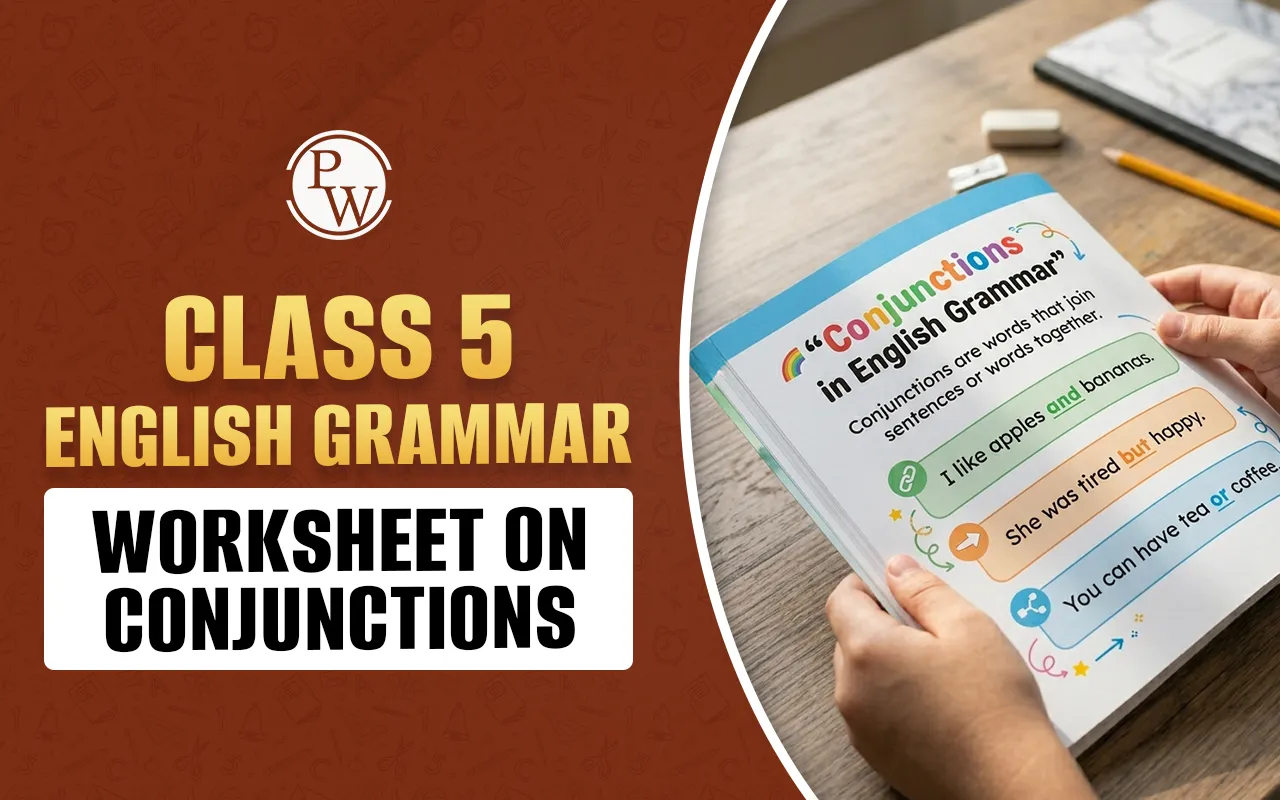
Think of a conjunction worksheet for class 5 as a set of instructions for the "glue" that holds the English language together. Without these little joining words, our writing would feel like a series of short, robotic hiccups. Instead of saying "I like pizza. I like pasta. I don't like salad," we use conjunctions to say "I like pizza and pasta, but I don't like salad."
For a fifth-grader, mastering these words is a huge step. It’s the difference between writing like a little kid and writing like a student who can express complex thoughts.
Understanding the Conjunction Worksheet for Class 5 with Answers
When you start working through a conjunction worksheet for class 5, you’re really learning how to build bridges between ideas. These words—like "and," "but," "or," and "because"—are what we call connectors. They show the reader exactly how two different thoughts are related.
For parents and teachers, having a conjunction worksheet for class 5 with answers is a lifesaver. It allows the student to check their own work and immediately see why they might have picked the wrong word. Whether you are using a conjunction worksheet for class 5 for home practice or a specialized conjunction worksheet for class 5 for school exams, the core logic is the same: find the relationship, then pick the word.
The Three Main Types
Most worksheets break these down into three categories that help organize our thoughts:
-
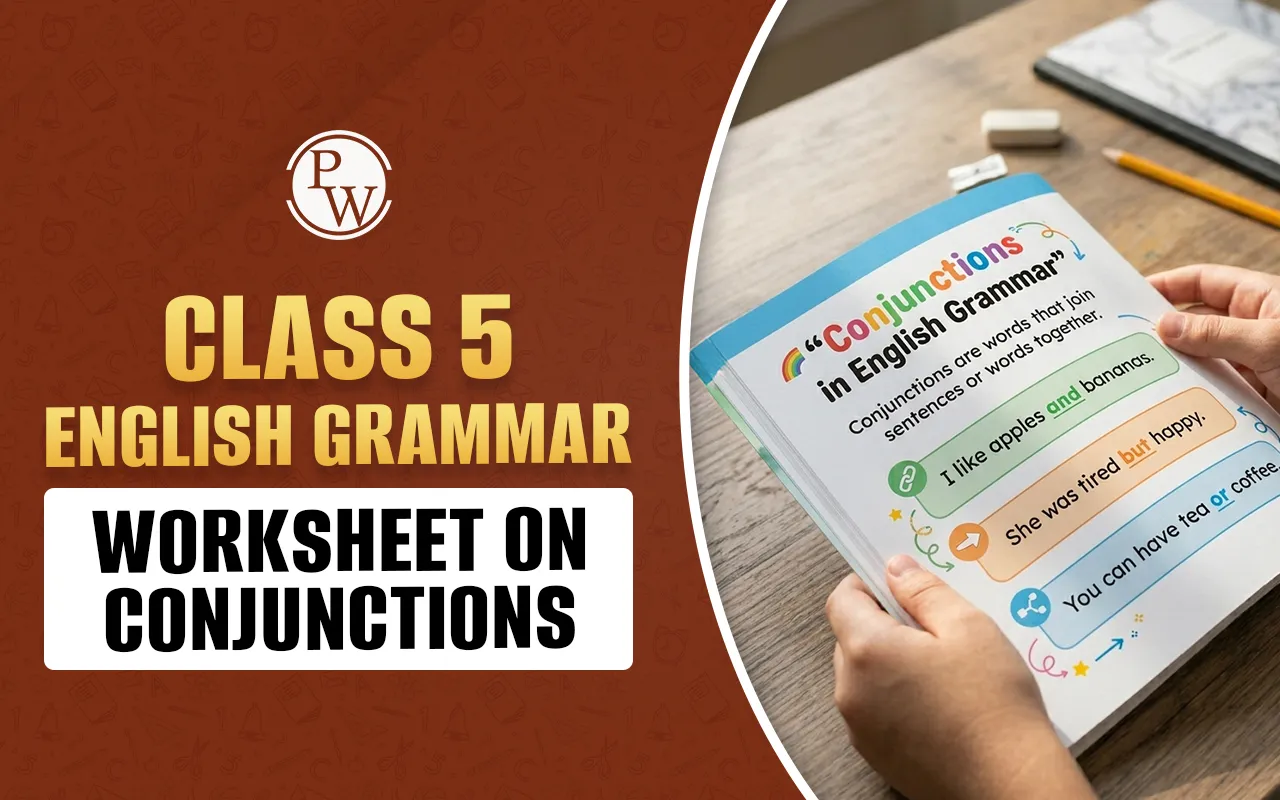
Coordinating Conjunctions: These are the most common. They join two things that are equally important. Just remember the word FANBOYS: For, And, Nor, But, Or, Yet, and So.
-
Subordinating Conjunctions: These are a bit more advanced. They link a main idea to a supporting one. Words like "because," "if," "unless," and "since" fall into this camp.
-
Correlative Conjunctions: These are the "best friends" of grammar—they always come in pairs. Think of "either...or" and "neither...nor."
What’s Inside a Conjunction Worksheet for Class 5 with Answers?
A solid conjunction worksheet for class 5 with answers doesn't just give you a list of words; it gives you different ways to use them. Here is a look at the types of exercises you’ll usually find.
Joining the Dots: Sentence Combination
In this section, the student takes two lonely sentences and brings them together.
-
Sentence 1: It was very cold.
-
Sentence 2: We decided to stay inside.
-
Combined: It was very cold, so we decided to stay inside.
Picking the Best Fit: Fill in the Blanks
This is the heart of any conjunction worksheet for class 5. The student has to look at the logic of the sentence and choose the right connector.
-
Would you like to have chocolate ________ vanilla ice cream? (or)
-
She failed the test ________ she didn't study at all. (because)
-
The man is very old ________ he is quite energetic. (but or yet)
The Proverb Challenge
In some conjunction worksheet for class 5, you might see proverbs that need finishing. It’s a great way to see how conjunctions have been used in our language for centuries. A classic example is: "Make hay ________ the sun shines." (while)
Read More - Direct and Indirect Speech English Worksheet Grade 5
Why Fifth Grade is the Perfect Time for This
By the time a student reaches Class 5, they are expected to write stories, letters, and reports. If they don't know how to use a conjunction worksheet for class 5 effectively, their writing will feel repetitive.
Here is a quick "Cheat Sheet" for usage:
-
And: Use it to add more information.
-
But: Use it to show a contrast or something unexpected.
-
Or: Use it when there is a choice to be made.
-
Because: Use it to give a reason for an action.
-
So: Use it to show the result of something.
-
Although: Use it when something happens despite a problem.
By practicing with a conjunction worksheet for class 5 with answers, students learn the subtle differences between these words. They start to realize that "so" and "because" are actually opposites—one points to the reason, and the other points to the result!
Read More - List of Word Families for Kids with Examples
Extra TIp:
One more thing students learn through a conjunction worksheet for class 5 is how to spot the “signal” in a sentence before choosing a connector. If the second idea gives a reason, they should reach for “because” or “since.” If it shows a result, “so” works better. If it shows a surprise or contrast, “but,” “yet,” or “although” may fit. Many class 5 worksheets also include joining words for time and condition, like “when,” “while,” “after,” “before,” “if,” and “unless,” because these help students write longer, clearer sentences in stories and essays. With regular practice, children start using conjunctions naturally in their own writing instead of forcing short, choppy lines.
Develop Your Child’s English Skills with PW CuriousJr
PW CuriousJr’s online English classes are designed to help young students learn English in a clear and effective way. Small batch classes ensure every child receives individual attention and proper guidance from teachers. Fun and interactive sessions help students improve their reading, writing, speaking, and listening skills with confidence.
The program follows internationally recognised English standards and helps children use English comfortably in everyday communication. Each course is short and well-structured, making learning simple, focused, and stress-free.
Along with live online classes, PW CuriousJr also provides recorded video lessons for revision and extra practice. These videos allow students to revisit lessons anytime and learn at their own pace. Together, live sessions and recorded content offer a complete English learning experience for overall language development.