Blood and Its Components: Types and Functions
 Shivam Singh25 Nov, 2025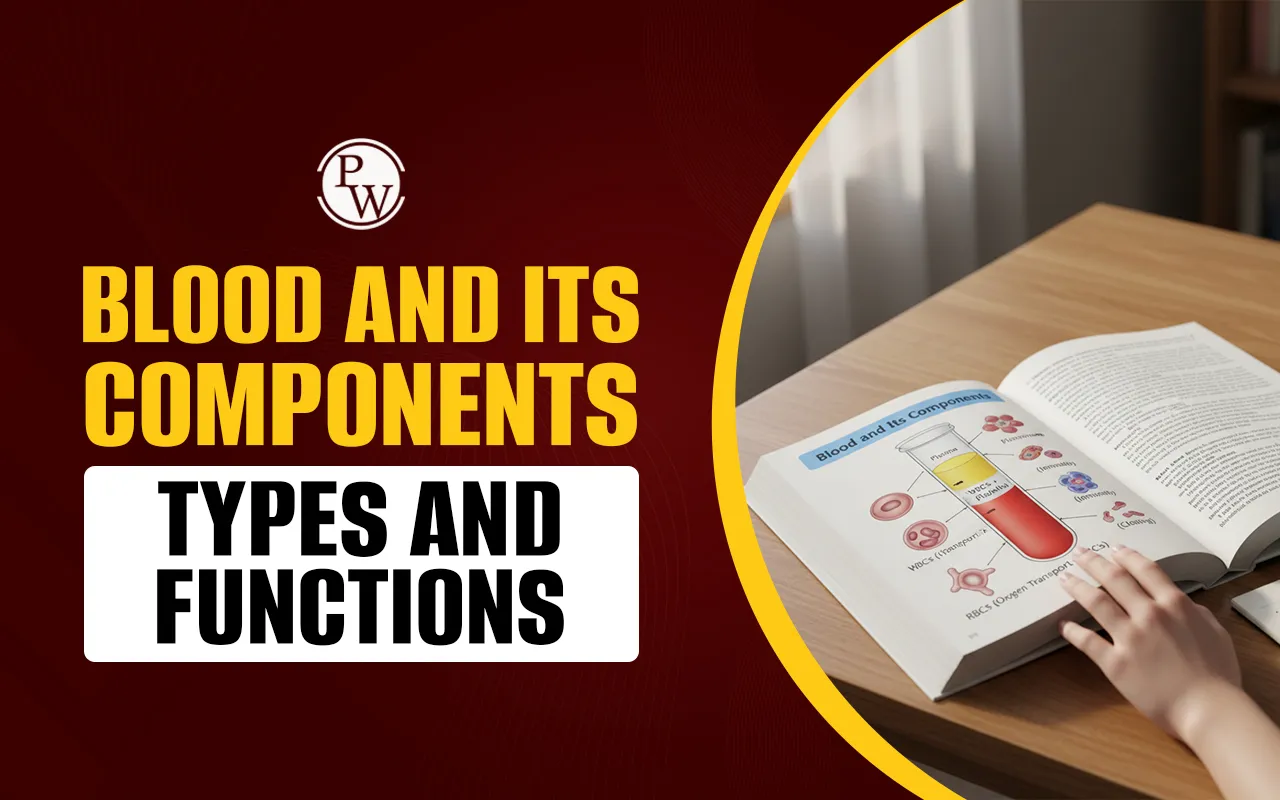
Blood and Its Components
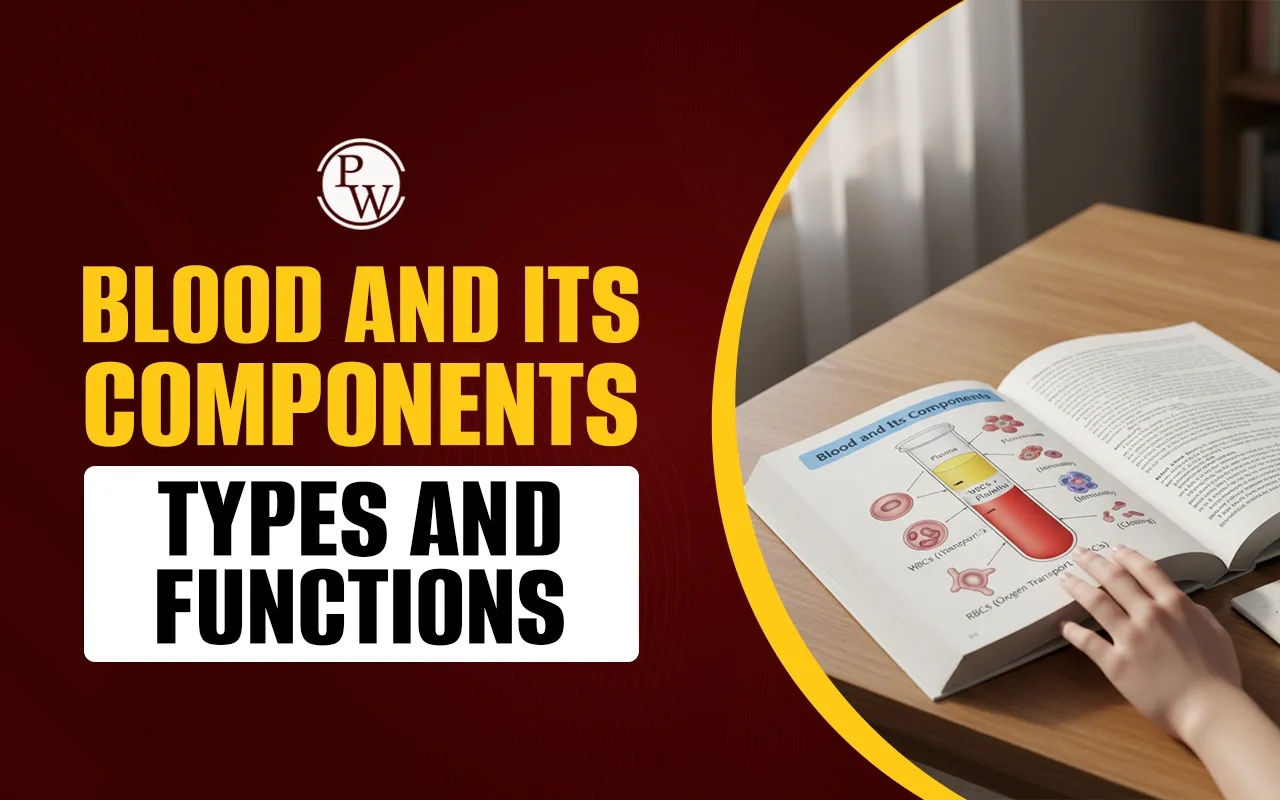
Blood is a red liquid that flows inside our body. It moves through small tubes called blood vessels. Blood and its components help our body stay alive and healthy. Blood helps us fight germs and heal when we get hurt. Four main components of blood are plasma, red blood cells, white blood cells, and platelets. Plasma is the yellow liquid part that carries food, water, and other substances.
Red blood cells carry oxygen to every part of the body. White blood cells fight diseases. Platelets help the blood to clot and stop bleeding when we get a cut. So, blood and its components together help our body work properly. To learn in detail about blood and its components, keep reading.
Read More: Human Digestive System
Four Components of Blood
Blood is made up of four main components that work together to keep our body healthy and strong. Each component of blood has its own function to perform. Let’s learn about the four main components of blood one by one.
1. Plasma
-
Plasma is the liquid part of blood.
-
It is pale yellow in colour and makes up more than half of our blood.
-
Plasma carries water, salts, proteins, vitamins, and other nutrients to all parts of the body.
-
It also helps move waste products to the organs that remove them from the body.
-
Plasma carries all the other components of blood, such as red blood cells, white blood cells, and platelets, and helps them move easily through the blood vessels.

2. Red Blood Cells (RBCs)
-
Red blood cells are the most common type of blood cell.
-
RBC's key job is to carry oxygen from the lungs to all body parts and take carbon dioxide back to the lungs to remove it.
-
These cells have a red colour because of a protein called haemoglobin, which holds oxygen.

3. White Blood Cells (WBCs)
-
White blood cells help our body fight infections.
-
They attack and kill germs like bacteria and viruses that make us sick.
-
White blood cells are fewer in number than red blood cells, but they play a very important role in protecting us from diseases.

4. Platelets
-
Platelets are tiny cell pieces that help stop bleeding when we get a cut or wound.
-
When bleeding starts, platelets come together and form a clot to close the wound.
-
This protects the body from losing too much blood and from germs entering the cut.

Blood Functions
Blood has many important functions in our body. Every drop of blood is important for us, as it helps our body stay alive, healthy, and balanced. So, it's even more important for us to understand the main blood functions.
Blood Transports Oxygen and Food
-
Blood carries oxygen from the lungs to all body parts and takes back carbon dioxide to remove it.
-
It also carries nutrients from the food we eat to our cells, which helps them grow and stay active.
-
Along with this, blood transports hormones from glands to different parts of the body so that all body organs can work together properly.
-
Blood also collects waste materials and takes them to the kidneys and liver, which clean the blood and remove harmful things.
Blood Helps Fight Germs
-
Another important blood function is protection.
-
White blood cells and special proteins in the blood fight harmful germs like bacteria and viruses.
-
When we get a cut, platelets in the blood form clots to stop the bleeding.
-
This prevents too much blood loss and also keeps germs from entering the wound.
Blood Controls Body's Temperature and Pressure
-
Blood functions also include keeping the body balanced.
-
It helps control body temperature by spreading heat all over the body.
-
Blood also keeps the balance of water, salts, and pH levels so that all body parts can work smoothly.
-
It even helps maintain normal blood pressure, which is important for good health.
Read More: Floating and Sinking
Types of Blood
There are different types of blood found in people. The types of blood are divided based on antigens and a protein called Rh factor that are present on red blood cells. The four main types of blood, or groups, are A, B, AB, and O.
Each of these blood groups can be either positive (+) or negative (−) depending on the Rh factor. So, this way, there are eight common types of blood: A+, A−, B+, B−, AB+, AB−, O+, and O−.
1. Type A Blood
-
People with Type A blood have A antigens on their red blood cells.
-
Their plasma contains anti-B antibodies, which fight against Type B blood.
2. Type B Blood
-
People with Type B blood have B antigens on their red blood cells.
-
Their plasma has anti-A antibodies, which fight against Type A blood.
3. Type AB Blood
-
People with Type AB blood have both A and B antigens on their red blood cells.
-
Their plasma does not have anti-A or anti-B antibodies.
-
This type of blood can receive blood from all other types, which is why it is called a universal receiver.
4. Type O Blood
-
People with Type O blood do not have A or B antigens on their red blood cells.
-
Their plasma has both anti-A and anti-B antibodies.
-
Type O blood can be given to anyone, so it is known as a universal donor.
Read More: 5 Sense Organs
Interesting Facts About Blood
Blood is full of amazing facts that tell us how important it is for our body. Let’s look at some interesting facts about blood and learn what makes it so unique.
Blood Carries a Small Part of Our Body Weight
The amount of blood in the human body is about 6–7% of our total body weight.
Blood is Not Too Acidic or Basic
Blood is not too acidic or too basic. It stays a bit alkaline with a pH of about 7.4. This balance helps our body work properly.
Men and Women Have Different Amounts of Blood
On average, women have about half a litre less blood than men. The amount of blood also changes with age, size, and health.
Our Body Makes Millions of Blood Cells Every Second
Our body is always busy making new blood cells. Every second, about 2 million red blood cells are made in the bone marrow. These new cells replace the old ones that die after a few months.
Blood Is Not Always Red in Colour
Not all living things have red blood. Spiders, snails, and lobsters have blue blood because their blood contains a protein called haemocyanin, which has copper instead of iron.
Blood Increases During Pregnancy
A pregnant woman’s body makes around 50% more blood by the 20th week. This extra blood helps the baby grow and stay healthy.
Our Blood Has a Little Gold in It
Interestingly, our blood contains a very small amount of gold, almost 0.2 milligrams, but it’s too tiny to be seen or used.
Mosquitoes Like Type O Blood More
Research shows that mosquitoes are more likely to bite people who have Type O blood.
The Eye’s Cornea Has No Blood Supply
The cornea, the clear front part of our eyes, has no blood supply. It gets oxygen directly from the air instead of from blood.
There Is No Replacement for Blood Yet
Even with modern science, there is no replacement for real blood. This is why blood donation is so important because it saves lives when people need blood after accidents or surgeries.
Also Read: Tips to Keep Kids Engaged in Online Learning Without Losing Focus
Spark Your Child’s Interest in Science With CuriousJr
Do you see your child memorising science topics without really understanding them? Many children focus on just memorising for exams, but this habit stops them from thinking deeply and applying concepts in real life.
That’s where CuriousJr’s Online Science Tuition Classes come in. These classes are made to make science simple, fun, and easy to understand for young learners.
-
The online program follows CBSE, ICSE, and major state board syllabus, so your child stays on track with school lessons.
-
Through live, interactive sessions and a two-teacher model, every child gets personal attention and clear explanations of every topic.
-
You also receive regular PTM reports that help you track your child’s learning progress.
-
Whether your child wants to revise lessons or get ahead of the class, CuriousJr’s online science tuition classes make learning engaging and effective.
So, book a demo class today and see how CuriousJr can help your child build a strong foundation and develop a real love for science.