What Is the Best Age to Start Teaching Kids Mental Maths?
 Jasdeep Singh19 Jan, 2026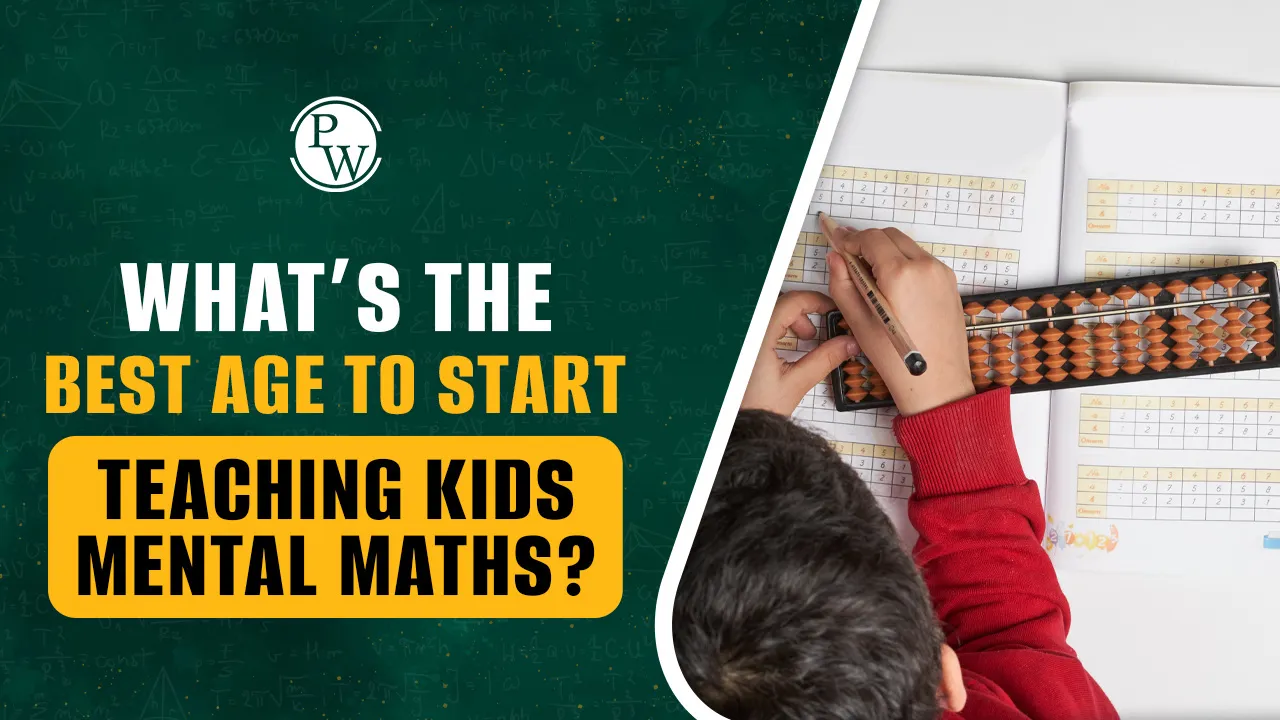
Mental Maths is a technique that helps children solve arithmetic problems quickly without doing calculations on paper or using calculators.
It not only enhances their mathematical aptitude but also improves concentration, memory, and overall thinking abilities.
However, the big question is:
What is the best age to start teaching mental maths to children? Does it vary from child to child?
To get an answer, let’s go through the article to find the best age to introduce mental maths and how you help your child learn this skill.
What Is Mental Maths?
Mental maths is the ability to perform calculations mentally without the aid of tools.
It focuses on understanding mathematical concepts and solving problems using logical reasoning and fast mental processing.
Mental maths covers a variety of calculations related to basic arithmetic operations as well as complex problem-solving.
Children can grasp these foundational concepts at an early age and improve their mathematical proficiency as they grow.
Why Learning Early is Beneficial for Kids?
Children can receive and retain information easily at an early age, especially during their formative years.
Several studies indicate that between 3 years and 5 years of age, children’s brains are highly receptive to learning new skills.
At this stage, kids are naturally curious and it’s easier to make them learn new concepts through play and interactive methods.
This is the ideal time to introduce basic number sense and counting which forms the foundation for learning advanced mental maths.
However, mental maths is not a compulsory skill for kids to learn. They should practice it as a fun, game-like activity that develops their interest in maths and encourages them to think with an open mind.
The Best Age to Start Mental Maths
There is no magic number when it comes to the best age to start teaching mental maths.
However many experts recommend introducing it to children aged between 4 years to 6 years when they are ready to grasp basic mathematical concepts.
Schools often introduce basic maths in this phase, so learning mental maths helps create a stronger base for more advanced learning.
Let’s see how children can handle mental maths at different ages:
1) 4 to 6 Years: Building the Basics
This is the time when kids begin understanding numbers and basic arithmetic.
You can explain simple concepts through fun activities like counting objects, playing number games, or using everyday scenarios.
Mental maths helps children understand patterns, quantities, and number relationships through practical activities that are both enjoyable and educational.
2) 6 to 8 Years: Strengthening Understanding
At the age of 6 or 7 years, children are familiar with the basics and can handle more structured mental maths exercises.
It’s the time to make them learn strategies such as breaking numbers into smaller parts and reorganizing them.
With simple and interesting problems, you can encourage kids to use logical thinking and enhance their mental calculation abilities by finding answers quickly and accurately.
3) 8 to 10 Years: Developing Advanced Skills
Children above 8 years can tackle more complex mental maths problems involving multiplication, division, fractions, and decimals.
They can now learn mental estimation techniques that help them make quick calculations related to real-life scenarios.
Mental maths training at this stage should focus on building confidence and encouraging children to think analytically and solve problems efficiently.
The Role of Abacus and Vedic Maths
Children’s mental math abilities can be enhanced by abacus and Vedic maths.
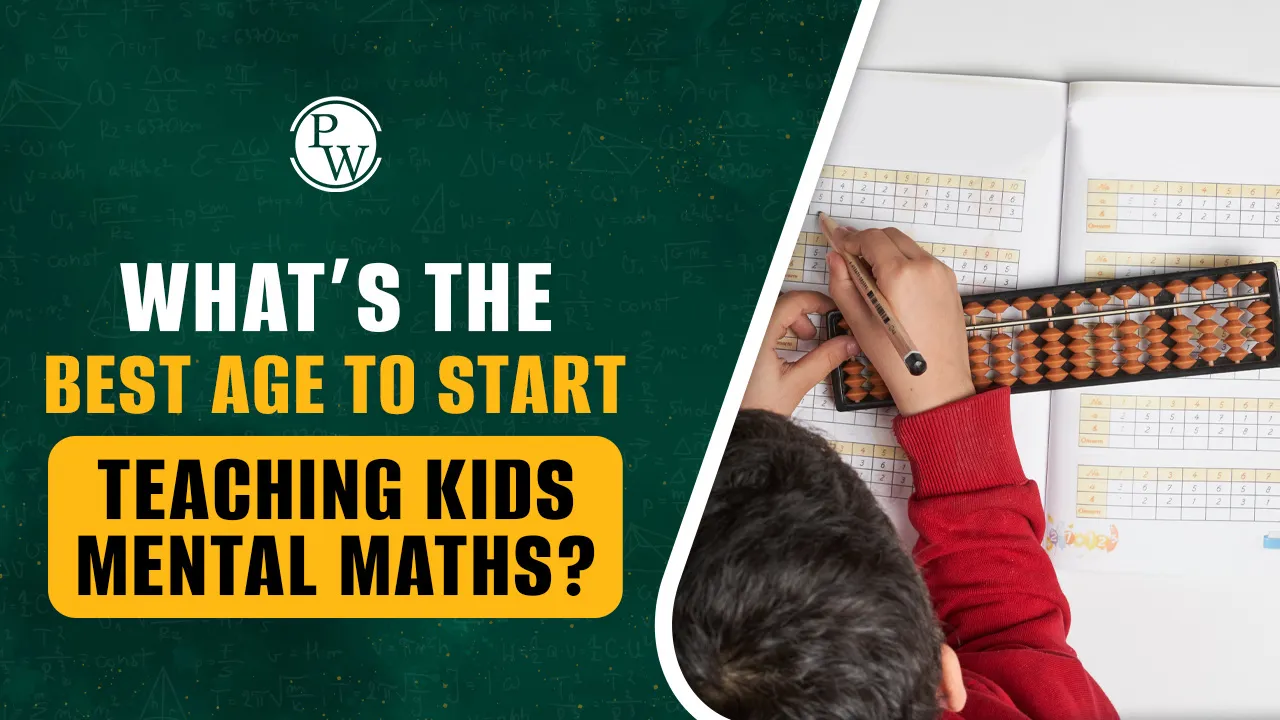
The abacus uses the physical movement of beads along columns to help children visualize numbers and perform mental calculations.
Vedic maths, on the other hand, introduces tricks to enable children to solve complex problems quickly.
Children can start learning the basics of the abacus at the age of 5 to 6 years, and by the age of 7 or 8 years, they can be proficient enough to solve mathematical problems mentally.
Abacus-based learning has been proven to improve focus, memory, and overall cognitive skills, making it an effective approach in early maths education.
The Benefits of Mental Maths
Students can benefit in different ways by acquiring skills in mental maths, which are explained below.
-
Enhanced Problem-Solving Skills: Mental maths teaches children to think logically and solve problems quickly, which becomes useful in everyday life.
-
Improved Concentration and Memory: Mental calculations can improve focus by remembering multiple numbers and steps which also enhances memory and concentration.
-
Boosts Confidence: As children develop proficiencies in mental maths, they become confident to handle various mathematical problems independently.
-
Foundation for Future Learning: Mental maths allows children to clearly understand mathematical concepts which helps them to tackle higher-level maths in school.
How to Make Mental Maths Fun for Kids?
Teaching mental maths should not be a boring or stressful experience. Here are some ways to make the learning enjoyable:
-
Use Everyday Scenarios: Incorporate mental maths into daily routines such as counting, estimating, or measuring various quantities.
-
Play Math Games: Engage your child in maths-based games or puzzles designed to boost mental maths skills.
-
Make It Visual: Use visual aids like flashcards, boards, or the abacus to help children grasp concepts more effectively.
The right time to start teaching mental maths ultimately depends on your child’s readiness and interest.
The learning should be enjoyable, interactive, and aligned with their developmental stage.
The focus is to create interest in mathematics from an early stage that will benefit the children in future days.
Make Math Fun with Curious Junior by PhysicsWallah
Mental math is more than just solving numbers. It builds quick thinking, sharpens problem-solving, and keeps learning exciting.
Curious Junior online classes by PW turn math into an engaging experience with interactive activities that keep kids interested and motivated.
No more dull calculations. Watch your child gain confidence and enjoy working with numbers like never before. Book a free trial class today and see the difference.