Skip Counting by 3 - Chart, Number Line, Examples
 Shivam Singh20 Jan, 2026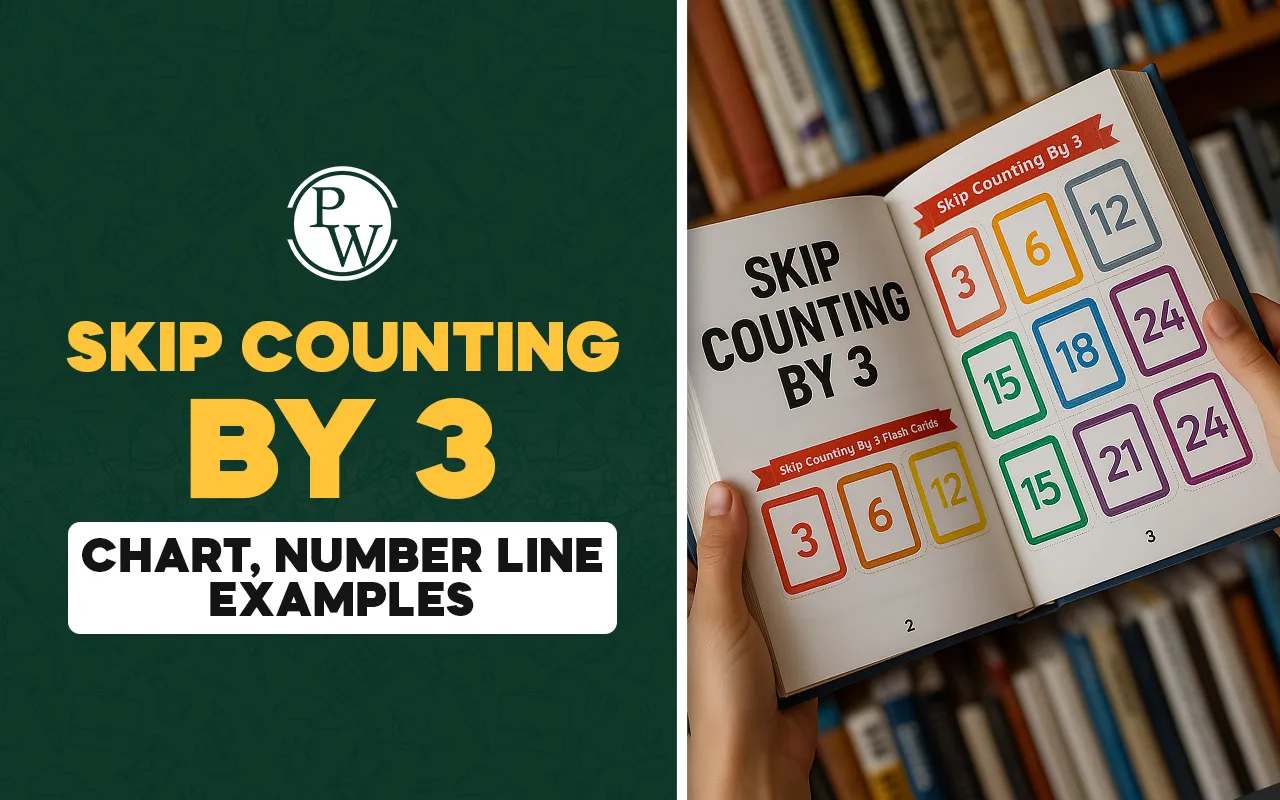
Skip Counting by 3
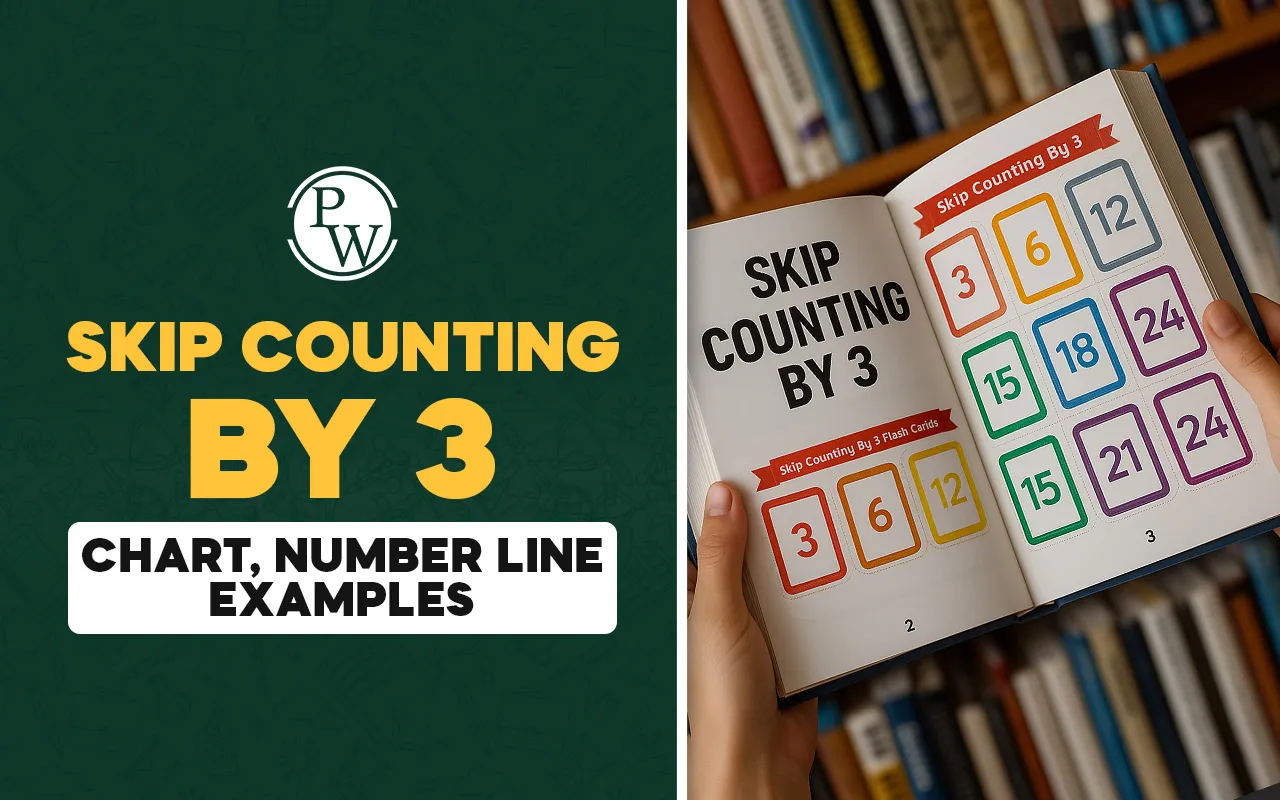
Skip counting by 3 means adding 3 repeatedly to a starting number. For instance, when you start from 0 and keep adding 3, you will have the sequence of 0, 3, 6, 9, 12, etc. This Skip counting method is very effective in teaching children the multiplication tables, developing their number sense, and understanding arithmetic sequences as well.
Skip counting by 3 is a basic math skill that lets children examine numbers, see the patterns, and acquire a solid ground for multiplication and division. Learning how to skip count by 3 also introduces multiples of 3, which are essential for mastering the 3-times table.
What is Skip Counting by 3?
Skip counting by 3 is a counting method where you add 3 to the previous number instead of 1. It is also referred to as the counting in 3s. Forward or backward skip counting can be applied depending on the order of the numbers in the sequence you want to count.
1. Forward Skip Counting by 3
Forward skip counting means starting from a number (usually 0 or 3) and adding 3 repeatedly:
0, 3, 6, 9, 12, 15, 18, 21, …
2. Backward Skip Counting by 3
Backward skip counting means starting from a larger number and subtracting 3 each time:
30, 27, 24, 21, 18, 15, 12, 9, 6, 3, 0
Skip Counting by 3 Chart
A skip counting by 3 chart is a visual representation of numbers obtained by adding 3 repeatedly. Charts make learning fun and help children see patterns clearly.
|
Example Skip Counting by 3 Chart (up to 30) |
|
|
Count by 3s |
Numbers |
|
1st multiple |
3 |
|
2nd multiple |
6 |
|
3rd multiple |
9 |
|
4th multiple |
12 |
|
5th multiple |
15 |
|
6th multiple |
18 |
|
7th multiple |
21 |
|
8th multiple |
24 |
|
9th multiple |
27 |
|
10th multiple |
30 |
Charts can be extended to skip count by 3 up to 100 or beyond. Using a chart regularly helps children remember the multiples of 3 and practice forward and backward skip counting by 3.
Read More: Counting Numbers
Skip Counting by 3 Upto 100
Counting by 3s up to 100 is a useful exercise to practice the multiples of 3. Start at 3 and keep adding 3 until you reach 100.
Sequence for Skip Counting by 3 up to 100: 3, 6, 9, 12, 15, 18, 21, 24, 27, 30, 33, 36, 39, 42, 45, 48, 51, 54, 57, 60, 63, 66, 69, 72, 75, 78, 81, 84, 87, 90, 93, 96, 99
Skip Counting by 3 Number Line
A skip counting by 3 number line is a helpful tool that shows numbers spaced at equal intervals of 3. This method makes it easier to see the sequence and understand repeated addition.
How to Use a Skip Counting by 3 Number Line
-
Draw a number line starting at 0.
-
Mark points at intervals of 3 (0, 3, 6, 9, 12…).
-
Move along the line in jumps of 3 to follow the skip count of 3.
Example of a Skip Counting by 3 Number Line: 0 → 3 → 6 → 9 → 12 → 15 → 18 → 21 → 24 → 27 → 30
Advantages of a Number Line
-
Makes skip counting by 3 visual and easy to follow.
-
Helps children understand that skip counting is just adding 3 repeatedly.
-
Useful for practicing forward and backward skip counting by 3.
-
Improves understanding of addition and arithmetic patterns.
A number line is especially helpful for young learners who benefit from visual and hands-on learning.
Skip Counting by 3 Examples
Using examples helps learners understand how to apply skip counting in math and real-life situations.
Forward Skip Counting by 3
-
Starting at 3: 3, 6, 9, 12, 15
-
Starting at 10: 10, 13, 16, 19, 22
Backward Skip Counting by 3
-
Starting at 30: 30, 27, 24, 21, 18
-
Starting at 50: 50, 47, 44, 41, 38
Real-Life Examples
-
Counting coins in multiples of 3.
-
Grouping objects like pencils, toys, or chairs in sets of 3.
-
Counting days in multiples of 3, such as every third day.
-
Arranging items for games or classroom activities in groups of 3.
These skip counting by 3 examples show how this method is useful for both mathematics and everyday life.
Also Read: Backward Counting
Improve Math Skills and Confidence with PW CuriousJr’s Mental Maths Program
PW CuriousJr’s Mental Maths Classes is designed to help students sharpen calculation skills, increase accuracy, and gain confidence in solving math problems. The program is carefully structured to cover all essential math topics step by step, making learning clear, simple, and effective.
The focus is on mental math techniques, allowing students to solve problems quickly in their minds. Lessons are interactive, engaging, and easy to follow, encouraging regular practice without stress or fear of mistakes.
Students strengthen their understanding of addition, subtraction, multiplication, and division while learning clever tricks and shortcuts to solve problems faster. With consistent practice, learners develop faster thinking, improved school performance, and stronger problem-solving confidence.
PW CuriousJr’s student-friendly and enjoyable approach makes math fun and stress-free. It’s ideal for learners who want to increase their math speed, develop logical thinking, and feel confident in everyday calculations.
Skip Counting by 3 FAQ
How do you skip count by 3?
What does skip count by 3 mean?
What is the way you teach a child to count by 3?
What is the importance of counting by 3?
Is it possible to use skip counting by 3 in real life?