
Organs in the Human Body - A Complete Overview
 Shivam Singh25 Oct, 2025
Organs in the Human Body
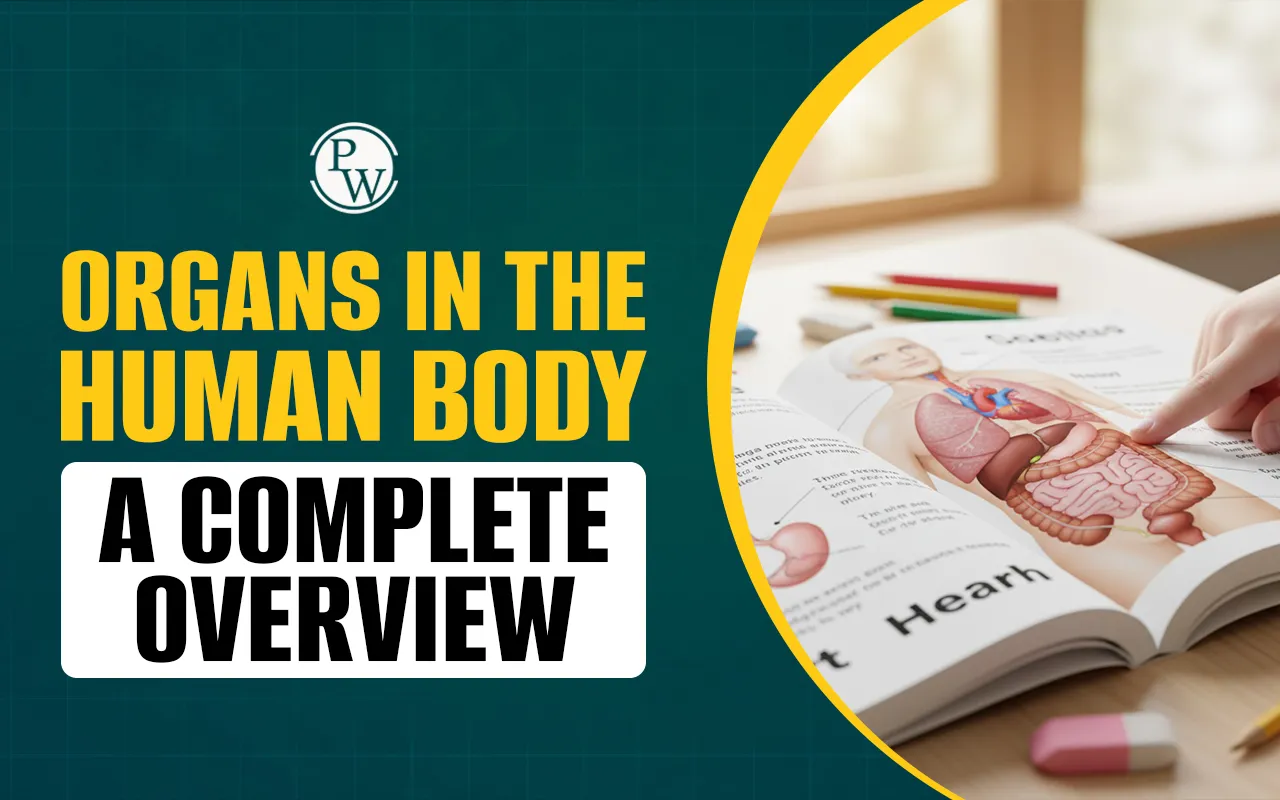
Organ systems are vital organs of the human body. From vital organs such as the heart, brain and lungs to the specific organs found in the male and female body, each organ is important in keeping us healthy. The human body consists of specialized organs that serve vital functions in order to help us breathe, digest food, pump blood and reproduce.
The organs are part of larger systems and each human body part has a special purpose and relies upon others to function correctly. Students should get information about what organs are, the various organs in male and female bodies, vital organs and their functions, etc. below.
Read More: Human Digestive System
What are Organs?
Organs are large units of different types of tissues working together to perform a specific function in the body. For instance, the heart circulates blood, the lungs enable us to breathe, and the liver removes toxic substances.
Organs are larger than tissues or cells and have different shapes and functions. While cells are the fundamental components of life and tissues are composed of similar cells, organs are larger and more complex, as they are composed of different tissues and perform specific functions.
Organs in the Human Body
The human body has over 78 organs, each with a different role. These organs are grouped into organ systems based on what they do. The systems work together to keep the body functioning properly. Some examples of organ systems and their organs include:
|
Major Organ Systems and Their Key Organs |
||
|
System |
Key Organs |
Function |
|
Circulatory |
Heart, Blood vessels |
Pumps and moves blood around the body |
|
Respiratory |
Lungs, Trachea, Diaphragm |
Helps us breathe and exchange oxygen and carbon dioxide |
|
Digestive |
Stomach, Liver, Intestines, Pancreas |
Breaks down food and absorbs nutrients |
|
Nervous |
Brain, Spinal cord, Nerves |
Controls body functions and responses |
|
Muscular |
Muscles, Tendons |
Allows the body to move |
|
Skeletal |
Bones, Joints |
Gives the body structure and protects organs |
|
Excretory |
Kidneys, Bladder |
Removes waste from the body |
|
Endocrine |
Thyroid, Adrenal glands |
Controls hormones and metabolism |
|
Reproductive |
Testes (male), Ovaries (female) |
Helps the body reproduce |
|
Integumentary |
Skin, Hair, Nails |
Protects the body and keeps temperature steady |
|
Immune |
Spleen, Lymph nodes |
Fights off sickness and disease |
These organs in the body work together to make sure everything runs smoothly and healthily.
Read More: 5 Sense Organs
Male Body Organs
The male body contains the general organs that are found in every human, as well as special organs for the male reproductive system. These male body organs play an important role for sexual health and fertility.
General Organs (Common to All Humans)
-
Brain: Controls thoughts, actions of the body.
-
Heart: Pumps blood to the entire body.
-
Lungs: Help us to breathe, exchange gases.
-
Liver: Filters out toxic substances and processes food.
-
Kidneys: Filter blood and excrete waste products.
-
Stomach: Breaks down food to aid in digestion.
-
Intestines: Absorb nutrients in food.
Male Reproductive Organs
-
Testes: Produce sperm and a male hormone called testosterone.
-
Penile area: Used for delivery of sperm for reproduction.
-
Prostate: Produces fluid, which mixes with the sperms.
-
Vas deferens: Carries the sperm from the testes to the urethra.
-
Urethra: Passage for both urine and semen.
These male body organs have a significant role in reproduction, hormonal balance, and the urinary system.
Female Body Organs
Female body organs comprise all the general organs and those which are specific to the female reproductive system. These organs are important for menstruation, pregnancy and childbirth.
General Organs (Common to All Humans)
-
Brain: Controls all activities and thoughts of a body.
-
Heart: Pumps blood throughout the body.
-
Lungs: Provide for breathing and exchange of gases.
-
Liver: Cleanses chemicals and digests food.
-
Kidneys: Clean blood & remove waste products.
-
Stomach and Intestines: Digests food and absorbs nutrients.
Read More: Nervous System
Female Reproductive Organs
-
Ovaries: Produce the eggs and the female hormones estrogen and progesterone
-
Uterus: Where the baby grows in pregnancy.
-
Fallopian tubes: Transport eggs from the ovaries to the uterus.
-
Vagina: The channel of menstrual flow and childbirth.
-
Cervix: The connection between the uterus and the vagina.
These female body organs play an important role in reproduction, hormone balance and overall health.
Vital Organs and Their Functions
Vital organs are the ones that are absolutely necessary for survival. If any of these organs stop working, the body cannot survive. These organs perform essential functions to keep the body alive.
List of Vital Organs
-
Brain: Controls thoughts, movements, and other vital functions.
-
Heart: Pumps blood to supply oxygen and nutrients to the body.
-
Lungs: Help bring oxygen into the body and remove carbon dioxide.
-
Liver: Detoxifies chemicals, produces proteins, and stores nutrients.
-
Kidneys: Clean the blood by filtering out waste and excess water.
-
Skin: Protects internal organs and helps control temperature.
These vital organs and their functions are key to the body’s survival. For example, without the heart pumping blood, oxygen cannot be carried to organs, and without the lungs, the body cannot take in the oxygen it needs.
Also read: Respiration
Make Science Learning Exciting and Fun with Curious Junior Online Classes
Many children struggle with complex science concepts due to a lack of interactive learning that can help clarify doubts and confusion. As a result, they lose curiosity, memorise without understanding, and fall behind in performance.
That's where CuriousJr steps in with Live Online Science for students in classes 3–8. These study sessions focus on building a strong foundation and developing a long-term interest in science.
Key Advantages:
-
Engaging 6-day live sessions with visual aids, real-life examples, and interactive activities
-
Personalised attention to clarify concepts and doubts with dual mentorship
-
Conceptual learning approach with application-focused modules that connect scientific principles with everyday life
-
Regular practice and fun quizzes to improve retention and make learning more engaging
-
Performance assessment and feedback to track progress, and guidance for necessary improvement
CuriousJr online classes makes science subjects fun, exciting, and relatable to students to make the learning more enjoyable. Book a demo today and see how your child develops a love for science with better focus and concentration.