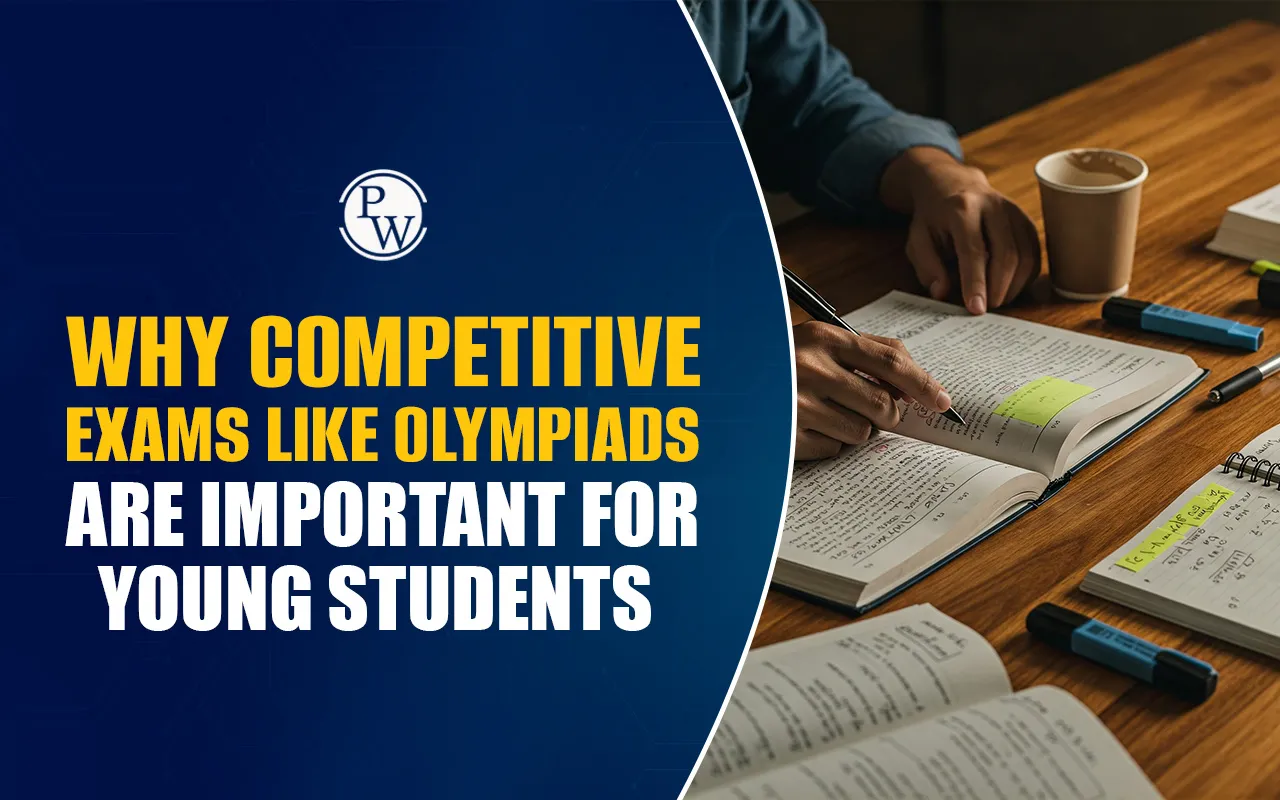
Why Competitive Exams Like Olympiads Are Important for Young Students
 Praveen Singh25 Apr, 2025
Education today is more than just reading books and scoring marks. It is about developing skills, thinking independently, and learning to solve problems creatively. As children grow, exposing them to opportunities that challenge their minds and build their confidence becomes important.
Olympiad exams are one such platform where young students can test their knowledge, explore new subjects, and experience competition healthily. These exams are designed to encourage curiosity and a deeper understanding of concepts beyond regular classroom learning.
In this blog, we will discuss what Olympiad exams are and why it is important for students to participate during their early academic journey
What Are Olympiad Exams?
Olympiad exams are national and international level competitions conducted in various subjects such as Mathematics, Science, English, General Knowledge, and even areas like Computer Science and Social Studies. Organizations like the Science Olympiad Foundation (SOF), Unified Council, and Indian Talent Olympiad conduct these exams for students from Class 1 to Class 12.
Unlike school exams that primarily focus on textbook knowledge, Olympiads test deeper conceptual understanding, application skills, analytical thinking, and reasoning abilities. They often consist of multiple-choice questions (MCQs) and require students to apply concepts rather than memorize facts.
Participation in Olympiads is voluntary, but highly encouraged, because it exposes students to a competitive environment early on, helping them develop essential skills needed for higher studies and future careers.
Best Ways to Prepare for an English Olympiad
Benefits of Olympiad Exams
Here are some of the key benefits of participating in Olympiad exams:
1. Tests Understanding, Not Just Memory
Olympiad exams focus on testing a student's understanding rather than just their ability to memorize facts. Unlike school exams that often rely on recalling textbook answers, Olympiads ask students to apply what they know in different ways. This helps them understand concepts at a deeper level.
When solving Olympiad problems, students need to combine different ideas and think logically. This shift from memorization to real learning makes a big difference in their academic foundation, helping them perform better not only in school but also in future competitive exams.
2. Improves Problem-Solving and Analytical Skills
One of the main goals of Olympiad exams is to improve students' problem-solving and analytical skills. The questions challenge them to observe carefully, think critically, and find smart solutions. Students learn how to compare ideas, spot patterns, and apply reasoning to answer difficult questions.
These skills go beyond textbooks and are important in real-life decision-making too. Regular practice for Olympiads builds sharp thinking abilities, making students faster and more accurate in solving academic as well as day-to-day problems. Over time, this gives them a strong advantage in every area of learning.
Tips to Prepare for Math Olympiads with Mental Maths
3. Boosts Confidence
Participating in Olympiad exams builds a student’s confidence in their own abilities. Preparing for challenging questions and achieving even small successes encourages them to believe in themselves. When students solve difficult problems and receive recognition through certificates, medals, or prizes, their self-esteem grows.
This confidence is reflected not just in academics but also in other activities like public speaking, sports, and leadership roles. Confident students are more willing to take up challenges and less afraid of making mistakes, which is an important attitude for success in both education and life.
4. Helps in Academic Performance
Students who prepare for Olympiad exams often show a clear improvement in their regular school studies. Olympiads sharpen thinking skills and strengthen understanding of subjects like Mathematics, Science, English, and General Knowledge.
Because students practice applying concepts rather than just memorizing them, they can understand classroom lessons faster and more thoroughly.
Olympiad preparation books also encourage higher-order thinking, which makes students better prepared for school tests. Overall, the deep learning that happens through Olympiads helps students achieve higher grades and better academic records throughout their schooling years.
5. Early Practice for Competitive Exams
Olympiad exams give students early experience in handling competitive exams. They become familiar with solving tricky questions within a limited time and dealing with exam formats like multiple-choice questions (MCQs). This early exposure is valuable because bigger exams such as JEE, NEET, UPSC, and many university entrance tests follow similar patterns.
Students who participate in Olympiads learn how to stay calm, manage their time well, and apply strategies while answering. This practice reduces the fear of exams later on and prepares students to handle high-pressure academic challenges confidently.
7 Daily Habits to Improve English Fluency
6. Exposure to Advanced Topics
Olympiad exams introduce students to topics that are not always covered in the regular school syllabus. Students explore advanced concepts in Maths, Science, English, Computers, and other fields. This exposure broadens their academic thinking and opens new areas of interest.
Learning beyond the classroom builds curiosity and encourages students to study more deeply. It also gives them a head start when they move to higher classes or competitive courses. Over time, early exposure to advanced topics helps students develop a love for learning and research.
7. Personal Growth and Critical Thinking
Olympiad exams encourage students to think critically and find solutions in creative ways. The problems asked are often designed to make students think carefully, plan strategies, and choose the best approach. This habit of critical thinking becomes part of their natural learning style.
Students learn how to analyze information, question assumptions, and solve unfamiliar problems. These are important skills not only for academics but also for real-life challenges. Personal growth through Olympiads includes being more thoughtful, making smarter decisions, and becoming more confident in tackling new situations.
Role of Reading in Improving English Vocabulary
8. Opens Opportunities for Scholarships and Recognition
Good performance in Olympiad exams brings students valuable rewards. Many organizations offer scholarships, medals, certificates, and cash prizes to Olympiad toppers.
Achieving success in such exams builds a strong academic profile, which is highly appreciated during college admissions and scholarship applications. Recognized achievements in Olympiads set students apart from others and highlight their dedication and skills.
Apart from financial benefits, students gain public recognition, which motivates them to aim higher. Early awards and achievements also boost a student’s long-term career prospects by showing their commitment to excellence.
9. Builds a Competitive Spirit
Olympiad exams create a healthy sense of competition among students. They learn that competition is not just about winning, but about improving themselves and giving their best effort.
Preparing for and participating in Olympiads teaches students how to work hard, stay focused, and not give up easily. Facing challenges at a young age builds resilience and determination.
Students also learn to accept both success and failure gracefully, which helps them handle future competitions and life challenges with a positive attitude. A strong competitive spirit encourages continuous self-improvement.
Tips to Use Mind Maps for Studying Complex Subjects
10. Connects Students with Like-Minded Peers
Olympiad exams bring together students from different schools, cities, and even countries who share a passion for learning. By participating, students get the chance to meet others with similar interests and abilities.
This builds a network of motivated learners who can support, inspire, and learn from each other. Students can exchange ideas, discuss challenges, and even form study groups.
Meeting like-minded peers boosts motivation and gives students a sense of belonging in a community that values knowledge and hard work. These friendships and connections can last a lifetime.
Tips for Overcoming Exam Stress and Anxiety
Role of Parents and Teachers in Olympiad Preparation
Parents and teachers play a pivotal role in guiding students through their Olympiad journey. Encouraging children to participate, providing access to Olympiad books and resources, scheduling regular practice sessions, and offering emotional support are crucial.
By fostering a positive and motivating environment, parents and teachers can help students not just participate but truly excel in Olympiad exams.
Help your child master Olympiad concepts with CuriousJr. Our live interactive audio-video classes focus on concept clarity, personal attention, and real-time doubt solving for better performance. Enrol today.