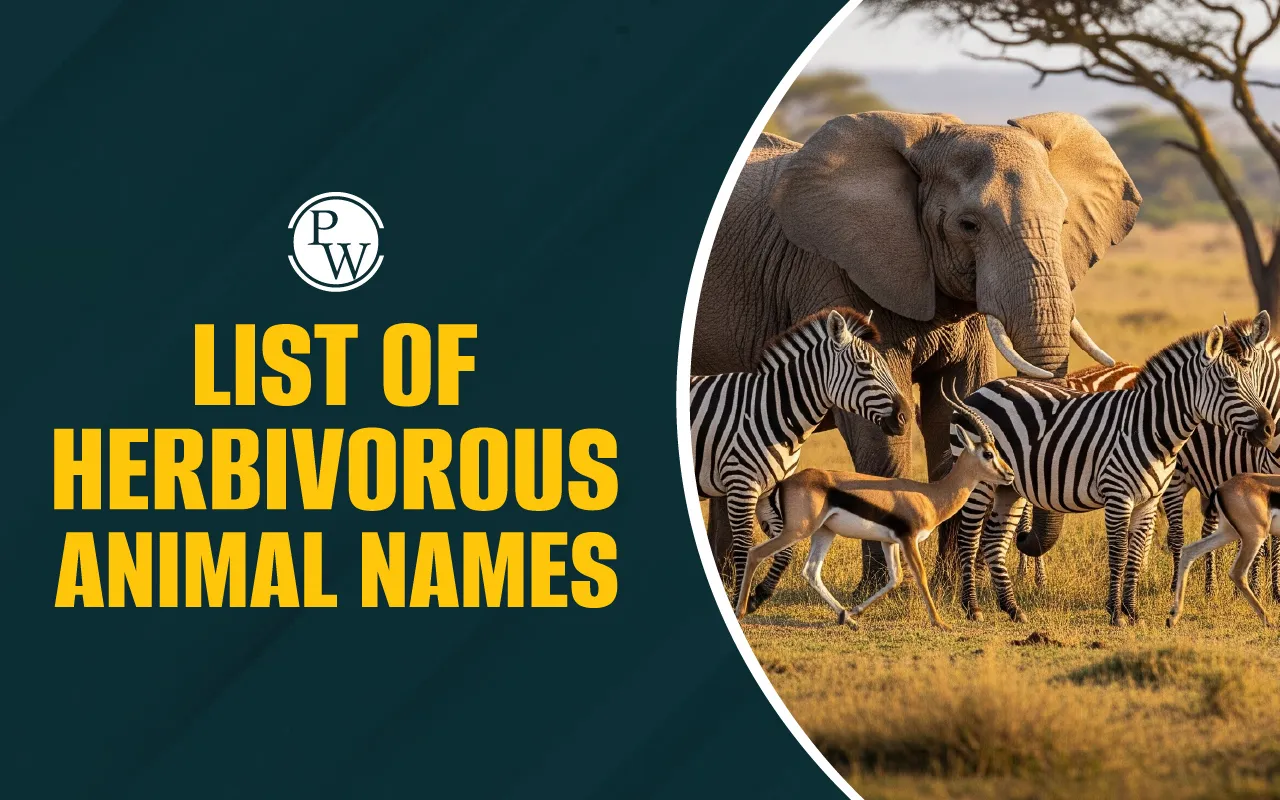
List of Herbivorous Animal Names
 Shivam Singh15 Sept, 2025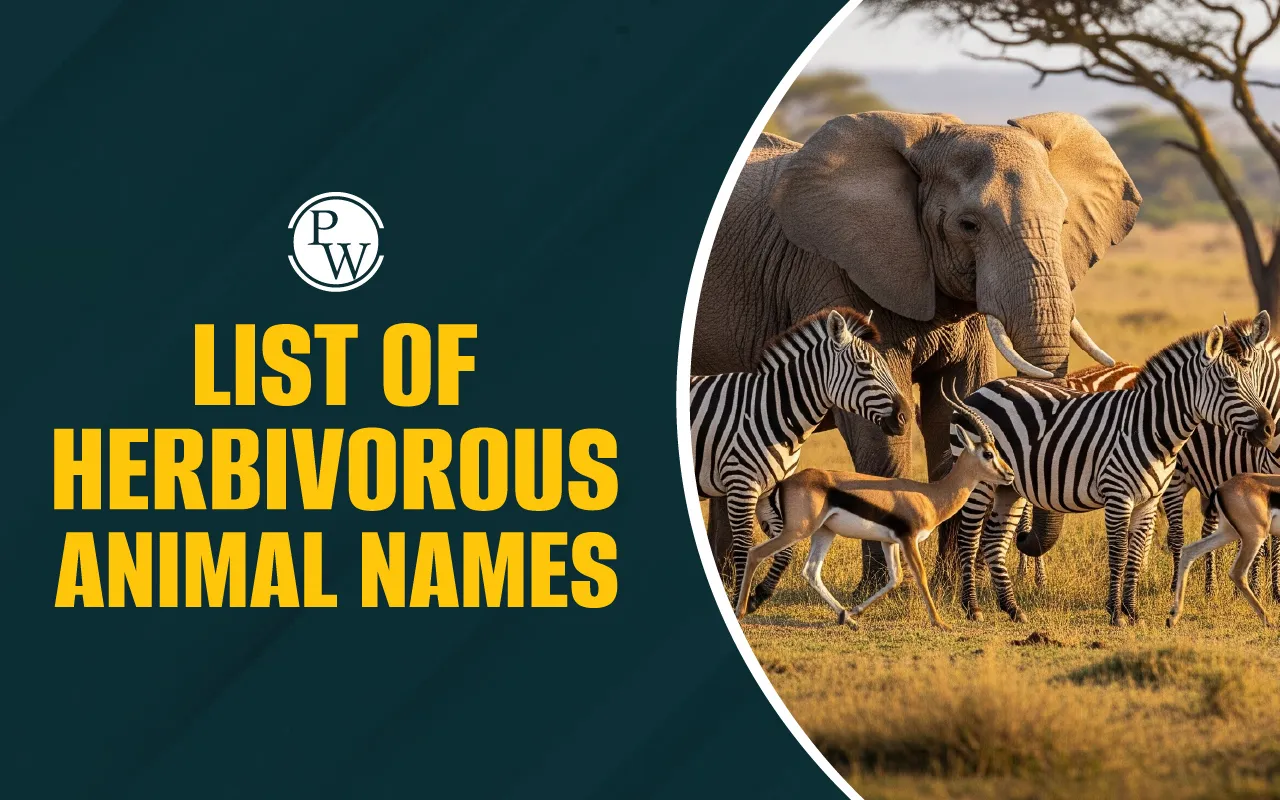
What Are Herbivorous Animals?
Herbivorous animals are animals that consume only plants. The term comes from "herb," meaning plant. These plant eating animals feed on leaves, fruits, flowers, seeds, grass, and other plant materials. They are also known as herbivores. Their digestive systems are uniquely designed to process fibrous plant matter, making them essential in transferring energy from plants to animals higher up in the food chain.
Importance of Herbivorous Animals in Nature
Herbivorous animals are more than just plant-eaters—they are vital players in keeping ecosystems healthy. By feeding on plants and passing energy up the food chain, they help sustain biodiversity and maintain the balance of nature.
Herbivorous animals play a crucial role in maintaining ecological balance:
Controlling plant growth: They prevent overgrowth and maintain plant population balance.
Serving as prey: Many carnivorous animals rely on herbivorous animals for nutrition.
Soil enrichment: Their waste fertilizes the soil, promoting healthy plant growth.
Herbivorous Animals List with Examples
Herbivorous animals can be found on land, in water, or even in the air. Here’s a categorized herbivores animals list to help you understand them better:
Land Herbivores (Terrestrial Plant Eating Animals)
These animals live on land, including grass, leaves, fruits, and vegetables. They constitute a part of many ecosystems, from grasslands to forests and even domestic environments. Here are some examples:
Elephant – It is one of the largest herbivores. It eats tree bark, leaves, and fruits.
Giraffe- They use their long neck to eat leaves from tall trees found in their habitat.
Zebra – It is a wild herbivore that mainly feeds on grass.
Rhinos – Rhinos primarily consume grass, but favor leaves, fruits, and woody plants.
Deer – It eats shrubs, grass, and fruits.
Horse – It feeds mainly on grass and hay.
Cow – It is a domestic herbivore that eats grass and grains.
Goat – It eats grass, leaves, and small shrubs.
Rabbit – It eats leafy greens and vegetables
Sheep – It consumes grass, hay, and pasture plants.
Read More: Degree of Comparison
Aquatic Herbivores (Water-living Plant Eating Animals)
Some herbivores live in aquatic environments such as ponds, lakes, rivers, and oceans. Here is a list of common aquatic herbivorous animals:
Manatees – These are marine animals feeding on seagrass and aquatic plants.
Dugong – They are similar creatures to manatees found in shallow coastal waters.
Green Sea Turtle – They primarily eat sea grasses and algae.
Herbivorous Fish – Some fish species, like surgeonfish, parrotfish, and tilapia, feed on plant matter and algae.
Hippos – Hippos stay in water most of the time, feeding on aquatic plants.
Read More: How to Write 1500 in Words?
Flying Herbivores (Aerial Plant Eating Animals)
Birds and some animals that can fly also rely on plants and plant products as their food source.
Parrots – They eat seeds, nuts, fruits, and flowers.
Macaw – A parrot that consumes fruits, berries, and leaves.
Pigeon – Mostly feeds on grains, seeds, and small fruits.
Hornbill – Eats fruit and occasionally leaves and flowers.
Fruit Bat – These mammals can fly and eat fruits, nectar, and flowers.
Rodents and Small Mammal Herbivores
These creatures are small but constitute a large part of plant-eating animals. Some examples are:
Mouse – They eat seeds, grains, and soft fruits.
Guinea Pig – Eats vegetables, fruits, and grass.
Hamster – Feeds on seeds, nuts, fruits, and grains.
Squirrels – They consume nuts, seeds, and fruits.
Beaver – Feeds on tree bark and aquatic plants.
Mouse – They eat seeds, grains, and soft fruits.
Read More: List of Tricky Words in english
Adaptation in Herbivorous Animals
Herbivores have developed certain adaptation features to consume and digest plant matter efficiently. Some of these features are as follows:
Specialized Teeth: Herbivores typically have big incisors for tearing or cutting plant materials and flat molars for grinding plants.
Jaw Structure: The herbivores' jaw structure allows special chewing movements to process plant material efficiently.
Longer Digestive Tracts: Herbivorous animals usually have longer digestive systems, so they get more time for the breakdown of cellulose.
Symbiotic Relationships: Many herbivores develop symbiotic relationships with bacteria and protozoa that help them digest cellulose easily.
Stomach Structures: Some herbivores, like cows, have a special stomach structure with multiple compartments that help break down plant matter for easy digestion.
Fun Facts About Herbivorous Animals
-
Cows eat plant materials quickly and store them in a stomach compartment, only to take them back to their mouth for re-chewing. This process is called rumination.
-
Giraffes have a very long tongue, about 45 cm in length, that allows them to pluck the most nutritious leaves from great heights.
-
African Elephants can consume up to 300 pounds of vegetation in a single day.
-
Herbivores can be of different types, such as Frugivores (feed on fruits), Folivores (feed on leaves), Granivores (feed on seeds), and Nectivores (feed on nectar).
Also read: Top 10 Longest Words in English
Herbivorous Animals in Human Life
Humans have domesticated many herbivorous animals for various purposes. Let's find out:
-
Cows, goats, and buffaloes are used for milk production.
-
Horses and donkeys are used for transporting goods.
-
Rabbits and guinea pigs are kept as pets in homes.
Herbivorous animals form an essential part of the ecosystem. They have special adaptive features that allow them to consume plant-based diets for nutrition. They also support the balance of nature through their role as primary consumers, transferring energy from plant sources to the higher levels of the food chain.
Let Your Child Learn with Fun with CuriousJr Online Tuition Classes
Are you concerned that your child is losing interest in studies, struggling to grasp basic concepts, or forgetting quickly what they learn? To help address your worries, CuriousJr has developed live online tuition classes to provide students with an engaging learning environment that fosters curiosity, confidence, and motivation.
How CuriousJr’s online tuition helps children:
-
Our interactive daily live classes help students stay attentive and actively involved to understand concepts better.
-
Our expert mentors provide tuition in the four core subjects: Maths, Science, English, and Social Studies to give your child all-round academic support.
-
We focus on concept-based learning through visual tools, real-life examples, and engaging discussions.
-
Students get personal attention, instant doubt-solving during class, and dual mentorship support to stay motivated.
-
Regular assessments and progress tracking with constructive feedback help improve performance and boost confidence.
CuriousJr’s tuition programs make learning more enjoyable with a practical, student-friendly approach. Book a demo class today to help your child develop a genuine interest in science to excel academically.