CBSE Class 7 Plant and Animal Tissues Notes 2026-27 | Free PDF

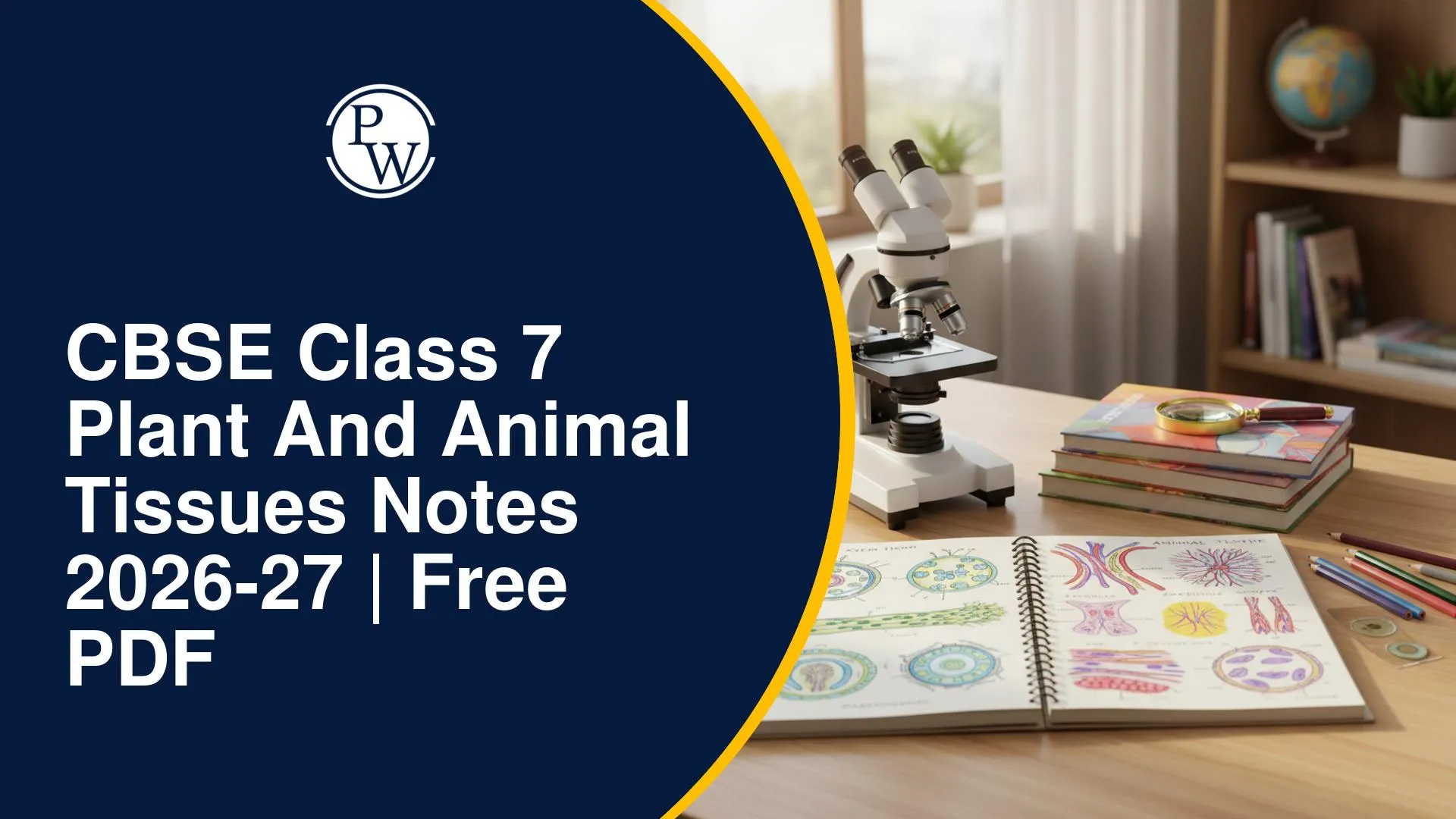
CBSE Class 7 Plant and Animal Tissues Notes 2026-27 help students understand how similar cells work together to perform specific functions. The notes explain the different types of plant and animal tissues through simple definitions, important features and familiar examples.
Have you ever wondered how plants grow taller, how water reaches different parts of a plant, or how muscles help the body move? This chapter answers these questions by explaining the role of different tissues in plants and animals. These notes are designed to strengthen conceptual understanding, support classroom learning and make revision easier before school tests.
Understanding Class 7 Science Plant and Animal Tissues
Plant and Animal Tissues introduces students to tissues and their role in the organisation of multicellular organisms. Cells form tissues, tissues form organs, and organs work together as organ systems. The chapter explains how different tissues are specialised to perform specific functions in plants and animals.
In this chapter, you will learn:
-
The meaning of tissues and their role in multicellular organisms
-
The organisation of cells, tissues, organs and organ systems
-
Types of plant tissues: meristematic and permanent
-
Simple permanent tissues such as parenchyma, collenchyma and sclerenchyma
-
Functions of xylem and phloem
-
Four major types of animal tissues
-
Types and functions of epithelial, connective, muscular and nervous tissues
-
How different tissues support growth, movement, transport and communication
CBSE Class 7 Plant and Animal Tissues Notes PDF
A downloadable PDF can make revision easier before class tests and examinations. Students can revise important definitions, tissue types, functions and examples without going through the complete chapter. The notes cover both plant and animal tissues in a concise format.
The PDF includes:
-
Meaning and organisation of tissues
-
Meristematic and permanent plant tissues
-
Parenchyma, collenchyma and sclerenchyma
-
Xylem and phloem and their functions
-
Four major types of animal tissues
-
Epithelial tissue and its types
-
Connective tissue and its different forms
-
Skeletal, smooth and cardiac muscular tissues
-
Structure and function of nervous tissue
-
Quick revision points for CBSE Class 7 Science
Why Are These Plant and Animal Tissues Notes Useful?
These notes are designed to make the topic easier to understand, organise important concepts clearly and support regular school revision.
|
Feature |
How It Helps You |
|
Simple Definitions |
Understand important terms such as tissue, meristematic tissue and permanent tissue in easy language. |
|
Concept-Based Explanations |
Learn how different tissues perform specific functions in plants and animals. |
|
Quick Revision Points |
Revise important tissue types, functions and examples before tests. |
|
Important Examples |
Understand concepts through examples such as xylem, phloem, bone, blood and different muscle tissues. |
|
Easy-to-Read Format |
Review important plant and animal tissue concepts in an organised way. |
How Do Class 7 Plant and Animal Tissues Notes Make Revision Easier?
Well-organised notes help students revise important tissue types, functions and examples in less time. They also make it easier to understand how tissues contribute to growth, support, transport, movement and communication.
-
Quick Revision: Covers important plant and animal tissue concepts in one place.
-
Better Concept Clarity: Explains the structure and functions of different tissues in simple language.
-
Easy Recall: Organises tissue types and examples for faster revision.
-
Exam Preparation: Helps students revise important definitions, functions and examples before school tests.
-
Concept Understanding: Shows how tissues such as xylem, phloem, muscles and nervous tissue perform specialised functions.
Important Mistakes to Avoid in Plant and Animal Tissues
Students may confuse tissue types, their functions or examples while revising. Keep these points in mind to avoid common mistakes.
1. Confusing Meristematic and Permanent Tissues
-
Meristematic tissues: Consist of actively dividing cells and help plants grow.
-
Permanent tissues: Develop from meristematic tissues and generally do not divide. They perform functions such as protection, support and transport.
2. Mixing Up Xylem and Phloem
-
Xylem: Transports water and dissolved minerals from the roots upward to different parts of the plant.
-
Phloem: Transports food or sugars from the leaves to other parts of the plant.
3. Confusing the Functions of Simple Permanent Tissues
-
Parenchyma: Helps in storing food and water.
-
Collenchyma: Provides flexible support, especially in young stems.
-
Sclerenchyma: Provides rigid support and protection.
4. Mixing Up Tendons and Ligaments
-
Tendons: Connect muscles to bones.
-
Ligaments: Connect bones to bones.
5. Confusing Types of Muscular Tissue
-
Skeletal muscle: Voluntary and attached to bones.
-
Smooth muscle: Involuntary and found in internal organs such as the intestines.
-
Cardiac muscle: Involuntary and found only in the heart.
What Makes Learning Plant and Animal Tissues More Engaging with CuriousJr?
Science becomes easier to understand when students can learn concepts clearly, revise important topics and receive academic support. CuriousJr can support school learning through structured classes, revision and academic assistance.
|
CuriousJr Feature |
Benefit for Students |
|
Daily Live Classes |
Learn Science concepts through teacher-led sessions. |
|
Recorded Classes |
Revise lessons and revisit concepts when needed. |
|
Dual Teacher Model |
Learn concepts with a Master Teacher while receiving academic support. |
|
Homework Support |
Get guidance with school and tuition-related assignments. |
|
Regular Assessments |
Practise concepts and review learning progress through assessments. |
|
Performance Reports & PTMs |
Parents can stay informed about academic progress. |
|
WhatsApp Support |
Receive additional academic communication and support. |
Learning about plant and animal tissues helps students understand how groups of cells perform specialised functions in living organisms. With clear explanations, important examples and regular revision, students can strengthen their Class 7 Science concepts and prepare for the topic more confidently. Join Online Tuition for Kids Now.