
Consecutive Numbers: Meaning, Types, Formulas and Examples
 Shivam Singh28 Sept, 2026

What Are Consecutive Numbers?
Consecutive numbers are numbers that follow one another in order without skipping any number. For ordinary consecutive integers, the difference between two consecutive numbers is 1.
For example:
1, 2, 3, 4, 5
Each number is 1 more than the number before it.
-
1 and 2 are consecutive.
-
5 and 6 are consecutive.
-
10, 11 and 12 are consecutive.
-
20, 21, 22 and 23 are consecutive.
Simple Definition
Consecutive numbers are numbers that come one after another in a sequence without a gap.
For example, 7, 8, 9, 10 are consecutive numbers because no number is skipped.
Consecutive Numbers Meaning in Maths
In elementary mathematics, consecutive numbers usually means numbers that come one after another in counting order.
For example:
12, 13, 14, 15
The difference between each pair is 1:
-
13 − 12 = 1
-
14 − 13 = 1
-
15 − 14 = 1
So, these numbers are consecutive.
On a number line, consecutive integers are next to each other.
What Does “Consecutive” Mean?
Consecutive means following one another in order without interruption or a gap.
For example:
-
3, 4, 5 → consecutive
-
15, 16, 17 → consecutive
-
25, 27, 28 → not consecutive because 26 is missing
Also, check: Successor and Predecessor in Maths: Meaning, Definition, and Examples
Difference Between Two Consecutive Numbers
The difference between two consecutive integers is always 1.
If the first number is n, the next consecutive number is:
n + 1
For example, if:
n = 20
then:
n + 1 = 21
Therefore, 20 and 21 are consecutive numbers.
Important Difference
Ordinary consecutive numbers differ by 1, while consecutive even numbers and consecutive odd numbers differ by 2.
| Type | Example | Difference |
| Consecutive integers | 8, 9, 10 | 1 |
| Consecutive even numbers | 8, 10, 12 | 2 |
| Consecutive odd numbers | 7, 9, 11 | 2 |
Two Consecutive Numbers
Two consecutive numbers are two numbers that come immediately one after another.
If the first number is n, the two consecutive numbers are:
n and n + 1
Examples
-
4 and 5
-
10 and 11
-
25 and 26
-
99 and 100
Example: Find Two Consecutive Numbers Whose Sum Is 101
Let the first number be n.
The next consecutive number is n + 1.
So:
n + (n + 1) = 101
2n + 1 = 101
2n = 100
n = 50
Therefore, the two numbers are:
50 and 51
Check:
50 + 51 = 101
Also, check: Integers: Types, Rules, Properties, and Examples
Three Consecutive Numbers
If the first number is n, three consecutive numbers can be written as:
n, n + 1, n + 2
Example
If n = 15, the three consecutive numbers are:
15, 16, 17
Their sum is:
15 + 16 + 17 = 48
Finding Three Consecutive Numbers
Suppose the sum of three consecutive numbers is 72.
Let the numbers be:
n, n + 1, n + 2
Then:
n + (n + 1) + (n + 2) = 72
3n + 3 = 72
3n = 69
n = 23
Therefore, the numbers are:
23, 24 and 25
Check:
23 + 24 + 25 = 72
Properties of Consecutive Numbers
Consecutive numbers have several useful properties.
1. The Difference Is 1
For ordinary consecutive integers:
n + 1 − n = 1
Example:
18 and 19
19 − 18 = 1
2. Two Consecutive Integers Have HCF 1
The HCF of any two consecutive integers is always 1.
For example:
HCF(29, 30) = 1
Why?
Any common divisor of two numbers also divides their difference. Since:
30 − 29 = 1
their only positive common divisor is 1.
3. The Sum of Two Consecutive Integers Is Odd
One of two consecutive integers is always even and the other is odd.
Therefore, their sum is always odd.
Example:
8 + 9 = 17
20 + 21 = 41
4. Consecutive Even Numbers Differ by 2
Examples:
2, 4, 6, 8
Each number is 2 more than the previous number.
5. Consecutive Odd Numbers Differ by 2
Examples:
1, 3, 5, 7
Each number is 2 more than the previous number.
6. The Sum of Consecutive Odd Numbers Is Divisible by the Number of Terms
For example:
3 + 5 + 7 = 15
There are 3 terms:
15 ÷ 3 = 5
More generally, the sum of any fixed number of consecutive odd numbers is divisible by the number of terms.
Consecutive Numbers from 1 to 100
The numbers from 1 to 100 form a sequence of consecutive natural numbers:
1, 2, 3, 4, 5, ..., 98, 99, 100
No number is skipped.
There are:
100 − 1 + 1 = 100 numbers
So, there are 100 consecutive natural numbers from 1 to 100.
Types of Consecutive Numbers
The most common types discussed in school mathematics are:
-
Consecutive natural numbers
-
Consecutive integers
-
Consecutive even numbers
-
Consecutive odd numbers
1. Consecutive Natural Numbers
Natural numbers are commonly used as counting numbers:
1, 2, 3, 4, 5, ...
Therefore, consecutive natural numbers are numbers that follow each other without a gap.
Example:
5, 6, 7, 8, 9
Another example:
21, 22, 23, 24
2. Consecutive Integers
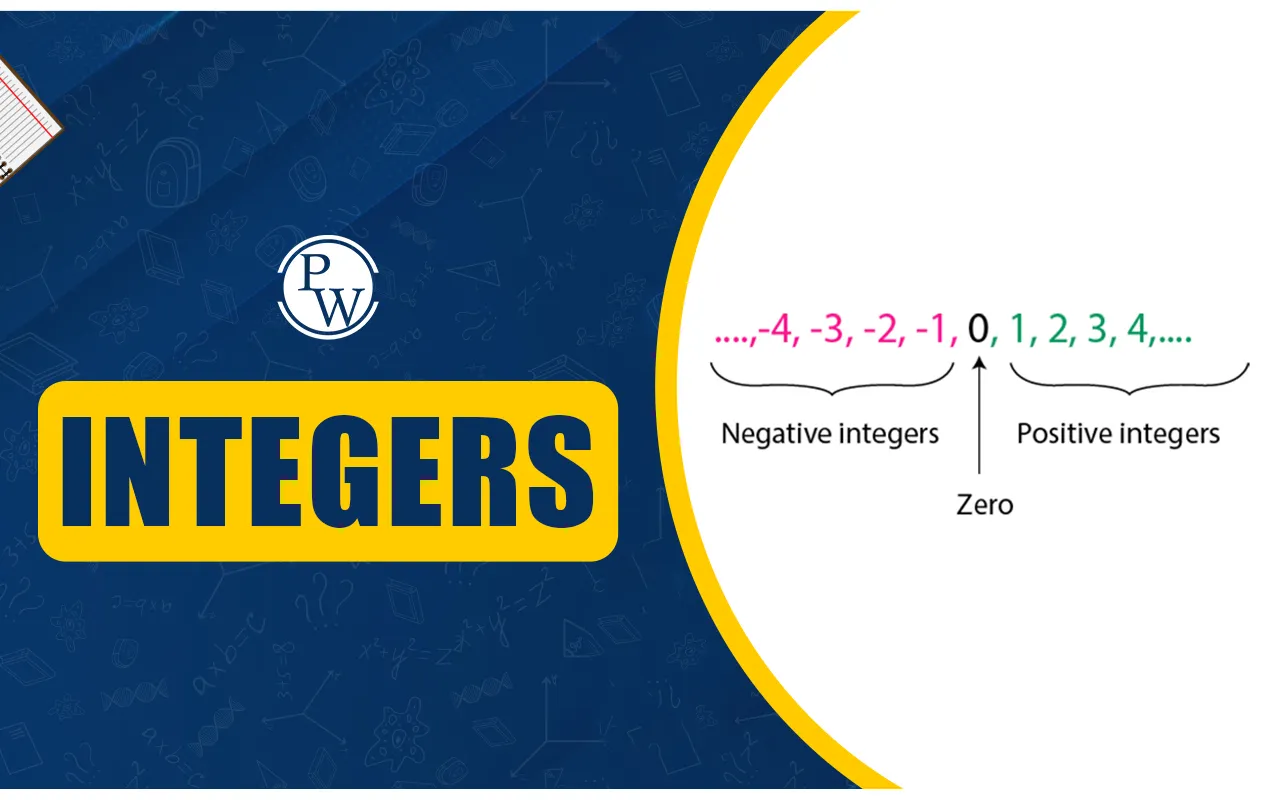
Integers include:
-
negative numbers
-
zero
-
positive numbers
Examples of consecutive integers include:
-3, -2, -1, 0, 1, 2
and:
5, 6, 7, 8
If the first integer is n, consecutive integers can be written as:
n, n + 1, n + 2, n + 3, ...
Can Negative Numbers Be Consecutive?
Yes.
For example:
-5, -4, -3, -2, -1
are consecutive integers because each number is 1 greater than the previous number.
3. Consecutive Even Numbers
Even numbers are integers divisible by 2.
Examples:
2, 4, 6, 8, 10
When even numbers occur consecutively within the sequence of even numbers, the difference between them is 2.
Formula
If the first consecutive even number is 2n, then the next even numbers can be written as:
2n, 2n + 2, 2n + 4, 2n + 6, ...
Example
If n = 5:
2n = 10
So, four consecutive even numbers are:
10, 12, 14, 16
4. Consecutive Odd Numbers
Odd numbers are integers that are not divisible by 2.
Examples:
1, 3, 5, 7, 9
Consecutive odd numbers have a difference of 2.
Formula
If the first consecutive odd number is 2n + 1, then the next odd numbers are:
2n + 1, 2n + 3, 2n + 5, 2n + 7, ...
Example
If n = 4:
2n + 1 = 9
Four consecutive odd numbers are:
9, 11, 13, 15
Consecutive Numbers Formulas
Formulas make it easier to represent consecutive numbers in algebra.
Formula for Consecutive Integers
If the first integer is n, then:
n, n + 1, n + 2, n + 3, ...
For example, if n = 12:
12, 13, 14, 15
Formula for Two Consecutive Integers
Two consecutive integers can be represented as:
n and n + 1
Example:
If n = 30:
30 and 31
Formula for Three Consecutive Integers
Three consecutive integers can be represented as:
n, n + 1, n + 2
Example:
20, 21, 22
Formula for Consecutive Even Numbers
Consecutive even numbers can be written as:
2n, 2n + 2, 2n + 4, 2n + 6, ...
Example:
For n = 3:
6, 8, 10, 12
Formula for Consecutive Odd Numbers
Consecutive odd numbers can be written as:
2n + 1, 2n + 3, 2n + 5, 2n + 7, ...
Example:
For n = 3:
7, 9, 11, 13
Quick Formula Table
| Type | Algebraic form |
| Two consecutive integers | n, n + 1 |
| Three consecutive integers | n, n + 1, n + 2 |
| Four consecutive integers | n, n + 1, n + 2, n + 3 |
| Consecutive even numbers | 2n, 2n + 2, 2n + 4, ... |
| Consecutive odd numbers | 2n + 1, 2n + 3, 2n + 5, ... |
Sum of Consecutive Numbers
The sum of consecutive numbers can be found using different formulas depending on the sequence.
Students can strengthen their maths concepts through interactive learning resources on CuriousJr.
General Sum Formula
If the first term, last term and number of terms are known:
Sum = n/2 × (First term + Last term)
where n is the number of terms.
Example
Find the sum of the integers from 50 to 60.
First term = 50
Last term = 60
Number of terms:
n = 60 − 50 + 1 = 11
Therefore:
Sum = 11/2 × (50 + 60)
= 11/2 × 110
= 605
So, the sum is:
605
Sum of the First n Natural Numbers
For:
1 + 2 + 3 + ... + n
the formula is:
Sum = n(n + 1)/2
Example
Find the sum of the first 15 natural numbers.
Sum = 15(15 + 1)/2
= 15 × 16/2
= 120
Sum of the First n Even Numbers
The first n even numbers are:
2, 4, 6, ..., 2n
Their sum is:
n(n + 1)
Example
Find the sum of the first 5 even numbers.
Numbers:
2 + 4 + 6 + 8 + 10
Using the formula:
5(5 + 1) = 30
So, the sum is:
30
Sum of the First n Odd Numbers
The first n odd numbers are:
1, 3, 5, ..., (2n − 1)
Their sum is:
n²
Example
Find the sum of the first 8 odd numbers.
Sum = 8²
= 64
Check:
1 + 3 + 5 + 7 + 9 + 11 + 13 + 15 = 64
Consecutive Numbers Examples
Example 1: Find Two Consecutive Numbers Whose Sum Is 101
Let the first number be n.
The second number is n + 1.
Therefore:
n + n + 1 = 101
2n + 1 = 101
2n = 100
n = 50
The numbers are:
50 and 51
Example 2: Find Three Consecutive Even Numbers Whose Sum Is 96
Let the numbers be:
2n, 2n + 2, 2n + 4
Their sum is:
2n + 2n + 2 + 2n + 4 = 96
6n + 6 = 96
6n = 90
n = 15
Therefore:
2n = 30
The three numbers are:
30, 32 and 34
Check:
30 + 32 + 34 = 96
Example 3: Find Four Consecutive Odd Numbers Whose Sum Is 200
Let the numbers be:
2n + 1, 2n + 3, 2n + 5, 2n + 7
Their sum is:
8n + 16 = 200
Therefore:
8n = 184
n = 23
The numbers are:
47, 49, 51 and 53
Check:
47 + 49 + 51 + 53 = 200
Example 4: Find Three Consecutive Integers Whose Sum Is 72
Let the numbers be:
n, n + 1, n + 2
Then:
n + n + 1 + n + 2 = 72
3n + 3 = 72
3n = 69
n = 23
Therefore, the numbers are:
23, 24 and 25
Example 5: Find Five Consecutive Integers Starting From 18
Start with:
18
Add 1 each time:
18, 19, 20, 21, 22
These are five consecutive integers.
How to Identify Consecutive Numbers
Use these simple steps:
Step 1: Put the numbers in order
Example:
12, 13, 14, 15
Step 2: Find the difference between adjacent numbers
13 − 12 = 1
14 − 13 = 1
15 − 14 = 1
Step 3: Check whether the difference remains the same
If the difference is 1 throughout, the numbers are consecutive integers.
For even or odd sequences, a difference of 2 may indicate consecutive even or consecutive odd numbers.
Example
4, 5, 6, 7 → consecutive integers
4, 6, 8, 10 → consecutive even numbers
3, 5, 7, 9 → consecutive odd numbers
4, 6, 9, 10 → not a consecutive sequence of integers, even numbers, or odd numbers
Consecutive Numbers vs Consecutive Even and Odd Numbers
| Feature | Consecutive Numbers/Integers | Consecutive Even Numbers | Consecutive Odd Numbers |
| Example | 5, 6, 7 | 4, 6, 8 | 5, 7, 9 |
| Difference | 1 | 2 | 2 |
| Can include zero? | Yes, for integers | Yes | No |
| Basic form | n, n + 1 | 2n, 2n + 2 | 2n + 1, 2n + 3 |
Common Mistakes
Mistake 1: Skipping a number
5, 6, 8 are not consecutive integers because 7 is missing.
Correct example:
5, 6, 7, 8
Mistake 2: Confusing even numbers with ordinary consecutive numbers
2, 4, 6 are consecutive even numbers, but they are not consecutive integers because the difference is 2.
Mistake 3: Using the wrong algebraic form
For consecutive integers:
n, n + 1, n + 2
For consecutive even numbers:
2n, 2n + 2, 2n + 4
For consecutive odd numbers:
2n + 1, 2n + 3, 2n + 5
Mistake 4: Forgetting zero when working with integers
Zero is an integer.
So:
-2, -1, 0, 1, 2
is a sequence of consecutive integers.
Quick Revision
-
Consecutive numbers follow one another without a gap.
-
Consecutive integers have a difference of 1.
-
Two consecutive integers can be written as n and n + 1.
-
Three consecutive integers can be written as n, n + 1, n + 2.
-
Consecutive even numbers have a difference of 2.
-
Consecutive odd numbers have a difference of 2.
-
Consecutive integers can be positive, negative, or include zero.
-
The HCF of two consecutive integers is always 1.
-
The sum of two consecutive integers is always odd.
-
Sum of the first n natural numbers = n(n + 1)/2.
-
Sum of the first n even numbers = n(n + 1).
-
Sum of the first n odd numbers = n².
Consecutive Numbers FAQ
1. What are consecutive numbers in maths?
2. Can consecutive numbers include zero?
3. Why is the HCF of two consecutive numbers always 1?
4. Can negative numbers be consecutive?
5. What is the formula for consecutive numbers?