Commonly Misused Words in English
 Shivam Singh20 Jan, 2026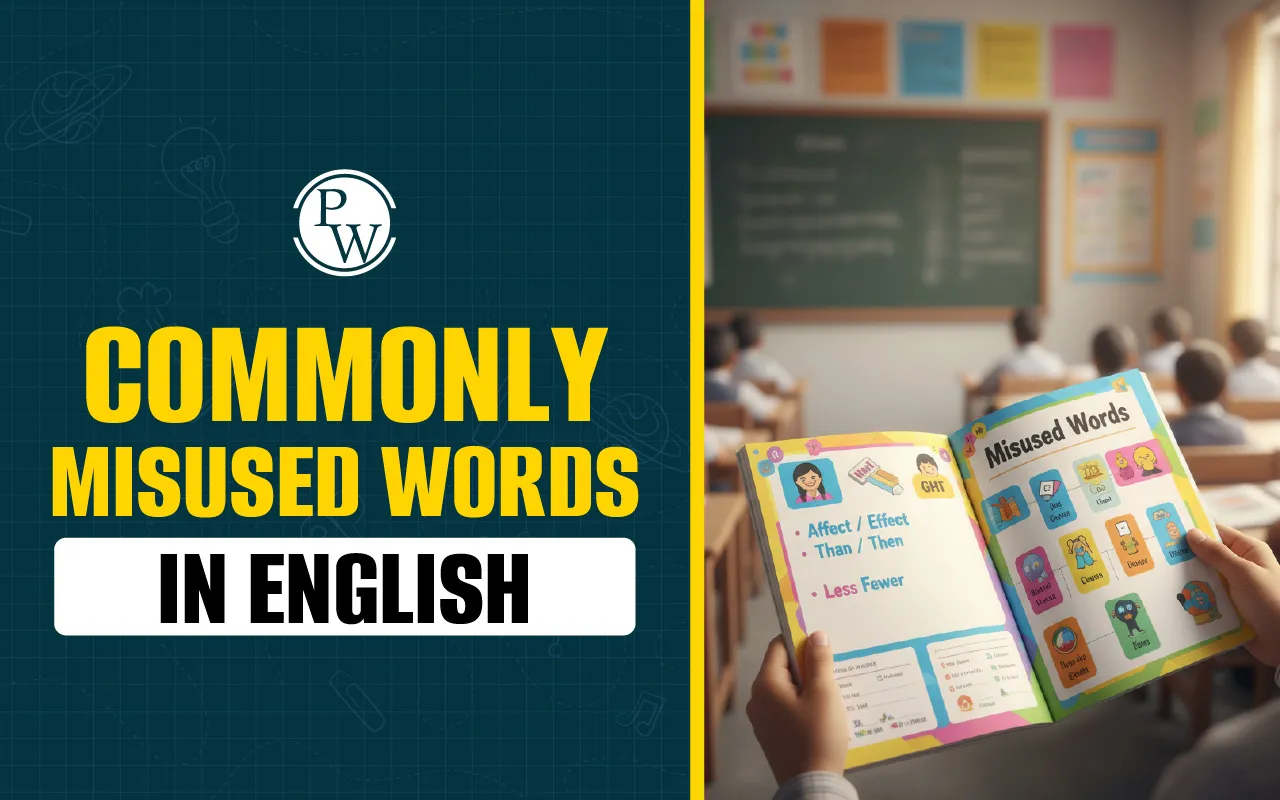
What Are Commonly Misused Words in English?
Commonly misused words in English are words that students often use incorrectly because of similar spelling, similar sound, or confusing meanings. These are also called commonly misused English words, confused words in English, or common confusing words. Students sometimes mix these words because they appear similar, but their meanings are completely different.
Why Students Misuse Words?
Students misuse words for many reasons. Some words sound the same but have different meanings. Some words have more than one meaning, which confuses beginners. When writing quickly, students also forget to check the correct spelling or meaning.
These confusing words in English are common in school assignments, emails, and exam papers. Learning them will help you avoid small errors that can change the meaning of your sentence. When you understand common confusing words, your communication becomes easier and more correct.
Read More: Most Commonly Confused Words in English
The Most Commonly Misused Words in English
Below is a simple list of commonly misused words with easy examples for students. These are the most commonly misused words in English that appear in school exams and daily writing.
1. Accept / Except
Accept means to receive.
Except means to leave out.
Example:
I accept your idea.
Everyone came except John.
2. Advice / Advise
Advice is a noun.
Advise is a verb.
Example:
She gave me helpful advice.
Teachers advise students to read daily.
3. Affect / Effect
Affect means to change something.
Effect is the result.
Example:
Lack of sleep can affect your mood.
The effect of exercise is better health.
4. There / Their / They’re
There refers to a place.
Their shows ownership.
They’re means they are.
Example:
Your books are over there.
Their project is ready.
They’re going to the library.
5. Loose / Lose
Loose means not tight.
Lose means to misplace.
Example:
My shirt is loose.
Do not lose your pencil case.
6. Than / Then
Than is used for comparison.
Then talks about time.
Example:
She is taller than him.
Finish your homework then go to play.
7. Your / You’re
Your shows ownership.
You’re means you are.
Example:
This is your bag.
You’re going to enjoy this book.
Students mix these up often because they sound similar.
8. Its / It’s
Its shows ownership.
It’s means it is.
Example:
The dog wagged its tail.
It’s raining outside.
These are commonly misused words in English because of the apostrophe.
9. Principal / Principle
Principal means the school head or main thing.
Principle means a rule.
Example:
Our principal spoke today.
Honesty is an important principle.
10. Weather / Whether
Weather refers to climate.
Whether means a choice.
Example:
The weather is cold today.
I do not know whether to go or stay.
Read More: Top 10 Longest Words in English
More Common Confusing Words Students Should Learn
Here are additional commonly misused English words with quick meanings.
Affecting / Effecting
Affecting means causing change. Effecting means bringing something into action.
Example: The news was affecting her mood. The teacher is effecting new rules.
Ensure / Insure
Ensure means to make sure. Insure relates to insurance.
Example: Please ensure the form is complete. I need to insure my car.
Stationary / Stationery
Stationary means not moving. Stationery means writing materials.
Example: The bus stayed stationary. She bought new stationery.
Complement / Compliment
Complement means to complete. Compliment means to praise.
Example: The colours complement each other. He gave her a compliment.
Cite / Site / Sight
Cite means to quote. Site means a place. Sight means vision.
Example: Please cite your sources. This is a large site. The sunset was a beautiful sight.
Dessert / Desert
Dessert is a sweet dish. Desert is a dry region.
Example: She loves chocolate dessert. Camels live in the desert.
Quiet / Quite
Quiet means silent. Quite means very or fairly.
Example: The room is quiet. This movie is quite good.
Adapt / Adopt
Adapt means to adjust. Adopt means to accept or take.
Example: Children adapt quickly. They plan to adopt a puppy.
Effectively / Efficiently
Effectively means achieving a result. Efficiently means using time or resources well.
Example: She solved the problem effectively. He works very efficiently.
Moral / Morale
Moral means lesson or right conduct. Morale means confidence or spirit.
Example: The story has a moral. The team's morale was high.
These words appear in every list of commonly misused words because students easily confuse them.
Read More: List of Tricky Words in english
How Parents Can Help Children Avoid Misusing Words?
Even when children know the meaning of a word, they can still use it incorrectly. Parents can play an important role in helping them understand and avoid the most commonly misused words in English. Here are a few practical ways to support them at home.
1. Encourage regular reading
Children learn correct word use by seeing it in stories, books, and simple articles. Reading a little each day helps them understand how commonly misused English words are used in real sentences.
2. Pause and check meaning
When your child writes homework, remind them to pause and think about the word they want to use. A short moment of checking the meaning can prevent many mistakes.
3. Create a small word list together
Make a simple list of commonly misused words and keep it in a notebook or on the study table. Reviewing it often helps children remember the difference between confusing word pairs.
4. Use quick tools like dictionaries
If your child is unsure about a word, encourage them to look it up. A quick check in a dictionary or a trusted online source can clear confusion within seconds.
5. Practise with short examples
Give your child simple sentence exercises. Ask them to use pairs of confused words in English in their own sentences. This builds confidence and improves memory.
These small habits can help children understand common confusing words and use them correctly in school and everyday communication.
Also read: How to Improve English Speaking Skills at Home
Help Your Child Speak English Fluently with CuriousJr
Commonly misused words in English often become lifelong habits when children do not receive the right guidance early. Through our English online classes, we help your child improve grammar, vocabulary, speaking, and writing with a Cambridge-certified learning path created for Indian learners. Our sessions are interactive, simple to follow, and designed to help children communicate confidently in everyday situations.
Your child will experience:
-
Live classes led by trained English teachers
-
Speaking and pronunciation practice in every session
-
Lessons that strengthen grammar, vocabulary, reading, and writing
-
Level-wise progress from Pre A1 Starters to B1 Preliminary
-
Fun activities, stories, and revision tasks that make learning enjoyable
Our online classes for ages 6–14 help children move from basic English use to confident everyday communication. With regular practice and our focused guidance, your child learns to avoid common mistakes and express ideas effectively.
Book a demo session to see how our classes can help your child improve English.