What is a Cell? - Definition, Types and Function
 Shivam Singh19 Jan, 2026
What is a Cell?
A cell is the basic living unit of all organisms. It is the smallest part of a plant, animal, or human body that can perform all the processes necessary for life. Every living thing starts as a single cell. Some organisms, such as bacteria, consist of only one cell (unicellular), while complex organisms like humans have millions of cells (multicellular).
Cells give the body its structure, energy, and support. They carry out essential activities such as growth, repair, and reproduction. The scientific study of cells, their structure, and their functions is known as cell biology.
Read More: Blood and Its Components
Cell Definition
A cell is defined as the smallest structural and functional unit of life.
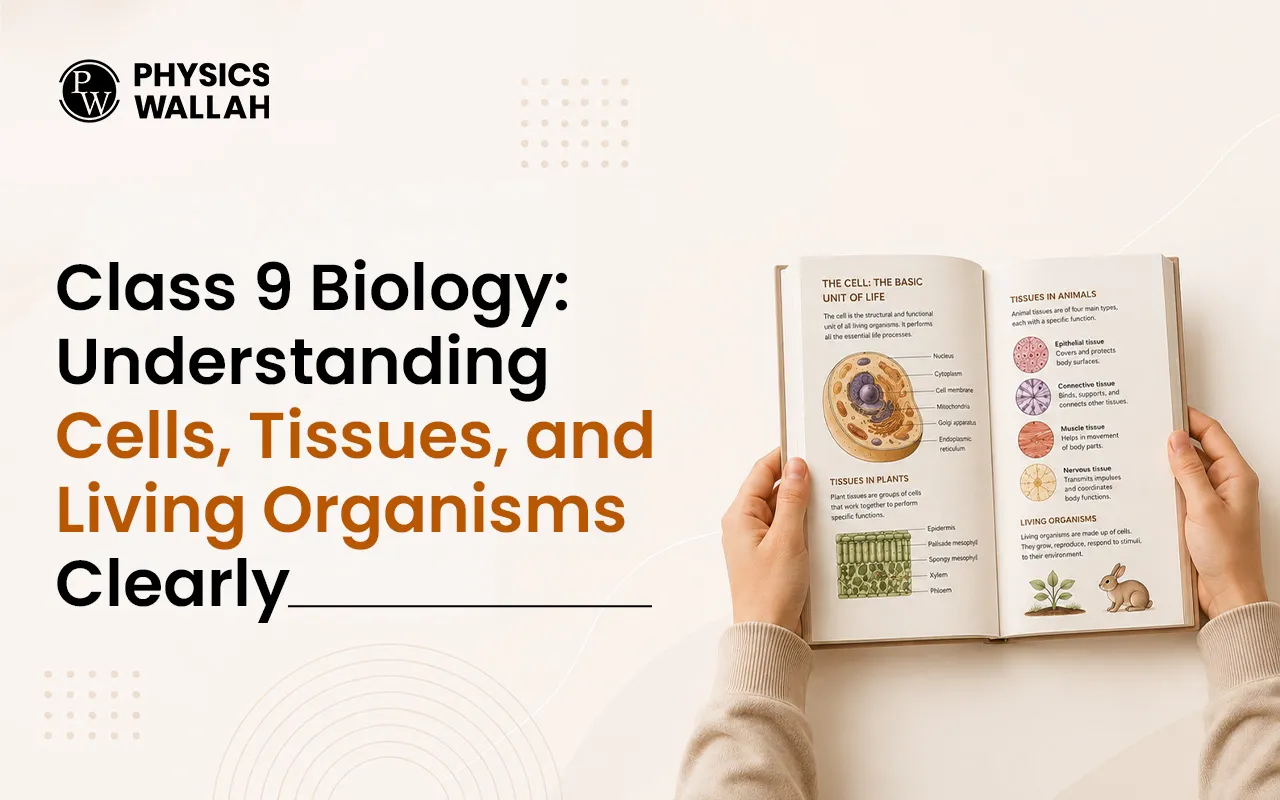
It can perform all the activities needed for an organism to live, grow, and reproduce. Cells are called the building blocks of life because every living thing is made up of them. Each cell has a thin membrane around it and a jelly-like cytoplasm inside, where tiny parts called organelles help the cell carry out different functions.
Discovery of Cells
The discovery of cells was made in 1665 by an English scientist named Robert Hooke. He used a microscope to observe a thin slice of cork and saw small box-like structures, which he called “cells.” Later, scientists like Anton van Leeuwenhoek observed living cells under improved microscopes.
This discovery marked the beginning of modern biology. It helped scientists understand that every living organism is made up of one or more cells, and that cells come from pre-existing cells. The discovery of cells laid the foundation for cell theory, which is one of the most important principles in biology.
Characteristics of Cells
All cells share some common features that help them perform vital functions. The main characteristics of cells include:
-
Cell membrane: A thin covering that separates the cell from its surroundings and controls what enters and leaves the cell.
-
Cytoplasm: A jelly-like substance inside the cell where most activities occur.
-
Nucleus (in most cells): The control centre that holds genetic material (DNA).
-
Organelles: Tiny structures that perform specific jobs, such as energy production and protein synthesis.
Despite their small size, the characteristics of cells allow them to grow, divide, and respond to their environment.
Types of Cells
There are mainly two types of cells: prokaryotic and eukaryotic.
1. Prokaryotic Cells
Prokaryotic cells are simple in structure and do not have a nucleus. Their genetic material floats freely in the cytoplasm. Bacteria are the best example of prokaryotic cells. They are small, single-celled organisms that perform all life processes within one cell.
2. Eukaryotic Cells
Eukaryotic cells are larger and more complex. They have a well-defined nucleus enclosed by a membrane. Plants, animals, fungi, and humans are made up of eukaryotic cells. These cells contain various organelles that perform different functions.
Both types of cells work efficiently in their own way to keep living organisms alive and active.
Read More: Human Digestive System
Cell Structure
The cell structure is made up of different parts, and each part has an important role in helping the cell stay alive and work properly. The main parts of a cell are the cell wall, cell membrane, cytoplasm, nucleus, and organelles.
-
Cell wall: Found only in plant cells. It is a strong outer layer made of cellulose that gives shape, support, and protection to the cell.
-
Cell membrane: A thin covering that surrounds the cell. It controls the movement of substances in and out and keeps all cell parts safely inside.
-
Cytoplasm: A thick, jelly-like fluid inside the cell where all organelles are found. Many chemical reactions that keep the cell alive happen in the cytoplasm.
-
Nucleus: The control centre of the cell. It contains DNA, which carries genetic information and gives instructions for growth and reproduction.
-
Organelles: Tiny structures inside the cell that perform specific tasks. Mitochondria make energy, ribosomes make proteins, the Golgi bodies pack and send materials, vacuoles store food and water, and chloroplasts (in plant cells) help make food through photosynthesis.
Each part of the cell structure works together to help the cell carry out all the functions needed for life.
Read More: 5 Sense Organs
Functions of Cell
The functions of cells are essential for life. Every cell, whether in a single-celled organism or a multicellular body, performs certain key roles. Some major functions of cell include:
-
Energy production: Cells convert nutrients into energy for daily activities.
-
Growth and repair: Cells divide to replace old or damaged ones.
-
Reproduction: Some cells help organisms reproduce and pass genetic information to offspring.
-
Transport: Cells carry oxygen, nutrients, and other materials throughout the body.
-
Communication: Cells send signals to coordinate actions between different parts of the body.
These functions of cells work together to maintain balance, protect the organism, and support life.
Why Are Cells Important?
Without cells, no living being could survive. They are responsible for building the body, protecting against disease, and performing every action needed to stay alive. From the smallest bacterium to the largest animal, life depends on the presence and activity of cells.
Some key reasons why cells are important include:
-
They form the basic structure of all living things.
-
They produce energy from the food we eat.
-
They help the body grow and repair itself.
-
They protect the body from infections and illnesses.
-
They control body activities through communication between cells.
In short, cells are the starting point of all life processes and keep every organism alive and functioning.
Also read: Health and Hygiene
Help Your Child Master Science with PW CuriousJr
Does your child struggle to understand how things work in science or get stuck on tricky experiments and lessons? These small gaps can slow learning and reduce interest over time.
With PW CuriousJr’s Online Science Classes, we make science easy and enjoyable. Our expert teachers use real-life examples, visuals, and interactive activities to build a deep understanding of every concept.
At PW CuriousJr, your child learns at their own pace with personal attention, 24x7 doubt support, and a curriculum designed for clear understanding, not memorisation.
Why Choose Us?
-
Dual Teacher Support for instant doubt-solving
-
Fun experiments, visuals, and quizzes
-
Personalised progress reports and feedback
Turn your child’s confusion into confidence. Book a Demo Session today and let them fall in love with science learning at PW CuriousJr.