
CBSE Class 8 Science Electricity - Magnetic and Heating Effects Notes 2026-27 | Free PDF
 Nikita Aggarwal29 May, 2026
What is Electricity Magnetic and Heating Effects Class 8?
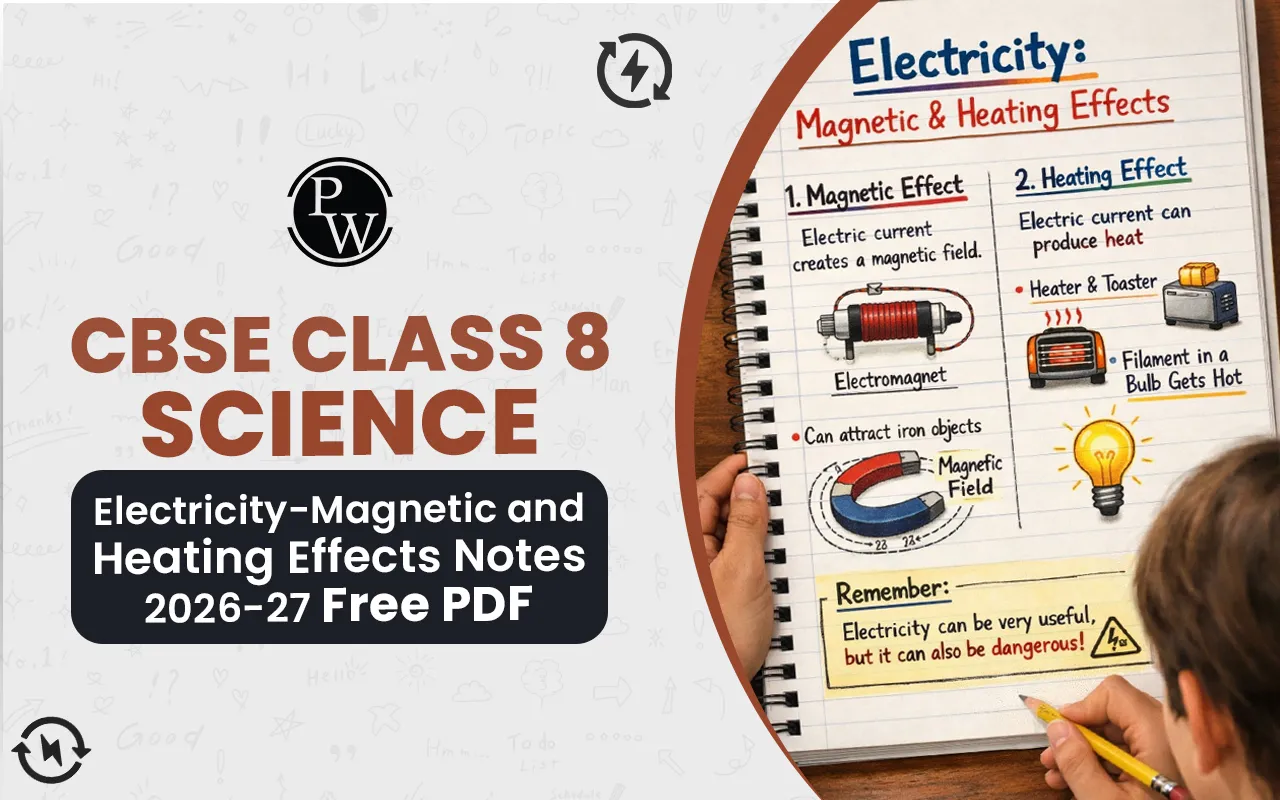
This chapter explains what happens when electric current flows through a conductor. Two major effects are studied here: the magnetic effect, where current produces a magnetic field, and the heating effect, where electrical energy changes into heat. Students also learn about electromagnets, electric cells, batteries, and common uses of these effects in daily life. In simple terms, this chapter helps students understand how electricity is used in many basic devices around them through heat and magnetism.
Download Class 8 Electricity Magnetic and Heating Effects Notes PDF
A PDF is useful because it keeps the important definitions, diagrams, and chapter points together in one place. Digital notes are helpful when students want quick revision before a class test or need to check a concept without reading the full chapter again.
For students who prefer compact revision material before exams, this format is practical and time-saving. It helps them go through important topics like electric current, electromagnets, fuse, heating effect, and batteries in a more organised way. Revision-note pages for this chapter commonly position the PDF as a quick recap tool for exam-focused study.
Benefits of Class 8 Science Electricity Magnetic and Heating Effects Notes
Using **electricity magnetic and heating effects class 8 notes** is not just about reading a summary. Good notes make revision smoother, concepts clearer, and preparation less stressful.
1. Makes a mixed chapter easier to understand
This chapter covers electric current, magnetism, heat, and devices together. Clear notes help students see how these ideas connect instead of treating them like separate pieces.
2. Helps in quick revision
Before a unit test or school exam, students often need short and structured revision material. That is where electricity magnetic and heating effects notes become useful. They bring definitions, uses, and important concepts together in one place.
3. Supports better answer writing
When students revise from neat notes, they are more likely to remember the right terms such as conductor, electromagnet, heating effect, dry cell, and rechargeable battery. This improves answer quality in exams. Important keywords and diagrams are often recommended in revision resources for scoring better.
4. Builds confidence before exams
This chapter may look long, but short and organised notes make it feel lighter. Students can revise without feeling overwhelmed and focus on the parts that matter most.
Key Features of CBSE Class 8 Science Electricity Magnetic and Heating Effects Notes
If you are looking for useful notes, these are the features that make them practical for regular study and exam preparation:
-
Simple explanation of electric current and its effects
-
Easy understanding of magnetic effect and heating effect
-
Clear notes on electromagnets and their uses
-
Important points on dry cells and rechargeable batteries
-
Quick revision support before exams
-
Short explanations of daily-life applications
-
Helpful recall of key definitions and concepts
-
Useful structure for creating your own PDF
These features make the chapter feel more organised and easier to revise in less time.
Revision Tips Using Class 8 Science Electricity Magnetic and Heating Effects Notes
Students can use Class 8 science electricity magnetic and heating effects notes more effectively if they revise the chapter in small sections instead of trying to memorise everything at once.
Start with the basic idea of electric current and then move to the two major effects one by one. First revise the magnetic effect and understand how a current-carrying wire produces a magnetic field. Then revise the heating effect and connect it with appliances that become hot during use. Studying the chapter in this sequence usually makes it easier to remember.
It also helps to keep a short list of keywords ready while revising, such as electromagnet, conductor, heating effect, dry cell, battery, and fuse. If your notes include diagrams or simple labelled explanations, go through them once before writing answers in practice. Many revision resources for this chapter emphasise key definitions, diagrams, and stepwise answers for stronger exam performance.
How to Score Well Using These Class 8 Science Electricity Magnetic and Heating Effects Notes
To score well, students should not use the notes only for reading. They should use them for quick recall, answer framing, and last-minute revision.
Begin by revising the short definitions properly. Then identify the most important chapter areas, such as magnetic effect of electric current, heating effect of current, electromagnets, and applications in daily life. These are repeatedly highlighted as key revision zones across chapter-note sources.
After that, practise writing 2-mark and 3-mark style answers in simple language. If relevant, add neat labels or a short explanation instead of writing very long paragraphs. Notes are most useful when students use them to turn chapter content into quick, exam-ready points rather than passive reading.
How CuriousJr Makes Learning Simple and Enjoyable
Children learn more effectively when they receive proper guidance, patience, and support. CuriousJr provides a positive and stress-free learning environment that feels comfortable for both students and parents.
Many parents trust CuriousJr’s online tuition classes because they help children stay focused, confident, and motivated. The friendly and encouraging atmosphere allows students to ask questions and share their thoughts without hesitation.
The lessons focus on building strong basics while promoting curiosity and creative thinking. With interactive sessions, engaging activities, and consistent practice, students stay interested and gradually develop a love for learning.
Our skilled teachers give personal attention to each student, especially those who need extra help. Children can learn at their own pace, understand concepts clearly, and build confidence step by step. Parents also receive regular updates and feedback to track their child’s progress with ease.





CBSE Class 8 Science Electricity - Magnetic and Heating Effects Notes FAQs
What is covered in class 8 science electricity magnetic and heating effects notes?
Why are electricity magnetic and heating effects notes useful for students?
Is a class 8 electricity magnetic and heating effects notes PDF useful for revision?
What are the most important topics in electricity magnetic and heating effects?
How can electricity magnetic and heating effects class 8 notes help in scoring better?










Get Free Counselling Today
and Clear up all your Doubts
 Live & recorded classes available at easeDashboard for progress trackingLakhs of practice questions

