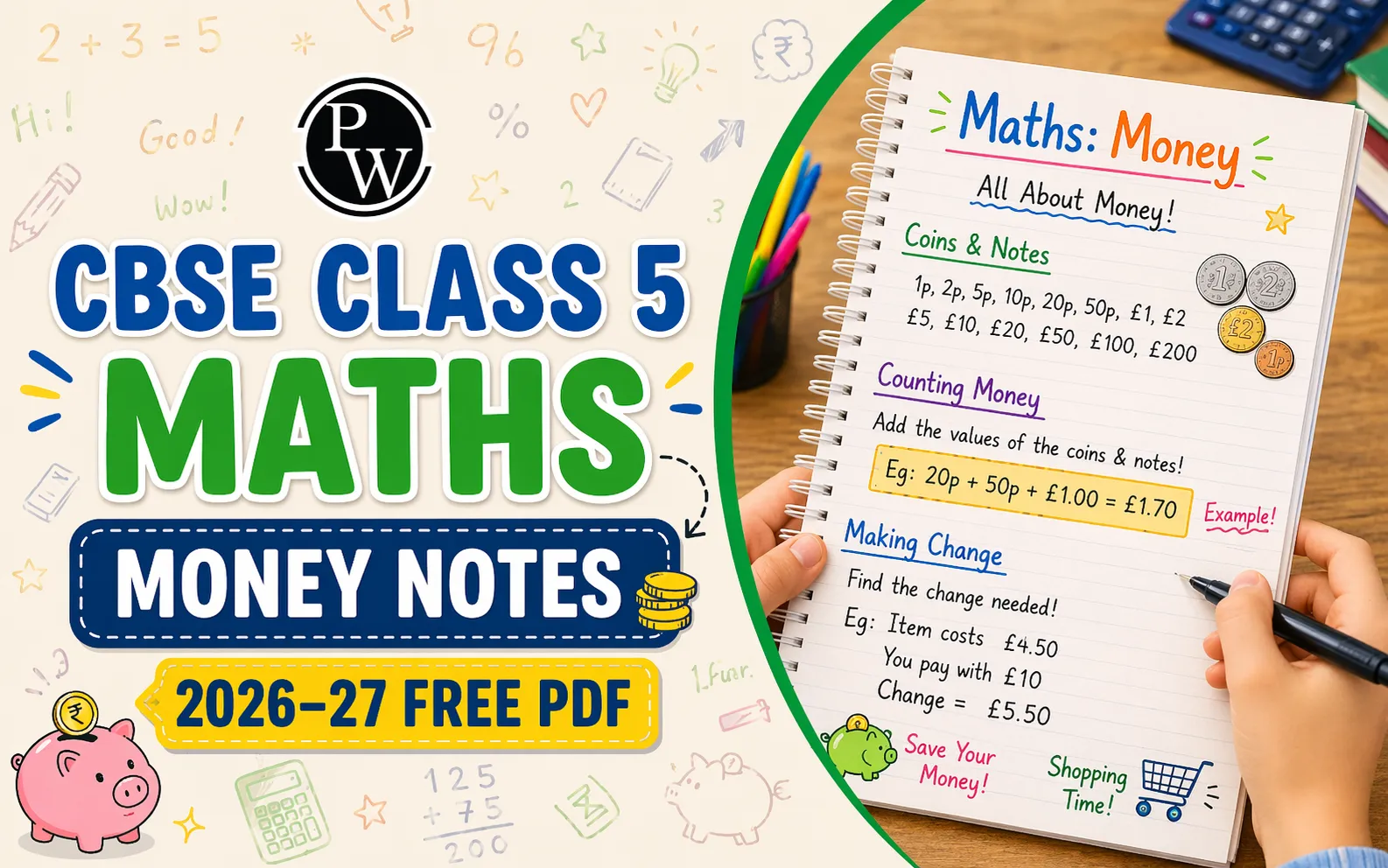
CBSE Class 5 Maths Money Notes 2026-27 | Free PDF
 Nikita Aggarwal17 Apr, 2026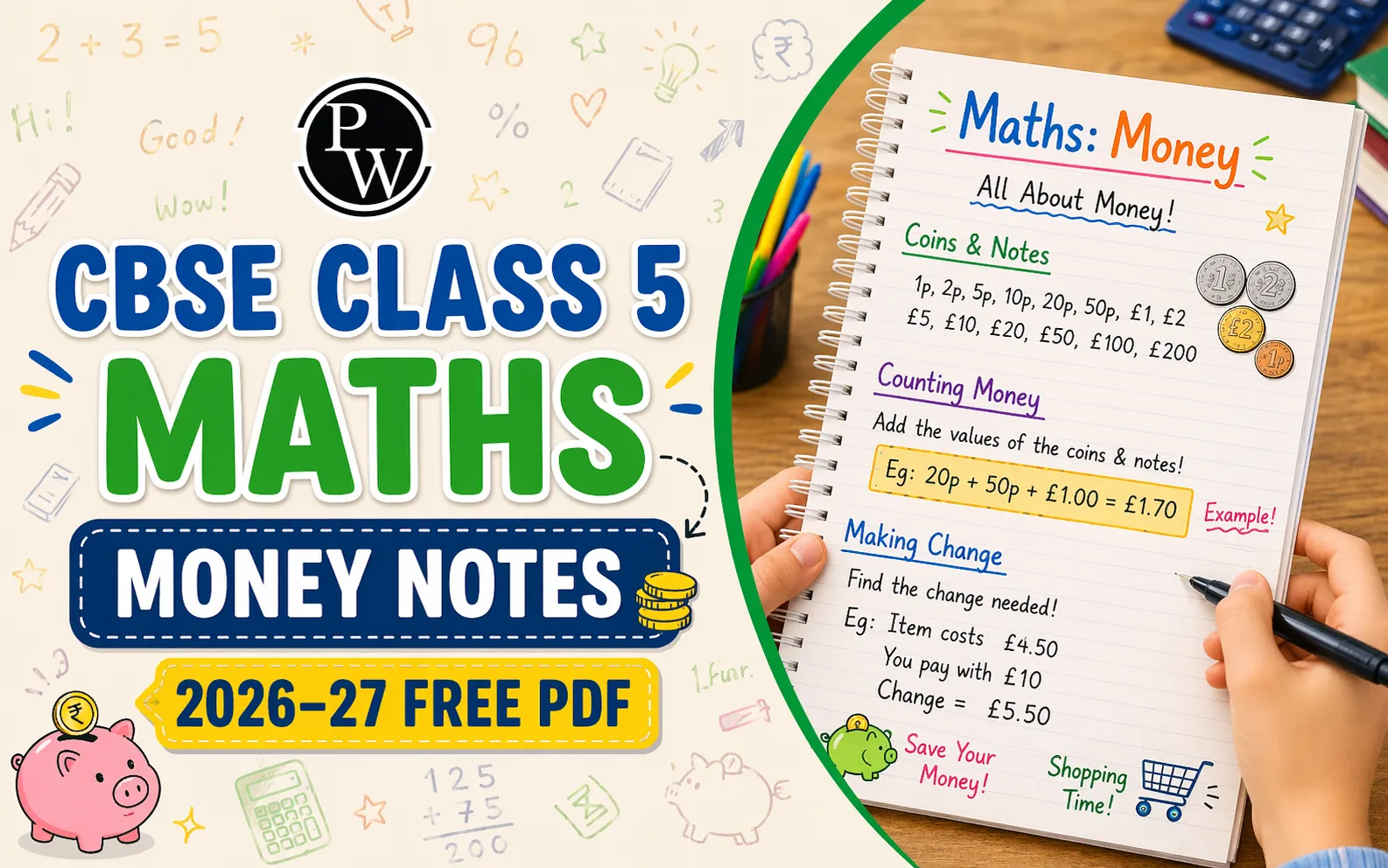
What is Money Class 5?
In Class 5 Maths, money implies learning how to use rupees and paise in maths problems. Students learn how to write and read amounts accurately, how to change paise into rupees, and how to answer simple questions about purchasing, selling, saving, and figuring out the overall cost.
In Money Class 5 notes, students mainly focus on three ideas:
-
Reading and Writing Money: Writing amounts correctly in rupees and paise.
-
Operations on Money: Solving addition, subtraction, multiplication, and division questions.
-
Word Problems from Daily Life: Using money concepts in situations like shopping, bills, savings, and change.
Download Class 5 Maths Money Notes PDF
A PDF is useful because it helps students keep all the important definitions, conversions, and examples in one place. Digital notes are easy to review when you are revising before a class test or trying to understand a homework question.
For students who prefer quick revision before exams, this format is practical and time-saving. It lets them go over money conversion rules, solved examples, and common question types without flipping through different notebooks.
How to Use Class 5 Maths Money Notes Effectively
To get the best results from Money notes, students should use them in a simple and regular way. Start by learning how rupees and paise are related, then move to conversion and basic operations. Once the concept is clear, practise short sums and everyday word problems based on shopping and spending.
Students can also use a PDF for quick revision before tests. Reading the notes again and again helps improve clarity, reduce careless mistakes, and make money calculations feel more natural over time.
Benefits of Class 5 Maths Money Notes for Students
Using **class 5 money notes for students** is not just about reading theory. Good notes make learning more focused, more organised, and much easier to revise.
1. Makes everyday Maths easier to understand
The money chapter is based on situations children see around them, but the sums can still become confusing. Clear notes explain the topic in a simple way so students can connect classroom learning with daily life.
2. Helps in quick revision
Before a unit test or final exam, students often need short and structured revision material. That is where Money notes become useful. They bring conversion rules, examples, and common question types together in one place.
3. Improves accuracy in calculations
Many students make mistakes while aligning rupees and paise or placing the decimal correctly. Well-arranged notes help them revise carefully and solve questions with better accuracy.
4. Builds confidence in word problems
Money questions often appear in story form. Strong basics in Money notes help students understand what the question is asking and choose the correct method more easily.
Key Features of Class 5 Maths Money Notes
If you are looking for useful Money notes, these are the features that make them practical for regular study and exam preparation:
-
Simple explanation of rupees and paise
-
Easy understanding of conversion between rupees and paise
-
Clear rules for addition and subtraction of money
-
Basic practice for multiplication and division of money
-
Everyday examples based on shopping and bills
-
Quick revision support before exams
-
Easy format for solving word problems
-
Helpful structure for creating your own PDF
These features make the topic feel less confusing and more organised, which is especially helpful for students revising on their own.
What Is the Right Time to Use Class 5 Maths Money Notes?
Class 5 Money notes are most useful when students want quick and clear revision without going through long explanations again. These notes work best at the right moments during study, especially when the chapter has already been taught once and students need support in understanding or practising it better.
1. Before a class test
These notes are helpful before a test because they bring together the main concepts, conversion rules, and question types in one place. Students can revise faster and focus on the parts that need more attention.
2. While doing homework
Money notes can help a student remember how to do maths problems based on rupees, paise or words if they get stuck. This will let them keep going with more confidence.
3. During exam revision
At the time of final revision, students often do not want to read full chapters again. That's where the Class 5 maths money notes PDF comes in handy because it helps you review quickly and in an ordered way.
4. When practising word problems
Money-based word problems can sometimes feel tricky because students must decide which operation to use. **Class 5 money notes for students** help them revise the logic and solve such questions more carefully.
5. When concepts feel confusing
If ideas like conversion, decimal placement, or writing money values correctly seem difficult, these notes can be used to clear up the basics in a simple way.
How CuriousJr Makes Learning Simple and Enjoyable
Children learn better when they receive the right guidance, patience, and encouragement. CuriousJr creates a positive and stress-free environment where both students and parents feel comfortable and supported.
Many parents choose CuriousJr’s online tuition classes because they help children stay focused, confident, and motivated. The warm and friendly atmosphere encourages students to ask questions and express their ideas freely.
The lessons are designed to build strong fundamentals while encouraging curiosity and creative thinking. Through interactive sessions, fun activities, and regular practice, students remain engaged and gradually develop an interest in learning.
Our experienced teachers provide individual attention to every student, especially those who need extra support. Children can learn at their own pace, understand concepts clearly, and grow in confidence step by step. Parents also receive regular updates and feedback to easily monitor their child’s progress.