

NCERT Solutions for Class 2 English Mridang Chapter 4 – Seeing Without Seeing
 Nivedita Dar30 Sept, 2026
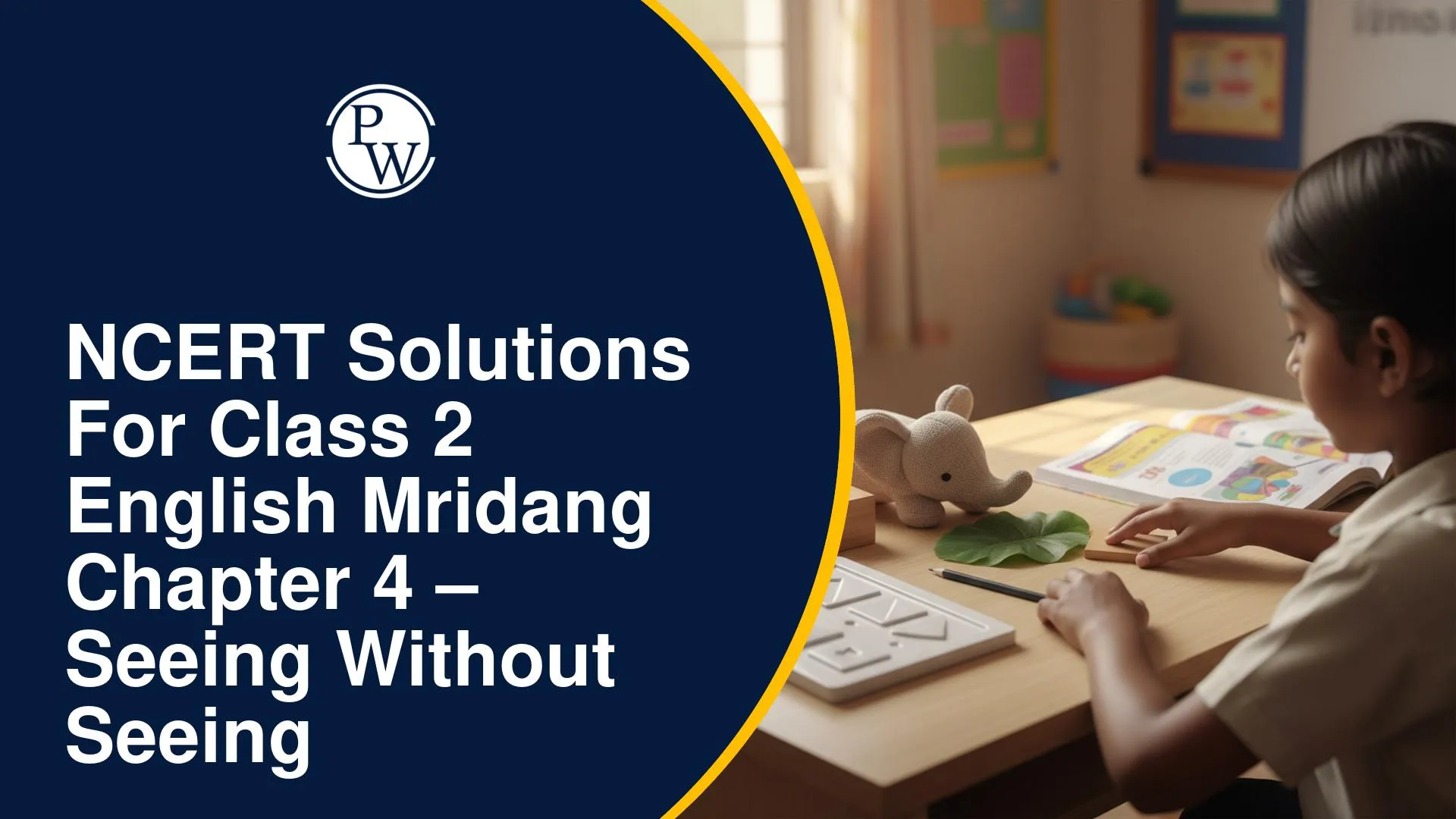
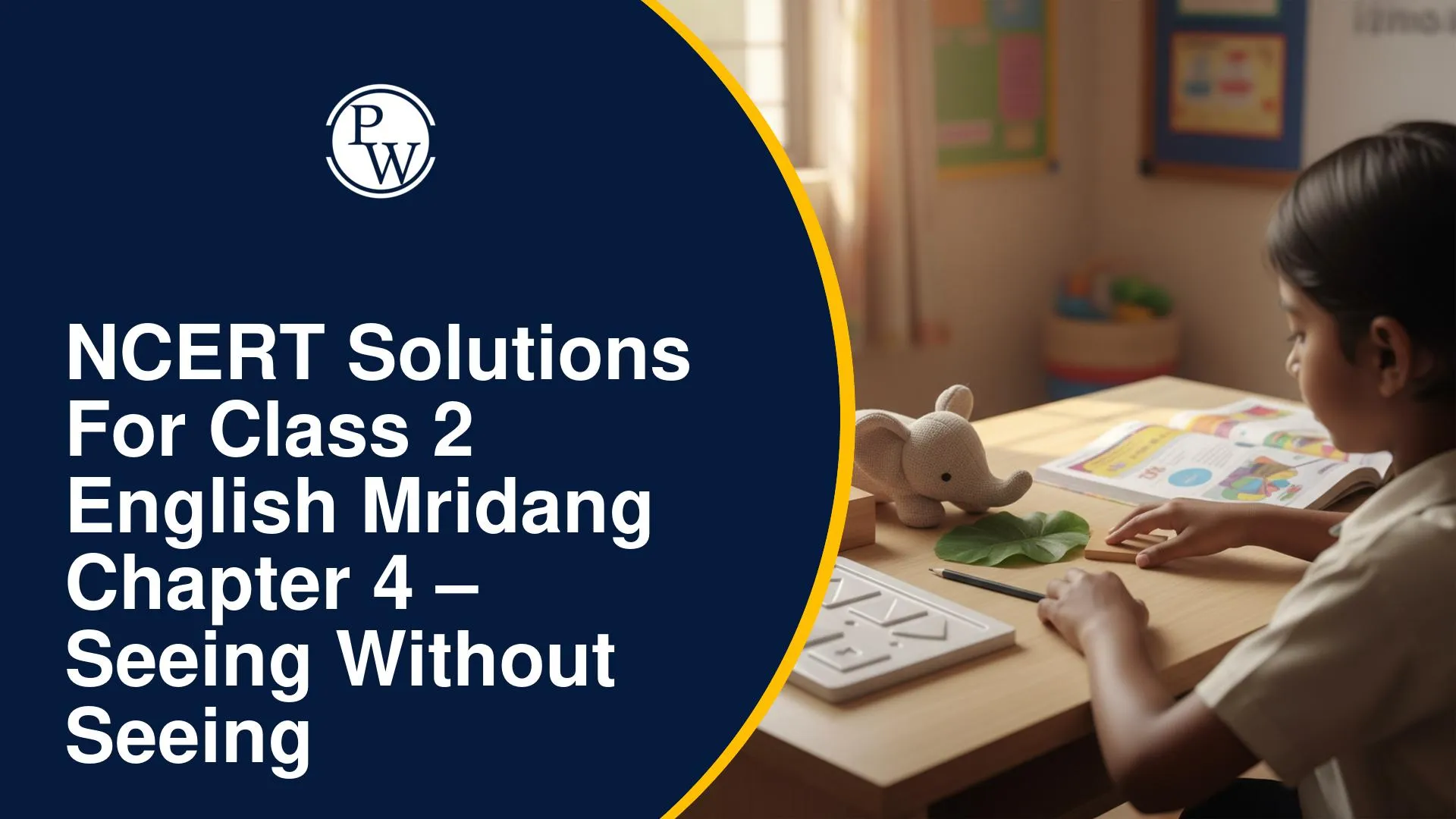
Seeing Without Seeing Class 2 Question Answer
1. What happened at Onshangla's school?
A new boy came to Onshangla's school. He sat in her class and wore black glasses because he could not see.
2. What game did Ava play with Onshangla?
Ava tied a scarf over Onshangla's eyes and asked her to identify different objects using her other senses.
3. How did Onshangla identify the rose?
Onshangla first touched the flower and felt its softness. She then smelled it and identified it as a rose.
4. How did Onshangla identify the bell?
She identified the bell by hearing its sound.
5. How did Onshangla know that the glass contained orange juice?
She touched the glass and then tasted the liquid. She realised that it was orange juice.
6. What did Onshangla learn from the game?
She learned that a person who cannot see can use other senses to identify things. She also understood that the new boy might need understanding and friendship.
Seeing Without Seeing Class 2 Short Question Answer
Why was Onshangla quiet when she returned from school?
Onshangla was thinking about a new boy in her class who could not see.
What did Ava put on the table?
Ava placed biscuits and milk on the table for Onshangla.
What did Onshangla identify by smelling?
She identified the flower as a rose by smelling it.
What sound did the small bell make?
The bell made a musical “Trin… Trin…” sound.
What did Onshangla identify by tasting?
She identified the liquid as orange juice.
Seeing Without Seeing Class 2 Extra Questions and Answers
How did Ava help Onshangla understand the new boy's experience?
Ava covered Onshangla's eyes and asked her to identify different objects through touch, smell, hearing, and taste.
Which senses did Onshangla use during the game?
She used her senses of touch, smell, hearing, and taste.
Why did Ava play the game with Onshangla?
Ava wanted Onshangla to understand that people who cannot see can use their other senses to know about things around them.
What message does the chapter give?
The chapter encourages children to understand the experiences of people who cannot see and to treat everyone with kindness and friendship.
I Can Do These Things on My Own Class 2
The chapter asks students to write about things they can do independently.
Examples include:
-
I can take a bath by myself.
-
I can brush my teeth by myself.
-
I can wear my clothes by myself.
-
I can eat my food by myself.
-
I can arrange my school bag by myself.
Children can write their own examples based on things they actually do independently.
Read More : NCERT Solutions for Class 2 English Mridang Chapter 1 My Bicycle
Seeing Without Seeing Class 2 Worksheet with Answers
A. Fill in the blanks
-
Onshangla was very ______ one day.
-
A new ______ came to Onshangla's school.
-
Ava placed ______ and ______ on the table.
-
Ava played a new ______ with Onshangla.
-
It was not water; it was ______ juice.
Answers:
-
quiet
-
boy
-
biscuits, milk
-
game
-
orange
B. Answer in one word
-
Who was Onshangla's mother?
Answer: Ava -
Which flower did Onshangla identify?
Answer: Rose -
What did Onshangla hear?
Answer: Bell -
What did she taste?
Answer: Orange juice
C. Match the sense with the activity
|
Sense |
Activity |
|
Eyes |
Seeing |
|
Ears |
Hearing |
|
Nose |
Smelling |
|
Tongue |
Tasting |
|
Skin/Hands |
Touching |
Seeing Without Seeing Class 2 Word Meaning
|
Word |
Meaning |
|
Quiet |
Making little or no noise |
|
Front |
The part that is ahead |
|
Sniff |
To smell something |
|
Remove |
To take something away |
|
Joy |
Great happiness |
|
Blink |
To quickly open and close the eyes |
|
Difficulties |
Problems or challenges |
These are among the new words introduced with the chapter.
Taking Care of Our Eyes
The chapter includes an activity about good and bad habits for eye care. Students are asked to identify which activities are good for their eyes.
Good habits
-
Sit straight while reading or drawing.
-
Read in good light.
-
Eat carrots and other vegetables.
-
Follow the eye exercises given by the teacher.
Habits to avoid
-
Sitting very close to the television.
-
Staring at the Sun.
-
Playing on a mobile phone for a long time.
The chapter also includes simple eye movements such as looking up, down, right, and left without moving the head.
A and An: Class 2 English Activity
The chapter also introduces the use of a and an with words beginning with the vowel sound represented in the activity.
Examples from the chapter include:
-
an ox
-
an otter
-
an orange
-
a fox
-
a dot
-
a top
-
a clock
-
a lock
-
a frock
The activity helps children notice the difference between a and an in simple words.
Read More : NCERT Solutions for Class 2 English Mridang Picture Reading
Seeing Without Seeing Class 2 Quick Revision
-
Chapter: Seeing Without Seeing
-
Book: Mridang
-
Class: 2
-
Main characters: Onshangla and Ava
-
Main idea: Using senses other than sight
-
Flower: Rose
-
Sound: Bell
-
Drink: Orange juice
-
New learning: Understanding and including people who cannot see
-
Activities: Speaking, writing, eye care, eye exercise, and a/an practice





NCERT Solutions for Class 2 English Mridang Chapter 4 FAQs
What is Seeing Without Seeing Class 2 about?
Who is Onshangla in Seeing Without Seeing?
What did Onshangla identify using her sense of smell?
What did Onshangla taste in the chapter?
What are the main activities in Seeing Without Seeing Class 2?



Get Free Counselling Today
and Clear up all your Doubts
 Live & recorded classes available at easeDashboard for progress trackingLakhs of practice questions


