Learn English Sounds and Words in a Fun Way (Level Starters)
 Nikita Aggarwal29 May, 2026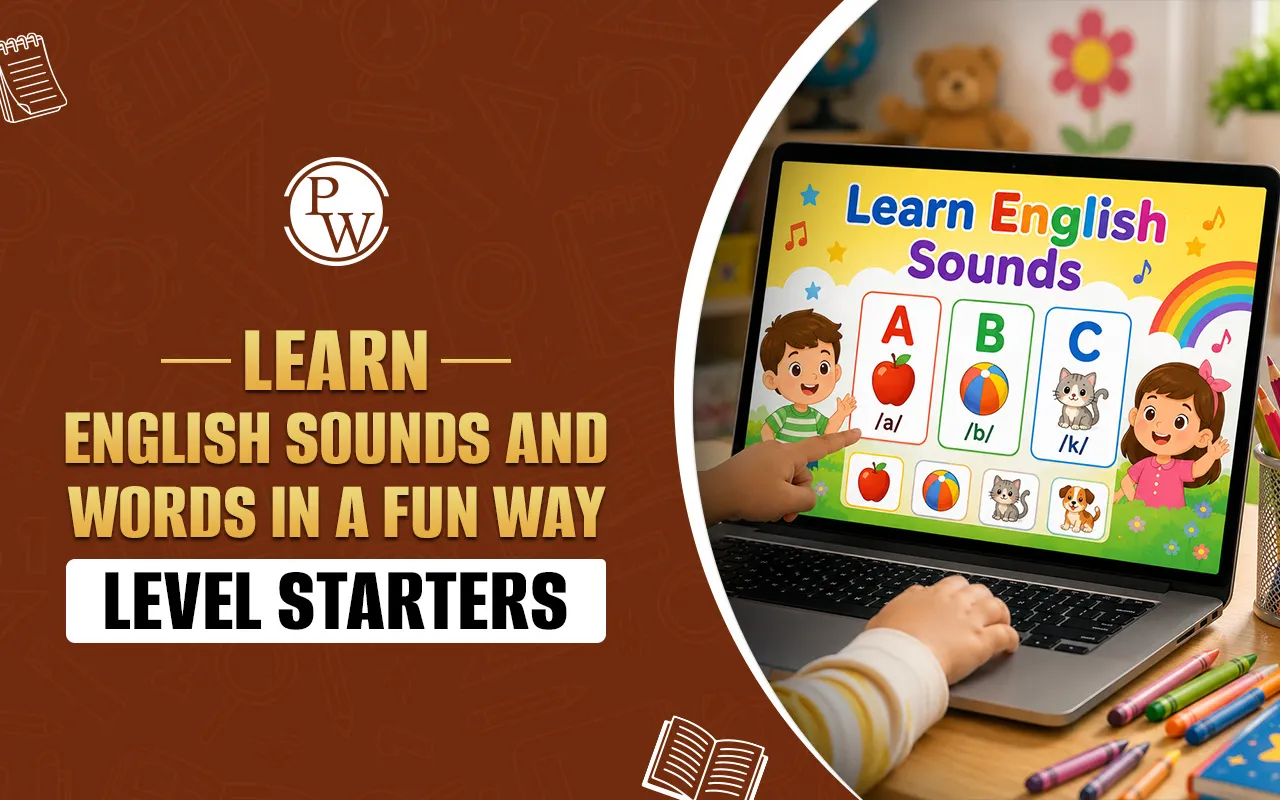
Why Kids Should Learn English Sounds and Words
Young learners who learn basic sound elements develop stronger reading habits. Kids decode unknown words much faster when they link letters to the actual sounds of their speech. This structural way of working means that they don't just learn to spell things by sight, with no understanding of the basics of how to say things.
Beginners learn to pick up small differences in speech with clear audio models. This early exposure means that the children will not get frustrated when they meet complex vowel shifts later on. A solid base in the early years eases the entire learning process for young learners.
Speaking is a skill and as with any skill it needs regular practice in an interesting way. The main advantages of focusing on these early linguistic elements are summarised in the following table.
|
Benefit |
How It Helps the Learner |
Long-term Impact |
|
Faster Decoding |
Converts letters to spoken terms easily |
Independent reading habits |
|
Confident Speech |
Minimises pronunciation errors |
Clear communication skills |
|
Stronger Vocabulary |
Simplises the process to learn english words |
Better academic performance |
Interactive English Sounds and Words for Kids
There are 44 different phonemes in English . The smallest unit of sound in speech is called a phoneme . These are 19 vowel combinations and 25 consonant sounds that form all spoken words. Teaching these units separately helps the young learners to break down longer words into manageable chunks.
Try combining speech tasks with physical actions to make this process fun. For example, children can clap out syllables, or use hand movements for long and short vowels. Physical activities also help auditory memory and maintain energy levels high.
The core speech categories can be broken down into specific groups for beginners.
-
Short Vowels: The quick vowel sounds found in basic words like cat, hen, sit, log, and sun.
-
Long Vowels: Extended sounds where the letter says its own name, such as the 'a' in wave or 'o' in boat.
-
Consonant Digraphs: Pairs of letters that combine to make a single unique sound, such as 'ch' in chop or 'sh' in ship.
-
Consonant Blends: Groups of two or more letters where each individual sound is still heard, like 'br' in brush or 'fl' in flag.
Phonics Practice to Learn English Sounds and Words
For beginners, the best way to start phonics practice for beginners is to learn to recognise individual letters and then work up to full sentences. The child has to hear a sound, find it, and connect it to a particular visual character. You do it step by step to avoid overloading your brain and keep the learning process stress-free.
Rhyming games are very good at that level of development. It teaches kids how language structures work by taking a word and changing its first letter while keeping the ending the same. For example, it can change 'cat' to 'hat' or 'mat', and this shows that by changing one letter, it changes the meaning.
The list below outlines a reliable three-step sequence to introduce these foundational concepts to young learners.
-
Isolation: Help the child identify the very first sound in a simple word, such as the 'p' sound in pig.
-
Blending: Encourage the student to slide individual letter sounds together to form a complete word, like b-a-g becoming bag.
-
Segmentation: Ask the child to break a whole word down into its separate auditory pieces, such as separating zip into z-i-p.
Read More - Learn English Easily with Simple Words, Speaking and Daily Practice (Level Starters)
Fun Activities to Learn English Sounds for Kids
The best way to keep a child engaged is with short, fun activities. Ten to fifteen minutes per day is much more productive than hours of repetitive writing. By transforming speech exercises into informal games, you create a fun and very effective environment.
A popular activity is a traditional “I Spy” format but only focused on pronunciation, not visual cues. Parents can say 'I spy with my little eye something starting with the sound mmm. This simple variation focuses the child's entire attention to auditory patterns.
Read More - Build Strong Vocabulary Through Stories (Starters Level)
How to Learn English Words with Visual Aids
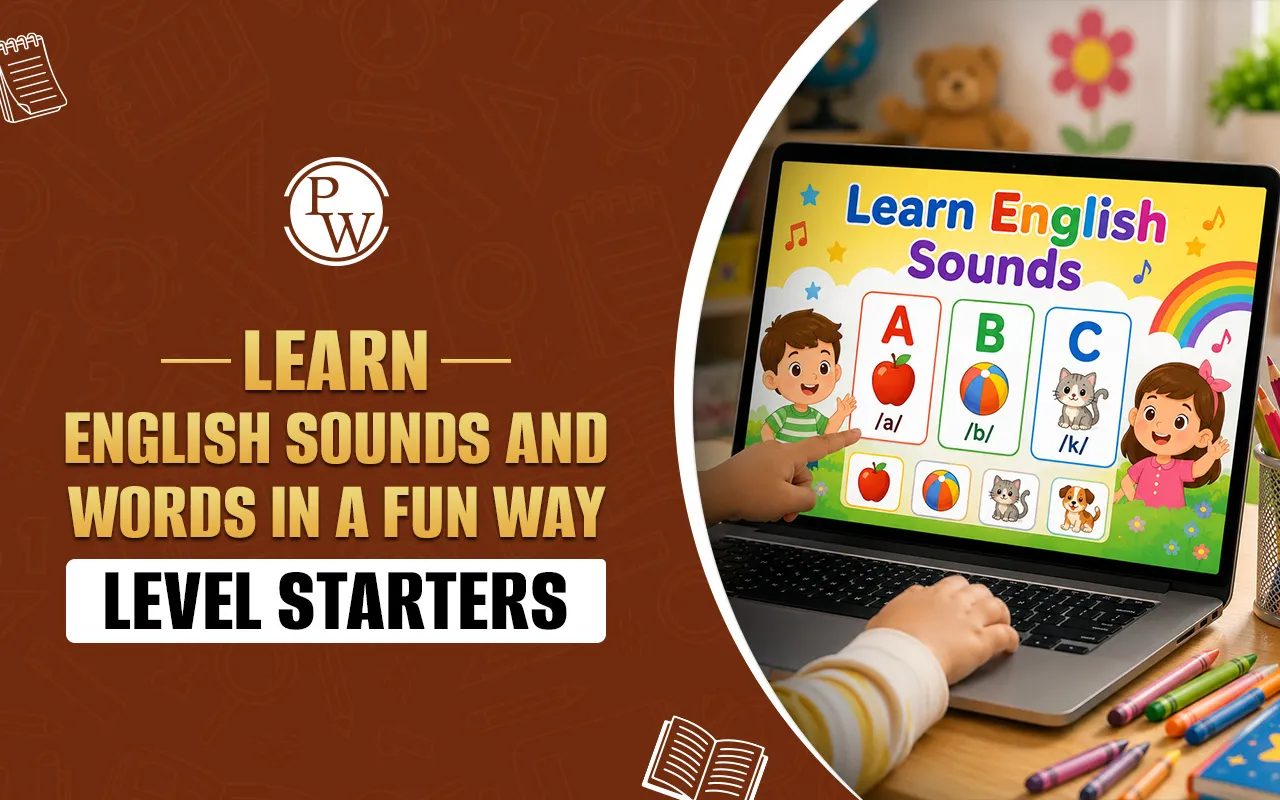
Combining vibrant illustrations with clear audio examples creates an ideal environment for young learners. Visual aids give abstract letter patterns an immediate, concrete meaning that children can retain. This dual-coding approach speeds up memory retention and builds reading confidence.
Matching games work exceptionally well for reinforcing these connections. You can create simple flashcards with a letter on one side and a familiar object on the other. This hands-on method allows children to physically interact with their learning materials.
Consistency is the secret to helping children retain new language habits. Integrating quick beginner English activities into normal daily routines keeps learning natural. You can practice spelling patterns while walking in the park, cooking dinner, or tidying up toys.
For example, point to objects around the kitchen and ask your child to identify the starting character. These casual interactions show children that language applies to the real world around them, not just to classroom textbooks.
Pattern to Learn English Sounds and Words
A systematic approach ensures that young learners build skills in the correct order. Starting with simple three-letter words allows children to experience early success before tackling challenging spelling structures. This steady progression prevents anxiety and maintains a positive attitude toward study.
The matrix below shows how spelling levels advance from basic letter pairs to more complex word structures.
|
Level |
Word Type |
Structural Pattern |
Examples |
|
Starters |
CVC Words |
Consonant-Vowel-Consonant |
Map, Fin, Pot, Red |
|
Movers |
Blend Words |
Consonant Blend + Vowel |
Frog, Clip, Tent, Stop |
|
Flyers |
Digraph Words |
Complex Consonant Pairs |
Ring, Chat, Fish, When |
Interactive Tasks to Learn English Sounds and Words
Interactive challenges encourage children to think actively rather than listen passively. Digital platforms and audio tools provide instant feedback, helping students correct pronunciation errors in real time. This immediate response prevents bad spelling habits from forming early on.
Using storytelling alongside audio exercises makes word recognition deeply memorable. When a child hears a word used in an exciting story context, they understand its meaning immediately. This contextual approach transforms abstract spelling patterns into meaningful communication tools.
As young learners master these foundational speech blocks, they need a structured space to test their skills. Safe digital environments allow children to practice independently at their own comfortable pace. Finding a platform tailored for early learners ensures that this educational journey remains positive and highly rewarding.
Fun English Learning Through CuriousJr Games
CuriousJr kids online English learning class offers an ideal educational space where children can practice speech mechanics through guided play. By interacting with intuitive digital exercises, young students can seamlessly learn English sounds and words while solving fun puzzles. The platform uses adaptive learning pathways that match each child's unique development level perfectly.







Learn English Sounds and Words in a Fun Way (Level Starters) FAQs
What are the 44 speech sounds in English?
How can I practice phonics at home without textbooks?
Why do some children struggle to blend letter sounds together?
What is the difference between a digraph and a blend?

Get Free Counselling Today
and Clear up all your Doubts
 Live & recorded classes available at easeDashboard for progress trackingLakhs of practice questions