Build Strong Vocabulary Through Stories (Starters Level)
 Nivedita Dar28 May, 2026
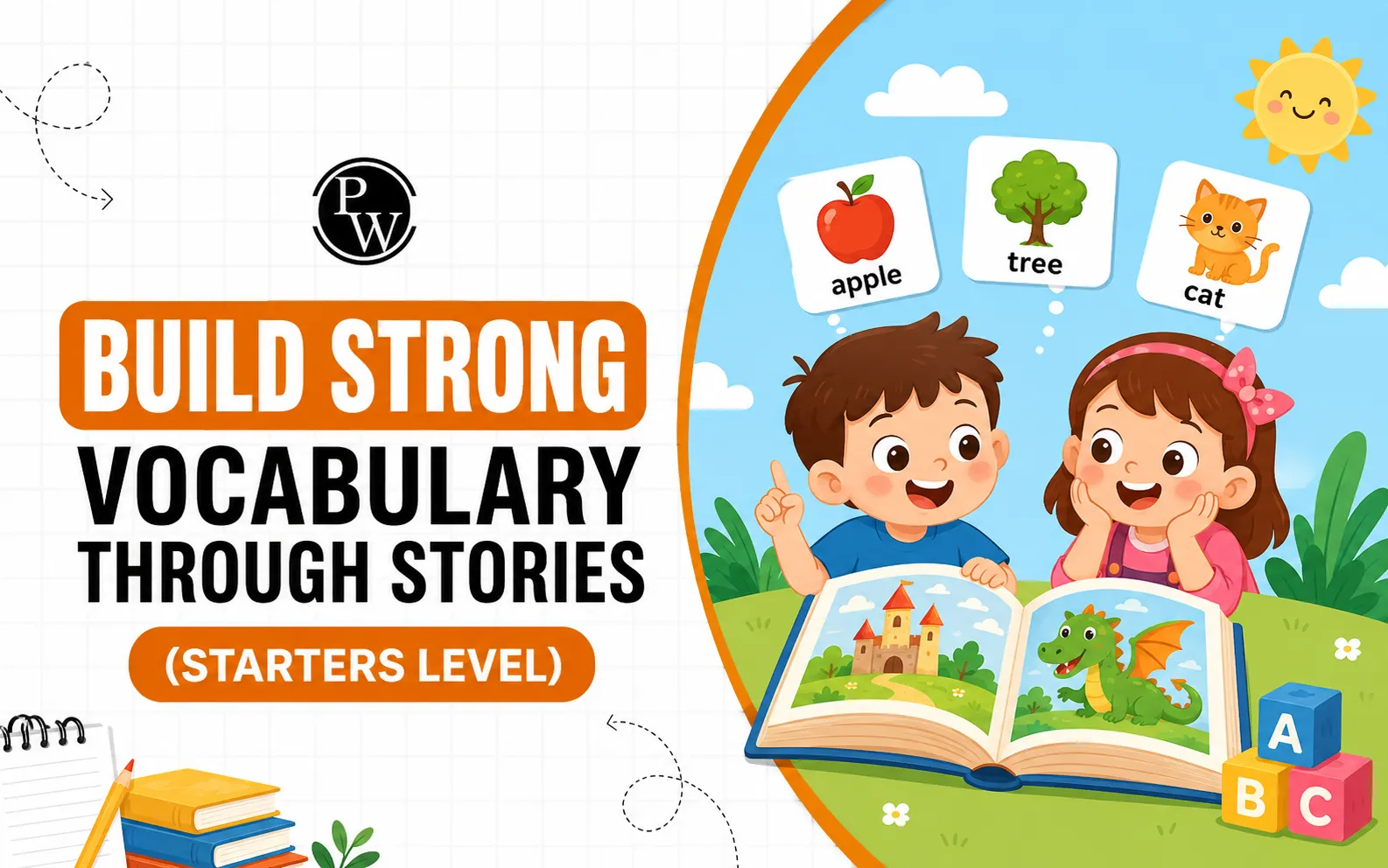
Learning a new language can often feel like a chore for young students when they are faced with long lists of words to memorise. Many parents and teachers find that traditional rote learning fails to keep children engaged, leading to a lack of progress. This is where the power of vocabulary through stories becomes essential. By moving away from dull drills and into the world of narratives, children can pick up new terms naturally.
Vocabulary Through Stories Overview
Kids are naturally interested in stories, characters and adventures. As they come across new words in the context of a storyline, their brains try to understand the meaning from the scenario. Learning like this, in context, is much more potent than searching a term up in the dictionary. Storytelling helps youngsters use vocabulary, and it teaches how language and words work in real life.
Storytelling forges an emotional connection. When a youngster cares about a character, they are more likely to recall the words that go with what that character is doing or experiencing. This strategy eliminates the pressure of formal learning and replaces it with amazement. It connects the dots between basic recognition of words and true fluency in the language.
Vocabulary Through Stories Benefits
Regular English reading practice through storybooks provides a structured yet flexible way to improve literacy. For starters level learners, the repetition found in many children's books is a key tool for retention. When a phrase or word appears multiple times in different parts of a story, it reinforces the memory without the child even realising they are "studying."
-
Contextual Clues: Pictures and plot points help children guess the meaning of unfamiliar words.
-
Sentence Structure: Kids learn how English sentences are built by seeing them in print.
-
Confidence Building: Finishing a short story gives a sense of achievement that motivates further learning.
-
Cultural Awareness: Stories often introduce cultural nuances and idioms that textbooks might miss.
How Vocabulary Through Stories Improve Word Retention?
The structure of vocabulary building stories is specifically designed to introduce language in manageable chunks. For those at the starters level, these stories often focus on everyday themes like family, animals, or school. This relevance makes the new words immediately useful to the child.
Instead of learning separate nouns, youngsters learn “action” from what’s happening in the story. If a dragon “breathes” fire, the child learns the verb and noun combined. This method of association is why storytelling for vocabulary works so well in terms of long term memory. The brain retains the information as a “movie” instead than a still image, making it much easier to recall in conversation.
Engaging Kids Vocabulary Through Stories Tricks
To make the most of kids' storytelling learning, the process should be interactive. Simply reading a book aloud is a great start, but involving the child in the narrative journey yields better results. For starters level students, use the following techniques to enhance the experience:
-
Prediction Games: Ask the child what they think will happen next to encourage the use of descriptive words.
-
Character Voices: Using different tones for different characters helps distinguish dialogue and adds excitement.
-
Spot the Word: Give the child a specific "target word" to look for or listen for throughout the story.
-
Picture Talk: Before reading the text, look at the illustrations and ask the child to describe what they see in English.
By making the story a two-way conversation, the child moves from a passive listener to an active language user.
Read More - Learn English Easily with Simple Words, Speaking and Daily Practice (Level Starters)
Best Vocabulary Learning Activities Through Stories
Beyond just reading, integrating word learning exercises into the daily routine ensures that vocabulary sticks. These activities should be short, punchy, and related to the stories the child is currently enjoying.
-
Story Mapping: Draw a simple map of the story’s events and label the main objects or actions using the new words learned.
-
Role Play: Act out a scene from the book. Physical movement helps in "embodying" the language.
-
Flashcard Matching: Create cards with images from the story and have the child match them to the correct English word.
-
Word Jars: Every time a child masters a word from a story, they can drop a pebble or a slip of paper into a jar to track their progress.
These activities turn vocabulary through storytelling into a multi-sensory experience, catering to visual, auditory, and kinaesthetic learners alike.
How to Choose the Right Book for Vocabulary Through Stories
Selecting appropriate materials is vital for maintaining interest. At the English learning starters level, the text should not be overwhelming. Look for books that have a high image-to-text ratio. The goal is to provide enough challenge to learn but enough familiarity to prevent frustration.
Focus on themes that resonate with the child’s interests. If a child loves space, a story about an astronaut will be much more effective for vocabulary through storytelling than a generic tale about a park. Reference materials suggest focusing on clear, colourful illustrations that directly mirror the text provided. This visual-textual link is the cornerstone of early years language acquisition.
Read More - Speak English in Short Phrases (Level Starters)
Vocabulary Through Stories Progress Tracking
Consistency is more important than duration. Ten minutes of vocabulary through storytelling every day is significantly more effective than a two-hour session once a week. Keep a simple log of the "Words of the Week." When you see your child using a word from a story in their daily life—such as calling their breakfast "delicious" instead of just "good"—you know the method is working.
As the child grows more comfortable, you can gradually introduce more complex narratives. The transition from simple picture books to short chapter stories marks a significant milestone in their English learning journey.
How CuriousJr Makes Vocabulary Through Stories More Interactive
CuriousJr online Kids English classes help young learners speak English with stories integrated with guided activities specifically for Starters level. Rather of rote-learning words, children learn vocabulary through short discussions, visual prompts, role-play tasks and interactive reading exercises that encourage them to utilise new words in context.
For English learning students, structured activities such as picture-based storytelling, sentence-building games, and pronunciation practice help improve both confidence and comprehension. The learning approach keeps children engaged through fun themes, relatable situations, and gradual vocabulary exposure, making English reading practice feel less stressful and more enjoyable.
Another helpful aspect is the focus on speaking confidence alongside vocabulary growth. As children repeatedly hear and use words in stories, activities, and guided discussions, they become more comfortable forming sentences independently. This combination of kids storytelling learning and practical communication helps create a stronger foundation for future English fluency.