Comparing Numbers in Maths: Meaning, Steps, Symbols & Examples
 Shivam Singh1 Dec, 2025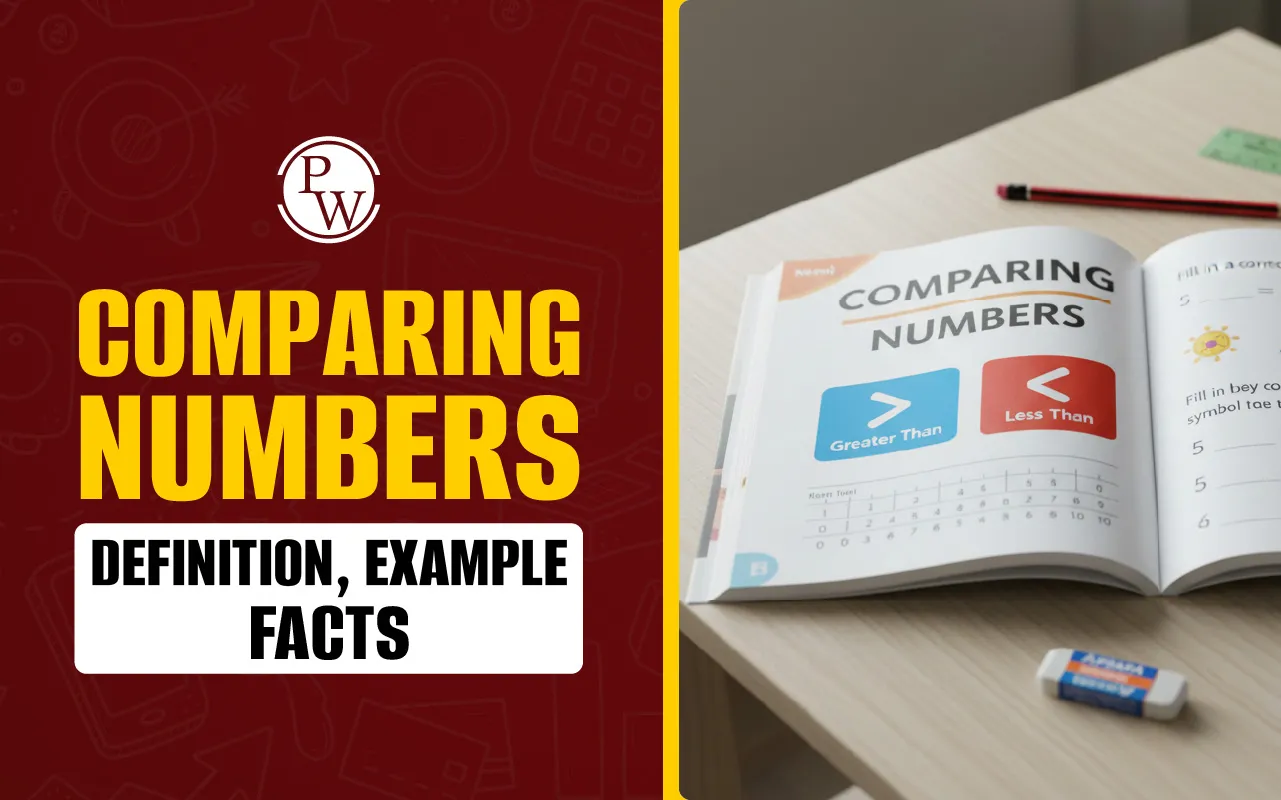
What is Comparing Numbers?
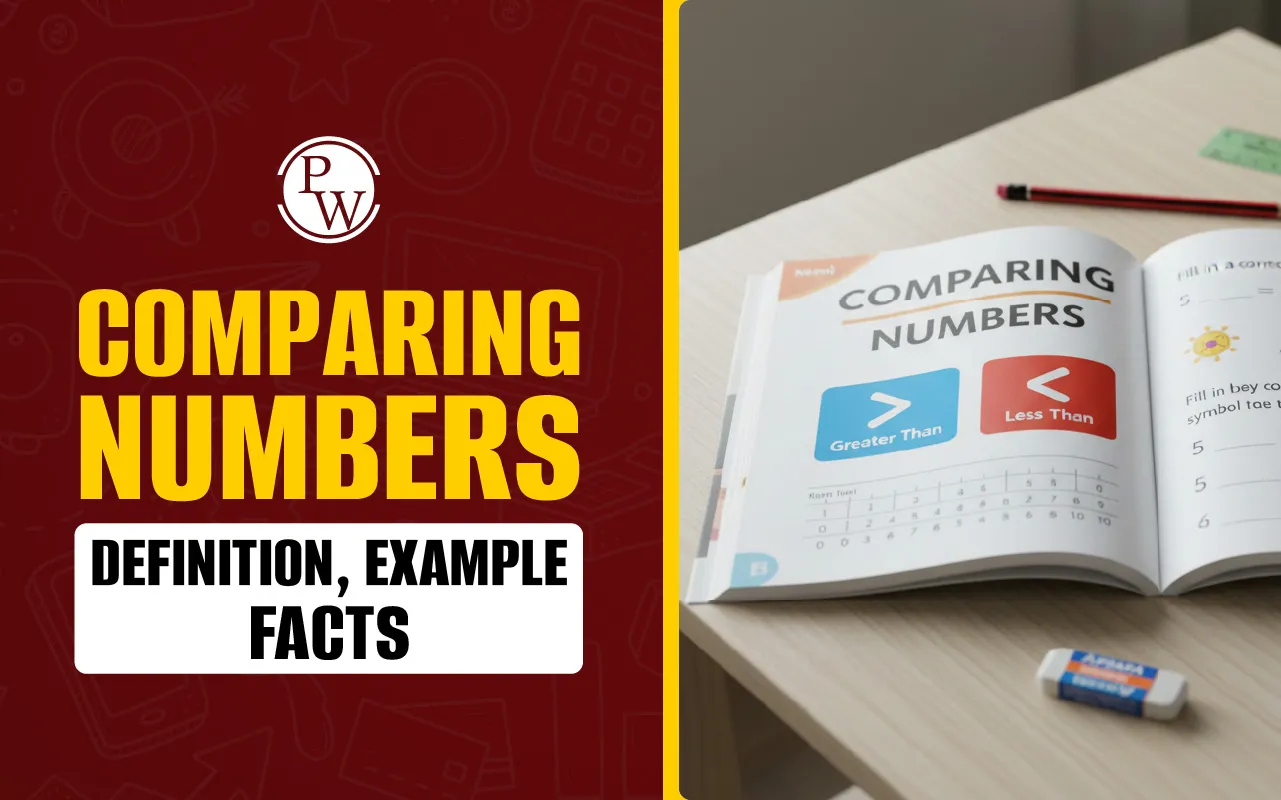
Comparing Numbers Meaning - Numbers is an easy way of finding out which number is bigger, smaller, or if both are equal. In maths, this is one of the first topics children learn in their early classes. Just like we compare the size of two apples to see which one is larger, in the same way, we compare numbers to know their value.
So, what is comparing numbers? It is the process of checking two or more numbers and deciding their relation. We use special signs to show this comparison, such as greater than (>), less than (<), and equal to (=). These are called the symbols for comparing numbers, and they make it easy to write the answer.
Read More: Consecutive Numbers
Symbols for Comparing Numbers
While comparing numbers, we use signs to represent which number is bigger, smaller, or equal. These are called symbols for comparing numbers. The three main symbols for comparing numbers are:
-
Greater than (>): means the first number is bigger.
-
Less than (<): means the first number is smaller.
-
Equal to (=): means both numbers are the same.
Steps for Compare the Numbers
In order to compare two numbers in maths, it is important to follow some simple steps that help understand which number is greater, smaller, or equal. Here are the steps for comparing numbers we need to follow while solving questions:
-
Step 1: Look at how many digits each number has. The number with more digits is bigger. For example, 456 is bigger than 98 because it has three digits and 98 has two.
-
Step 2: If both numbers have the same number of digits, check the first digit (from left). The bigger digit means the number is bigger. For example, 643 is bigger than 572 because 6 is greater than 5.
-
Step 3: If the first digit is the same, check the next digit to the right. For example, 542 and 574 both start with 5, so we compare the tens place. 7 is greater than 4, so 574 is bigger.
-
Step 4: Keep comparing numbers digit by digit until you find a difference. The number with the bigger digit at that place is greater.
Read More: Counting Numbers
What is Comparing and Ordering Numbers?
After learning what is comparing numbers, let's now understand how to arrange numbers in a proper order. This is called ordering numbers. When we compare numbers, we find out which one is bigger, smaller, or equal. Once we know that, we can put the numbers in a line either from small to big or from big to small.
-
Ascending Order (small to big): In this order, we arrange numbers starting from the smallest and moving towards the largest. For example: 12 < 25 < 34 < 40.
-
Descending Order (big to small): In this order, we arrange numbers starting from the largest and moving towards the smallest. For example: 90 > 75 > 60 > 45.
So, comparing and ordering numbers are connected with each other. First, we compare numbers to check their value, then we order them correctly in ascending or descending order.
Read More: Rounding Numbers
Comparing Numbers Examples With Solutions
Here are some comparing numbers examples to help you understand how to compare and arrange numbers while solving different maths questions:
Example: Arrange 124, 87, 203, and 156 in ascending order.
Solution:
-
The smallest number is 87, followed by 124, 156, and then 203.
-
So, 87 < 124 < 156 < 203.
Example: Arrange (-15, 7, -3, 0, -8, 4, 12, -1) in descending order.
Solution:
-
Separate negative numbers, positive numbers, and zero.
-
Negative: (-15, -3, -8, -1):
-
Then, arranging the numbers in descending order: -1 > -3 > -8 > -15
-
Positive: (7, 4, 12)
-
Arranged in descending order: 12 > 7 > 4
-
Now arrange all: 12 > 7 > 4 > 0 > -1 > -3 > -8 > -15
Example: Rahul got marks in five subjects: 78, 92, 85, 68, 90. His friend Arjun got marks in the same subjects: 82, 88, 91, 70, 95.
-
Arrange both Rahul’s and Arjun’s marks in ascending order.
-
Compare who has the highest mark overall and who has the lowest.
Solution:
Rahul’s marks in ascending order: 68 < 78 < 85 < 90 < 92.
Arjun’s marks in ascending order: 70 < 82 < 88 < 91 < 95.
-
Highest mark Arjun got: 95.
-
Lowest mark Rahul got: 68.
Hence, Arjun has the highest mark, and Rahul has the lowest mark among them.
Also Read: Platonic Solids
Make Maths Easy & Fun for Your Child with CuriousJr’s Online Tuition
Is your child finding maths homework tough and boring after school hours? While this is common, it can affect their understanding of concepts, and without proper practice, they may lose marks in exams.
CuriousJr’s Online Maths Tuition Classes after school make learning easy and enjoyable for children. Here’s what CuriousJr offers:
-
Concept Clarity: Lessons designed to make difficult topics simple and easy to understand.
-
Friendly Teachers: Teachers who make learning fun and engaging.
-
Live Audio-Video Sessions: Real-time learning with full interaction.
-
1-on-1 Mentor Support: Doubts cleared instantly, anytime.
-
Covers All Key Subjects: Complete syllabus for your child’s grade and board.
-
Dual Teacher Mentorship: Two teachers work together: one teaches the lessons during class, and the other helps your child anytime with doubts and homework.
-
Exam Preparation: Offers help to prepare for exams and Olympiads.
-
Online PTM Sessions: Easy updates on your child’s progress.
Give your child the support they need for success. Book a demo class today at just INR 29 and watch them grow confident in maths.
Comparing Numbers FAQ
What is comparing numbers in maths?
Are comparing and ordering numbers the same?
How do we compare numbers in fractions?
How does comparing numbers work for integers?
Explain comparing numbers on a number line.