
How Online Tuition Builds Independent Learning Habits in Class 7 Students
 Nikita Aggarwal9 Jun, 2026

Why Independent Learning for Class 7 Students Is Important
The academic landscape alters significantly as children cross into secondary education. In earlier years, simple memorisation could guarantee decent marks. However, the syllabus splits into specialized tracks like algebraic equations, data handling, physical and chemical changes, and civic governance.
Many children feel overwhelmed by this sudden spike in difficulty. Without proper self-regulation, they face specific challenges:
-
Prolonged Homework Hours: Assignments take twice as long because basic concepts remain unclear.
-
Declining Classroom Confidence: Falling behind in a few topics makes students hesitant to speak up in school.
-
Heightened Exam Pressure: Leaving revision to the last minute leads to anxiety and poor marks.
-
Loss of Interest: When studies feel heavy, children lose their natural curiosity and drive.
Introducing independent learning for Class 7 at this exact juncture helps prevent these issues. Rather than relying on constant parental reminders, students must learn to identify their weak spots and fix them. Developing sustainable Class 7 self-study habits early ensures that the academic load of higher classes does not become a source of stress later on.
Read More - Why Class 7 Science Requires More Than Just Reading the Textbook
How Online Tuition Supports Independent Learning for Class 7 Students
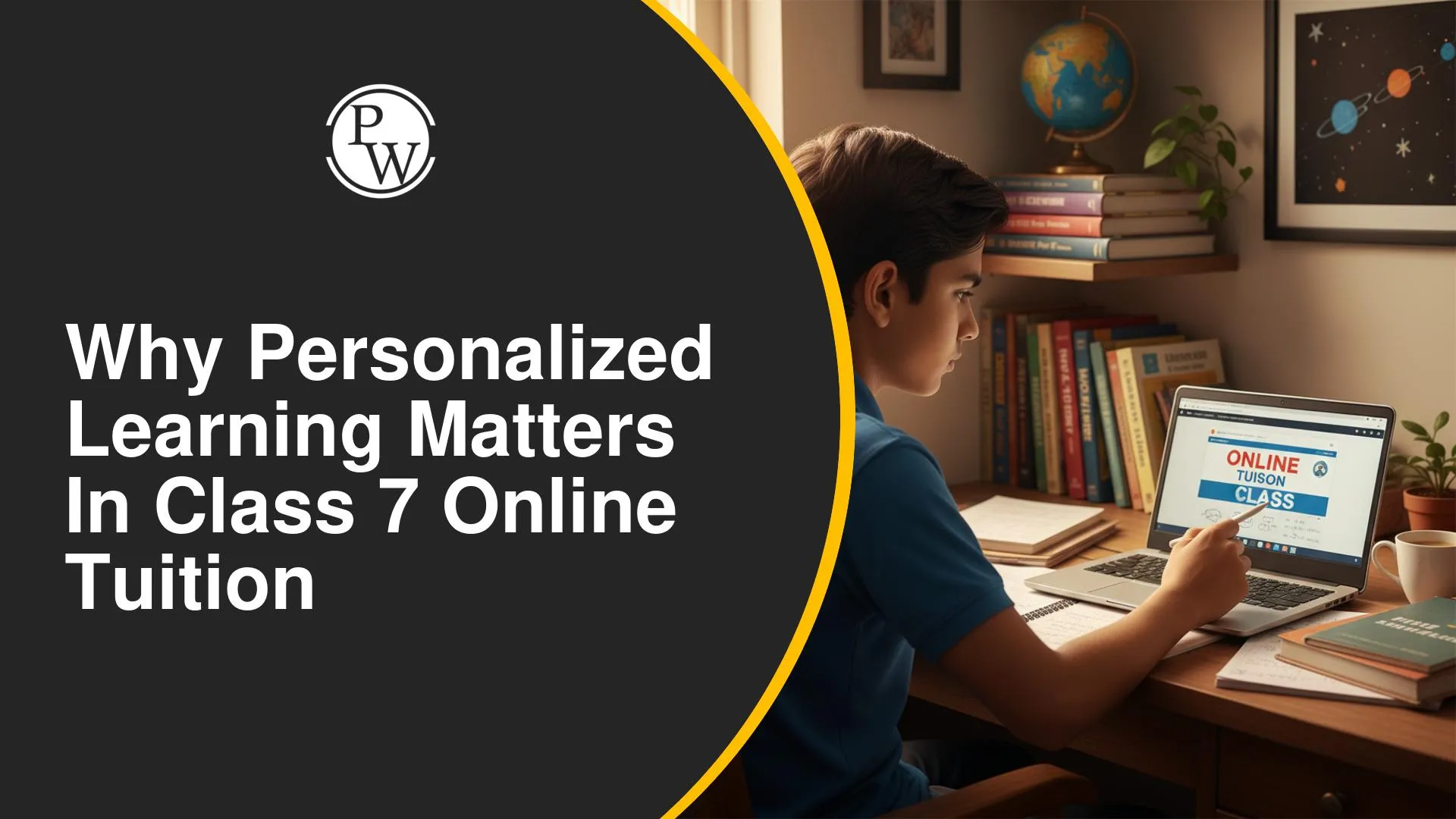
Traditional educational setups often follow a passive framework where information is simply fed to the learner. Conversely, choosing an expert online tuition structure alters how a student interacts with their syllabus. The digital environment demands a basic level of active participation, which naturally fosters individual responsibility.
|
Traditional Home Learning |
Managed Online Tuition Framework |
|
Passive Consumption: Waiting for a tutor to arrive and explain every line. |
Active Engagement: Navigating live portals, selecting topics, and checking progress dashboards. |
|
Fixed Pacing: Progress moves entirely based on the tutor's physical presence. |
Flexible Mastery: Reviewing recorded explanations of difficult topics like tenses or fractions whenever needed. |
|
Delayed Feedback: Mistakes in homework go unnoticed until the next scheduled visit. |
Instant Validation: Interactive quizzes point out mistakes immediately, encouraging instant self-correction. |
This systematic structure teaches children that their progress depends on their own efforts. By removing the physical crutch of a tutor sitting next to them, online tuition platforms subtly push students to think through problems before asking for help.
Ways to Build Independent Learning for Class 7 Students
Transitioning into an autonomous learner requires a clear framework. Students cannot build discipline without a systematic approach to their daily study targets.
Using specific features of digital platforms makes it much easier to build solid Class 7 self-study habits:
Learn Digital Time Allocation
Virtual learning requires logging in on time and following an digital calendar. Students learn to plan their afternoons around live sessions, allocating specific blocks for pre-class reading and post-class assignments. This routine instils an early understanding of time management.
Personal Progress Audits
Most digital portals feature student dashboards that display completion rates, quiz scores, and time spent on different topics. Checking these metrics regularly helps children build realistic self-assessment skills. They learn to say, "I am struggling with linear equations, so I need to spend thirty minutes reviewing it today."
Utilize On-Demand Doubt Clearance
When a student gets stuck on a complex science or maths problem at night, they do not have to leave it unfinished. Using virtual doubt-clearing tools allows them to seek answers independently, keeping their study momentum going without parental intervention.
Read More - CBSE Class 7 Science Motion and Time Notes 2026-27 | Free PDF
How Independent Learning for Class 7 Students Improves Learning Skills
True academic independence relies on deeper intellectual traits, often called learning skills. These include critical thinking, the ability to find reliable information, and the resilience to solve complex problems.
Interactive digital media plays a major role in building these competencies:
-
Gamified Skill Checks: Short quizzes and puzzle-based checkpoints turn boring practice into an engaging challenge.
-
Visual Conceptualisation: Watching animated breakdowns of complex topics, like the movement of ocean currents or the human respiratory system, makes abstract concepts easy to visualize.
-
Targeted Practice: Digital systems adjust their difficulty based on student performance, ensuring learners practice at the right level to build genuine confidence.
These digital tools transform studying from a passive chore into an active puzzle. As a student's Class 7 learning skills improve, their reliance on external supervision decreases. They begin to see learning as a process they can manage on their own.
How to Develop Independent Learning for Class 7 Students
Shifting from a parent-led study routine to an independent one must happen gradually. Expecting a twelve-year-old to suddenly manage three hours of self-guided study without any help is unrealistic.
The table below outlines a practical roadmap showing how to study independently Class 7 using virtual resources:
|
Phase |
Parental/Tutor Responsibility |
Student Responsibility |
Digital Tool Assistance |
|
Phase 1: Foundation Setup |
Setting up the device, checking the schedule, and organizing a quiet workspace. |
Attending live sessions and following along with the teacher's slides. |
Automatic reminder alerts and structured weekly timetables. |
|
Phase 2: Guided Practice |
Reviewing completed dashboard scores at the end of the weekend. |
Opening practice assignments and trying to solve problems independently. |
In-app hints, step-by-step video breakdowns, and pop-up alerts. |
|
Phase 3: Full Autonomy |
Providing general encouragement and discussing overall monthly progress reports. |
Managing the daily study checklist and proactively clearing confusing points. |
Automated personal analytics and on-demand mock test engines. |
This phased approach ensures the student never feels abandoned. The clear structure of virtual resources helps them steadily build the confidence needed to understand how to study independently.
How Independent Learning for Class 7 Students Improves Academic Performance
High marks are not the result of luck; they come from blending personal discipline and study routines. Online learning platforms provide a balanced framework that encourages this consistency.
-
Pre-Planned Subject Milestones: Having clear pathways for every subject removes the confusion of figuring out what to study next.
-
Predictable Learning Schedules: Regular weekly live sessions help students build a stable routine, making studying a natural part of their day.
-
Private Doubt Resolution: A comfortable, private environment allows students to ask questions freely without the fear of looking foolish in front of peers.
This combination of discipline and study ensures that regular revision becomes a habit. When daily practice is built directly into a digital routine, preparing for exams shifts from a stressful rush to a smooth, manageable process.
How CuriousJr Encourages Independent Learning for Class 7 Students
The CuriousJr school curriculum is specifically built to address the unique challenges of secondary education. By providing comprehensive online tuition across core subjects—including Mathematics, Science, English, and Social Studies—the platform transforms how young minds approach self-guided learning.
CuriousJr online tuition for class 7 supports independent learning through specific structural design choices:
-
Simplifying Complex Core Concepts: Difficult topics like algebraic simplification, fractions, and tenses are broken down into clear, digestible steps. This ensures students can complete their homework without needing constant help.
-
Interactive Live Classes: Students are active participants rather than passive listeners. They can ask questions during the session, which encourages an analytical mindset.
-
Fun Activities and Quizzes: Incorporating educational games and quick quizzes keeps students engaged, reducing academic stress while reinforcing long-term retention.
-
Consistent Practice Frameworks: Regular practice sessions build the speed and accuracy needed for school exams, helping students become confident, self-reliant learners.
By focusing on a strong conceptual foundation in a supportive environment, CuriousJr ensures that independent learning for Class 7 becomes an achievable goal. It gives them the tools they need to take charge of their own academic journey.





How Online Tuition Builds Independent Learning Habits in Class 7 Students FAQs
How does virtual learning foster independent learning for Class 7 students?
Can an online tuition Class 7 program help a student who struggles with focus?
What changes in self-study habits are needed when moving from primary school?
Will virtual tools compromise the development of core learning skills?





Get Free Counselling Today
and Clear up all your Doubts
 Live & recorded classes available at easeDashboard for progress trackingLakhs of practice questions

