
CBSE Class 6 Science Exploring Magnets Notes 2026-27 | Free PDF
 Nikita Aggarwal29 May, 2026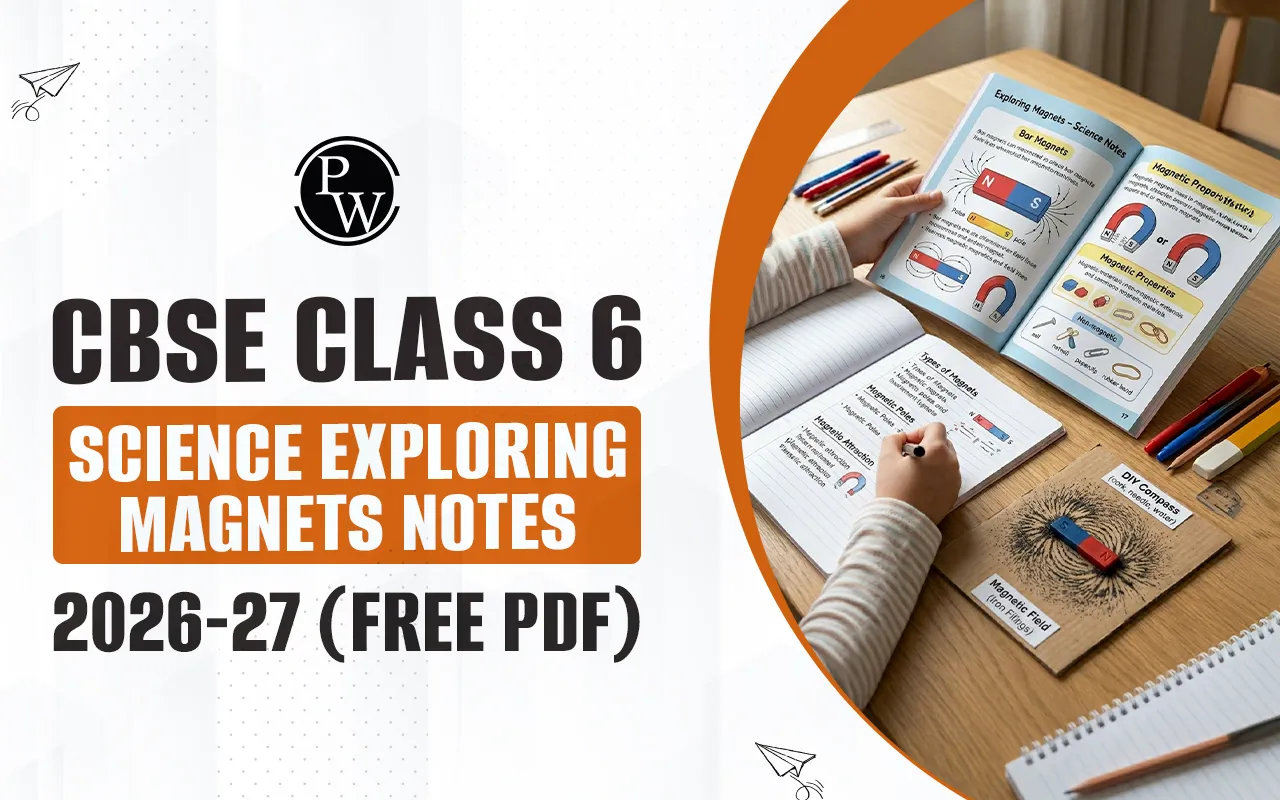
What is Exploring Magnets Class 6?
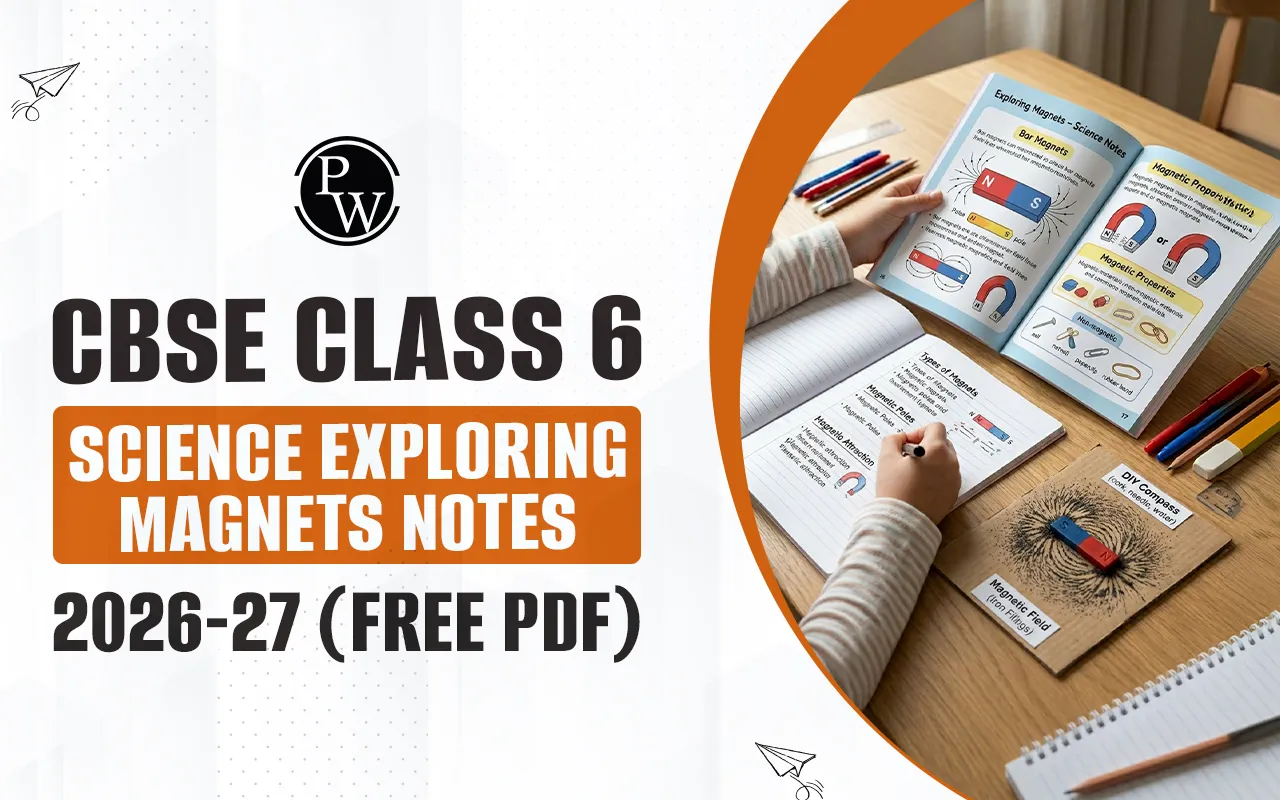
This chapter teaches students the basics about magnets and how they can be used. It talks about the two poles of a magnet, how magnets attract or repel each other, and the distinction between magnetic and non-magnetic materials. Students also learn that a magnet that is not attached to anything points north and south. This is why magnets are helpful for finding directions. The chapter also talks about how to build a magnet easily and how magnets are used in everyday life. These are the main ideas highlighted in standard revision material for the chapter.
Download Class 6 Science Exploring Magnets Notes PDF
A PDF is useful because it keeps the important chapter points, examples, and definitions together in one place. It is especially helpful before class tests, while doing homework, or during final revision when students want quick study material instead of reading the full chapter again.
Benefits of Class 6 Exploring Magnets Notes for Students
Using exploring magnets notes is not just about reading short points. Good notes make the chapter easier to revise and easier to remember.
1. Makes the topic easier to understand
This chapter includes properties, poles, direction, and ues of magnets. Clear notes help students connect all these ideas without confusion.
2. Helps in quick revision
Before a school test, students often need short and organised revision material. That is where exploring magnets notes become useful. They bring the main concepts together in one place.
3. Improves answer writing
When students study from good notes, they find it easier to remember crucial words like magnetic materials, non-magnetic materials, north pole, south pole, attraction, and repulsion. This will help you write better answers on tests.
4. Builds confidence with practical examples
This chapter includes everyday examples and simple activities. Notes help students revise them in a more organised way and understand how magnets work in real life.
Key Features of Class 6 Science Exploring Magnets Notes
If you are looking for useful Class 6 notes, these are the features that make them practical for regular study and exam preparation:
-
Simple explanation of magnets and their properties
-
Easy understanding of magnetic and non-magnetic materials
-
Clear notes on poles of a magnet
-
Short explanation of attraction and repulsion
-
Quick revision support before exams
-
Helpful recall of direction-finding using magnets
-
Easy examples based on daily life
-
Useful format for creating your own PDF
These features make the chapter feel less scattered and more manageable during revision.
Revision Tips Using Class 6 Science Exploring Magnets Notes
If students break the chapter up into smaller portions, they will be able to apply their class 6 science notes on magnets more successfully. Begin by explaining the distinction between materials that are magnetic and those that are not. Then change the poles of a magnet and discover the rule that poles that are the same repel and poles that are different attract.
Then, learn how to use magnets to locate your way and for easy tasks. It also helps to have a short list of important words on hand, like north pole, south pole, compass, attraction, repulsion, and magnetic materials. Standard revision notes for this chapter also stress that small experiments, finding your way, and manufacturing magnets are all good ways to learn.
What Is the Right Time to Use Class 6 Science Exploring Magnets Notes?
These notes are most useful when students need quick revision and clear concept support.
1. Before a test in class
These notes allow students rapidly go over the major themes without having to read the whole chapter again.
2. While doing homework
If a pupil can't remember poles, attraction and repulsion, or instances of magnetic materials, notes can help them remember the idea faster.
3. During final exam revision
At the time of revision, students often prefer short and focused study material. That is when a Class 6 science exploring magnets notes PDF becomes especially useful.
4. When learning through examples
This chapter becomes easier when students connect it with activities and daily-life uses. Notes help them revise these examples in a simpler way.
How CuriousJr Makes Learning Simple and Enjoyable
Children learn better when they receive proper support, patience, and encouragement. CuriousJr creates a positive and stress-free environment that makes learning comfortable for both students and parents.
Many parents prefer CuriousJr’s online tuition classes because they help children stay focused, confident, and motivated. The friendly and supportive atmosphere encourages students to ask questions and share their ideas freely.
The lessons are designed to build strong fundamentals while encouraging curiosity and creative thinking. With interactive sessions, engaging activities, and regular practice, students remain interested and develop a love for learning.
Our experienced teachers provide personal attention to each student, especially those who need extra support. Children can learn at their own pace, understand concepts clearly, and gradually build confidence. Parents also receive regular updates and feedback to track their child’s progress easily.





CBSE Class 6 Science Exploring Magnets Notes FAQs
What is exploring magnets Class 6 in simple terms?
What is included in exploring magnets notes?
Why are CBSE Class 6 science exploring magnets notes useful for students?
Why is a Class 6 Science PDF helpful?
How do exploring magnets class 6 notes help in exams?











Get Free Counselling Today
and Clear up all your Doubts
 Live & recorded classes available at easeDashboard for progress trackingLakhs of practice questions

